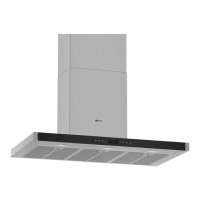
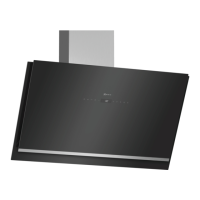
This document describes an extractor hood, a kitchen appliance designed to remove cooking fumes, odors, and steam from the air. It can operate in two primary modes: exhaust air mode and circulating-air mode, offering flexibility based on kitchen setup and ventilation requirements.
Function Description
The core function of the extractor hood is to clean the air in the kitchen environment. In exhaust air mode, air drawn into the appliance passes through grease filters, which trap fatty particles, and is then expelled to the exterior via a pipe system. This mode requires an external ducting system. For optimal performance in exhaust air mode, it is crucial to ensure adequate fresh air supply to the room, especially when other room air-dependent heat-producing appliances (like gas or wood-burning heaters) are in operation. This prevents the creation of a partial vacuum that could draw toxic flue gases back into the living space. Consulting a Master Chimney Sweep is recommended to assess the ventilation setup and ensure safe operation.
In circulating-air mode, the drawn-in air is first cleaned by grease filters and then by an activated carbon filter, which absorbs odors. The cleaned air is then recirculated back into the kitchen. This mode is suitable for kitchens where external venting is not feasible or desired. For effective odor removal in this mode, the installation of an activated carbon filter is essential.
The appliance features a fan with multiple speed settings (1, 2, 3) and an intensive mode (P) for situations with heavy cooking fumes or strong odors. The lighting can be operated independently of the fan, providing illumination over the cooking area.
Usage Features
To maximize effectiveness and energy efficiency, it is recommended to switch on the extractor hood at the start of cooking and keep it running for several minutes after cooking is finished. The fan speed should be adjusted according to the intensity of cooking fumes; using a lower fan speed when possible conserves energy. The intensive mode is designed for temporary use when a large volume of fumes or odors needs to be cleared quickly, automatically reverting to a lower setting after a preset time.
The control panel is intuitive, with dedicated symbols for fan on/off, fan settings, intensive mode, and light on/off. The fan starts at setting 2 when switched on, and users can select different speeds by touching the corresponding symbols. The intensive mode can be activated and deactivated by touching the 'P' symbol.
Safety is paramount during operation. Users are warned against operating the appliance without a grease filter, working with naked flames near the appliance, or leaving hot fat or oil unattended due to the risk of fire. Gas burners should always be operated with cookware on them to prevent excessive heat buildup that could damage the hood. The appliance's accessible parts can become hot during operation, so direct contact should be avoided, especially by children.
Maintenance Features
Regular cleaning and maintenance are crucial for the appliance's performance, safety, and longevity.
Grease Filters: The metal mesh grease filters are a key component for trapping fatty deposits. These filters should be cleaned regularly (recommended every 2 months) to prevent fire hazards caused by accumulated grease. They can be cleaned either by hand using hot soapy water and a brush, or in a dishwasher. When cleaning by hand, a special degreaser can be used for stubborn dirt. If using a dishwasher, normal domestic dishwashing detergents should be used, and filters should not be cleaned with heavily soiled cookware. A temperature of no more than 50 °C is recommended. Slight discoloration may occur in the dishwasher but does not affect performance. When removing the filters, care should be taken to hold them level to prevent fat from dripping.
Activated Carbon Filter (Circulating-Air Mode): For appliances operating in circulating-air mode, the activated carbon filter needs to be replaced periodically as it absorbs odors. The frequency of replacement depends on usage. These filters are available as accessories from specialist retailers, customer service, or the online shop.
General Cleaning: The appliance surfaces should be cleaned with a damp cloth. Harsh, abrasive, or alcohol-based cleaning agents, scouring pads, pressure washers, steam cleaners, limescale-dissolving products, aggressive all-purpose cleaners, or oven spray should not be used, as they can damage surfaces. Stainless steel surfaces should be cleaned in the direction of the grain. Operator controls should never be cleaned with a wet cloth to prevent damage to the electronic circuitry. The protective film should be removed from all parts of the appliance before first use to avoid surface damage.
Safety during Maintenance: Before any cleaning or maintenance, the appliance must be disconnected from the power supply by unplugging it or switching off the circuit breaker. Components inside the appliance may have sharp edges, so protective gloves should be worn. The appliance should be allowed to cool down before cleaning to prevent burns.
By following these usage and maintenance guidelines, users can ensure the safe, efficient, and long-lasting operation of their extractor hood.



 To Next Page
 General