Need help?
Do you have a question about the NEFF N13BK20N0 and is the answer not in the manual?
This document serves as the instruction manual for the NEFF N13BK20N0 hob, providing comprehensive guidance on its operation, maintenance, and safety. The hob is designed for private domestic use within a household environment, specifically for the preparation of food and beverages. It is intended for use in enclosed spaces and up to a maximum height of 2000 metres above sea level. The appliance is not designed for operation with an external clock timer or a remote control.
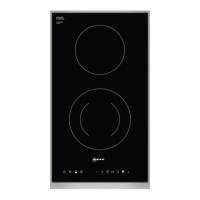
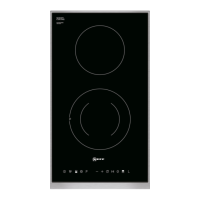
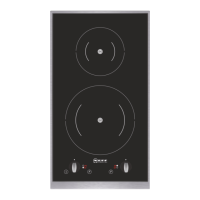
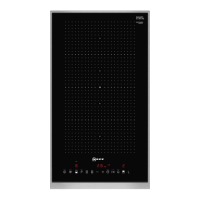
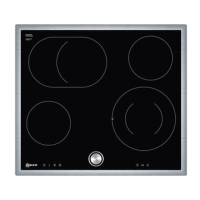
The NEFF N13BK20N0 hob features two hotplates, each controlled by a dedicated rotary knob. These knobs allow users to switch the hob on and off and adjust the heat settings for each hotplate. The heat settings range from 1 (lowest) to 9 (highest), offering precise control over the cooking process. The appliance incorporates a hotplate and residual heat indicator, which illuminates when a hotplate is warm. This indicator serves a dual purpose: during operation, it signals that a hotplate is active, and after cooking, it indicates that the hotplate is still warm, allowing users to utilise residual heat for energy saving, such as keeping food warm or melting chocolate. The hob's temperature regulation system ensures that sensitive components are protected from overheating, prevents electrical overload, and contributes to better cooking results by intermittently switching the heat on and off, even at the highest settings.
The manual provides detailed instructions for setting up and using the hob. Users can easily switch the hob on and off using the hotplate controls. Adjusting the heat setting for each hotplate is straightforward, with a clear range from 1 to 9. The document includes a "Table of cooking times," offering examples of heat settings and cooking durations for various meals, such as boiling, steaming, stewing, braising, frying, melting, heating, keeping warm, poaching, and simmering. This table serves as a helpful guide, though it notes that actual cooking times and heat settings may vary based on food type, weight, and quality. For bringing liquids to a boil, the highest heat setting (9) is recommended, and stirring thick liquids occasionally is advised. For quick searing or foods that lose a lot of liquid during initial frying, cooking in several small portions is suggested.
Safety is a paramount concern, and the manual highlights several important safety instructions. Users are warned about the risk of fire, particularly concerning hot oil and fat, and are advised never to leave them unattended. It explicitly states not to use water to extinguish burning oil or fat, but rather to switch off the hotplate and use a lid, fire blanket, or similar means. The hotplates become very hot, so placing combustible items or objects on the hob is strictly prohibited. The appliance also gets hot underneath, so combustible objects or aerosol cans should not be stored in drawers directly below the hob. The use of hob covers is discouraged due to potential overheating and fire hazards.
The risk of burns is also addressed, with warnings about the hot surfaces of the hotplates and the surrounding area, including the hob surround. Children should be kept at a safe distance. In cases where a hotplate heats up but the display does not work, users are instructed to switch off the circuit breaker and contact after-sales service. Only safety devices approved by NEFF, such as hob guards, should be used.
Furthermore, the manual warns against the risk of electric shock. It stresses that only trained after-sales technicians should carry out repairs and replace damaged power cables. In case of a defective appliance, it should be unplugged or the circuit breaker switched off, and after-sales service should be contacted. High-pressure cleaners or steam cleaners are not to be used. Cracks or fractures in the glass ceramic also pose an electric shock risk, requiring immediate action to switch off the circuit breaker and contact service.
The manual also includes a section on "Causes of damage," outlining common issues and their preventative measures. For instance, rough pot and pan bases can scratch the ceramic, boiling pots dry can cause damage, and placing hot items on the control panel or display area can lead to damage. Aluminium foil and plastic containers can melt on hot hotplates, and oven protective foil is not suitable for the hob. The table details how to address stains from boiled-over food, scratches from unsuitable cleaning agents or rough bases, discolouration, and blisters caused by sugar or pan abrasion.
Proper cleaning and maintenance are essential for the longevity and performance of the NEFF N13BK20N0 hob. The manual advises cleaning the hob after each use to prevent spills from burning onto the ceramic. It should only be cleaned once it has cooled down sufficiently. Only cleaning agents specifically suitable for glass ceramic should be used, and their instructions should be followed. Users are explicitly warned against using undiluted washing-up liquid, dishwasher detergent, scouring agents, harsh cleaning agents (like oven spray or stain remover), abrasive sponges, high-pressure cleaners, or steam jet cleaners.
Ground-in dirt can be effectively removed with a glass scraper, which is available from retailers or NEFF's after-sales service/e-Shop. Special sponges designed for glass ceramic are also recommended for achieving excellent cleaning results.
For the hob surround, specific instructions are provided to prevent damage. Only hot soapy water should be used, and new sponge cloths should be thoroughly washed before use. Sharp or abrasive agents, as well as the glass scraper, should not be used on the hob surround.
The document also includes information on "Environmental protection," offering energy-saving tips. These include using suitable lids on saucepans, employing pots and pans with even bases, matching saucepan diameter to hotplate size, using small saucepans for small quantities, cooking with minimal water, covering as much of the hotplate area as possible, switching to lower heat settings in good time, and utilising residual heat. The manual also details environmentally-friendly disposal procedures for the appliance and its packaging, aligning with European Directive 2012/19/EU concerning waste electrical and electronic equipment (WEEE).
Finally, the manual provides contact information for "Customer service," including E-number and FD number details, which are crucial when contacting service for repairs or product advice. It clarifies that misuse of the appliance, even during the warranty period, may incur charges for after-sales service visits. The importance of relying on trained service technicians who use original spare parts is emphasised.
 General
| Type | Induction Hob |
|---|---|
| Construction type | Built-in |
| Energy source | Electric |
| Number of cooking zones | 4 |
| Frame type | Frameless |
| Type of control | Touch Control |
| Color | Black |
| Height | 51 mm |
| Required niche size for installation (HxWxD) | 51 x 560 x 490 mm |
| Power boost | Yes |
| Timer | Yes |
| Power Levels | 9 |
| Product series | N Series |
| Safety Features | Childproof lock |

 To Next Page