
 Need help?
Do you have a question about the NetComm CloudMesh and is the answer not in the manual?
Lists necessary items and provides guidance on optimal satellite placement for best coverage.
Covers connecting power, initialisation, interpreting light status, and pairing with the gateway.
Explains various light patterns indicating status, signal strength, and pairing progress.
Instructions for extending network range by adding more satellites to the gateway.
Details using network ports for wired devices and establishing wireless/wired bridges.
Instructions on how to switch the satellite's LED light display on or off.
Information on downloading and using the CloudMesh App for setup assistance and analytics.
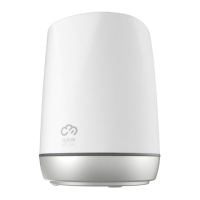
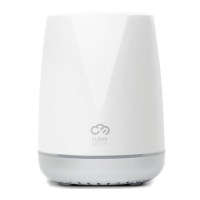
The NetComm CloudMesh Satellite (NS-02) is a device designed to extend and enhance Wi-Fi coverage within a home or office environment, providing seamless wireless connectivity. It is part of the CloudMesh system, which works in conjunction with a NetComm CloudMesh Gateway to create a robust mesh Wi-Fi network. The primary function of the CloudMesh Satellite is to act as an extender, relaying Wi-Fi signals from the main gateway to areas that might otherwise experience weak or no signal, thereby eliminating dead zones and ensuring consistent internet access throughout the premises.
One of the key usage features of the CloudMesh Satellite is its ease of setup and integration into an existing CloudMesh network. The device is designed for simple plug-and-play operation, requiring minimal technical expertise to get started. To begin, users need to ensure their NetComm CloudMesh Gateway is already connected to the internet. The Satellite itself requires a power point for operation. For optimal performance, it is recommended to place the CloudMesh Satellite in a central location within the area needing coverage, ideally no more than two rooms away from the CloudMesh Gateway. This strategic placement helps maintain a strong signal between the satellite and the gateway, maximizing the effectiveness of the mesh network.
The CloudMesh Satellite utilizes a clear LED light system to communicate its status and signal strength, which is a crucial usage feature for troubleshooting and placement optimization. When first powered on, the satellite's light will blink green, indicating it is powering up. Following this, it will blink blue, signifying it is ready for pairing. After initialization, which typically takes about ten minutes, the light status provides valuable feedback. A solid white light indicates a good signal connection to the CloudMesh Gateway, while a solid blue light means a medium signal. A solid red light, however, suggests a poor signal and indicates that the satellite needs to be moved closer to the gateway for better performance. If the light continues to flash blue after ten minutes, it means the satellite has not successfully paired with the gateway and requires manual pairing.
For manual pairing, users need to place the CloudMesh Satellite next to the CloudMesh Gateway, ensuring the gateway is connected to the internet. The pairing process involves pressing and releasing the WPS button on the Satellite, and then, within two minutes, pressing and releasing the WPS button on the Gateway. This initiates a secure connection between the two devices. Once successfully paired, the satellite's light will reflect the signal strength as described above.
Another significant usage feature of the CloudMesh Satellite is its ability to extend network range using multiple satellites. When deploying multiple satellites, it is advised to power up the satellite closest to the CloudMesh Gateway first. Once that satellite is confirmed to be working correctly, subsequent satellites can be powered up and connected. This sequential setup helps in establishing a stable and efficient mesh network across a larger area.
Beyond wireless extension, the CloudMesh Satellite also offers network ports for connecting non-wireless devices, functioning as a wireless bridge. Up to two devices, such as desktop PCs or Smart TVs, can be connected to the satellite using an included yellow network cable. This feature is particularly useful for devices that benefit from a wired connection for stability or speed, or for those that lack built-in Wi-Fi capabilities. This allows these devices to access the internet through the mesh network, leveraging the satellite's extended coverage.
Furthermore, the network ports can also be used to connect the satellite to the gateway via an Ethernet cable, creating a wired mesh. This wired connection is a maintenance feature that offers the best possible wireless performance, especially when the satellite is placed outside the optimal wireless range of the gateway. By using an Ethernet cable, the satellite can extend the network's range significantly without relying solely on wireless backhaul, providing a more stable and potentially faster connection for devices connected to that satellite.
For enhanced control and troubleshooting, the CloudMesh system is supported by a dedicated CloudMesh App. This app is a valuable maintenance feature, assisting users in finding the best placement for their CloudMesh Satellite, providing Wi-Fi analytics, and offering troubleshooting guidance. While the initial setup does not strictly require the app, it serves as a powerful tool for optimizing network performance and managing the mesh system effectively. The app is available for download on both the App Store and Google Play.
The CloudMesh Satellite also includes a simple maintenance feature for its LED lights. Users can press and hold the WPS button for five seconds to toggle the light display ON or OFF. This can be useful in bedrooms or other areas where the light might be distracting.
In summary, the NetComm CloudMesh Satellite (NS-02) is a versatile and user-friendly device designed to provide seamless Wi-Fi coverage by extending a mesh network. Its key features include easy setup, clear LED status indicators for signal strength and pairing, support for multiple satellites to expand coverage, and the ability to act as a wireless bridge for wired devices. The option for a wired mesh connection further enhances performance and range, while the CloudMesh App provides valuable tools for network management and troubleshooting. The device is built to integrate smoothly into a CloudMesh ecosystem, ensuring a reliable and consistent internet experience throughout the covered area.
 General
| MU-MIMO | Yes |
|---|---|
| Antenna Type | Internal |
| Ethernet Ports | 4 |
| WAN Port | 1 x Gigabit Ethernet |
| Bands | 2.4GHz, 5GHz |
| Maximum Speed | 1200 Mbps |
| USB Ports | 1 |
| Dimensions | Varies by model |

 To Next Page