EasyManua.ls Logo

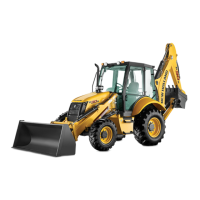
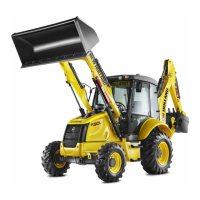
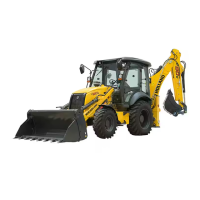
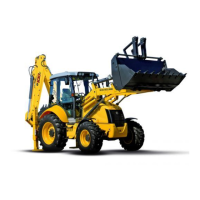
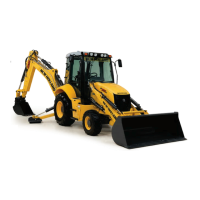
New Holland B95CTC - User Manual

New Holland B95CTC
374 pages
Print Icon
To Next Page IconTo Next Page
Loading...
B95C
B95CTC
B95CLR
B110C
OPERATOR’S MANUAL
Print No. 84484367
1
st
edition
English 03/12

Table of Contents

Questions and Answers

  • J
    Juan PerryAug 22, 2025
    Why is my New Holland B95CTC engine overheating?
    • C
      christopher08Aug 22, 2025
      If the New Holland Front End Loaders engine overheats, it could be due to several reasons. The centrifugal pump of the cooling system might be faulty and require overhaul or replacement. A faulty temperature switch can also cause overheating, so replace it. The radiator may be partially faulty due to scales or leaks, requiring washing and repair. Scales in the coolant passage compartments can also cause overheating, so clean them carefully. Other potential causes include a slack centrifugal pump drive belt or fan drive belt, needing adjustment, or insufficient coolant, requiring you to restore the level in the expansion tank. Incorrect engine timing or a restricted air filter can also lead to overheating; check and correct the timing, and clean or replace the air filter element.
  • K
    Kimberly AdamsAug 25, 2025
    What to do if my New Holland Front End Loaders engine suddenly stops?
    • A
      Anthony MorrowAug 25, 2025
      If the New Holland Front End Loaders engine stops, there could be several reasons. An irregular delivery from the supply pump could be the cause, so check the delivery on the workbench. Dirt or water accumulations in the fuel lines can also cause the engine to stop; disconnect the lines and the injection pump and carefully clean them, also clean and dry the fuel tank if needed. Restricted fuel filters can also be the issue, so replace the filter cartridges. Burned or cracked valves may also cause the engine to stop, so replace the valves. Air in the fuel system can also cause this; check the lines, fittings, supply pump, filters, and injection pump for air, then bleed the system. Lastly, damaged injection pump controls can cause the engine to stop, so replace the damaged parts.
  • P
    pittsjoannSep 3, 2025
    What to do if the starter motor of my New Holland B95CTC Front End Loaders does not run?
    • G
      Gary SimmonsSep 3, 2025
      If the New Holland Front End Loaders starter motor does not run, several issues could be the cause. Too low specific density and battery level can prevent the starter motor from running; inspect the battery. A poor ignition switch circuit connection or contact can also be the issue; replace the wiring harness and the ignition switch. Malfunction of the coil or of the magnetic switch pull-in cylinder can also prevent the starter motor from running; replace the magnetic switch.
  • J
    Jennifer BrownSep 5, 2025
    Why is the lifting circuit of my New Holland Front End Loaders failing to operate properly?
    • Q
      qbrownSep 5, 2025
      If the New Holland Front End Loaders lifting circuit fails to operate, is slow, or loses power, a leaking valve spool could be the cause. Inspect the spool and check it for wear or scratches. Alternatively, leaking cylinder seals or a damaged cylinder barrel could be the issue. Inspect and reseal the cylinder in this case.
  • C
    christophercruzSep 7, 2025
    Why is the bucket of my New Holland B95CTC Front End Loaders not operating correctly?
    • D
      David PayneSep 7, 2025
      If the New Holland Front End Loaders bucket fails to operate, is slow, or loses power, it could be due to several reasons. The relief valves being stuck open, set to a too low value, or a leak in the seat can cause this; check the bucket circuit relief valve. A leaking valve spool can also cause this; inspect the spool and check it for wear or scratches. Leaking cylinder seals or a damaged cylinder barrel can also be the issue; inspect and reseal the cylinder.
  • R
    Rebecca MillerSep 9, 2025
    Why is the electrical system of my New Holland Front End Loaders inoperative?
    • E
      Elizabeth LawsonSep 9, 2025
      If the New Holland Front End Loaders electrical system is inoperative, several issues could be the cause. Loose or oxidised battery connections can cause this; check that the battery voltage with open circuit is at least 12.6 V. Sulphated batteries can also be the issue; check the electrolyte level and density. A battery isolator switch being off can also cause this; restore the battery isolator switch. The main connection fuse of the machine being blown can also cause the electrical system to be inoperative; find the reason of the failure and replace the connection fuse.
  • J
    John WatsonSep 12, 2025
    Why can't my New Holland B95CTC Front End Loaders starter motor crank the engine?
    • J
      Jody AvilaSep 12, 2025
      If the New Holland Front End Loaders starter motor running cannot crank the engine, it could be due to the pinion gear not engaging with the ring gear. In this case, repair or replace the clutch and the control lever. Another possible cause is a sliding clutch, which would require replacing the clutch.
  • S
    Sandra HoSep 13, 2025
    What causes the pinion gear to spring in my New Holland Front End Loaders?
    • S
      Shawn FryeSep 13, 2025
      If the pinion gear of your New Holland Front End Loaders springs, it could be due to poor ignition switch return, in which case you should replace the ignition switch. It could also be caused by field coil loss or a burnt magnetic switch coil, etc., indicating a pinion gear disengagement fault caused by a coil short circuit in the magnetic switch.
  • E
    elizabethpowellSep 15, 2025
    What to do if my New Holland B95CTC Front End Loaders is not recharging?
    • D
      Dennis PageSep 15, 2025
      If the New Holland Front End Loaders is not recharged, it could be due to a recharge circuit interruption (warning lamp, fuse, connector, etc.). Check the connections of the recharge circuit and clean and tighten the alternator and battery terminals. It could also be due to an inefficient voltage regulator, a rotor winder interruption or worn brushes, in which case you should replace the alternator.
  • S
    Stanley GibsonSep 17, 2025
    Why is my New Holland B95CTC Front End Loaders recharge insufficient?
    • A
      Alicia HawkinsSep 17, 2025
      If the New Holland Front End Loaders recharge is insufficient, it could be due to a slackened fan belt, so supply the correct tension. It could also be due to a faulty voltage regulator, excessive wear of rotor rings or brushes, short-circuited diodes, or short-circuited stator winders or rotor winder, in which case you should replace the alternator.

Summary

General Information

Foreword

Introduction to the operator's manual and machine capabilities.

Intended Use and Safety Guidelines

Details on the machine's proper use and essential safety precautions.

Component Identification and Manuals

Information on technical manuals and component identification plates.

Safety Information

Signal Word Definitions and Personal Safety

Explains safety alert symbols, DANGER, WARNING, CAUTION, and NOTICE messages.

General Safety Rules and Precautions

Covers essential safety practices for machine operation and maintenance.

Safety Rules for Specific Systems

Details safety precautions for air conditioning, battery, and fuel handling.

Safety Rules for Operational Hazards

Guidelines for lifting, overhead loads, and hazardous chemicals.

Safety Rules for Mechanical Operations

Precautions for mounting, dismounting, and general operator safety.

Safety Rules for Protective Structures and Seat Belts

Ensuring safety with ROPS/FOPS and proper seat belt usage.

Hand Signals and Warning Decals

Visual communication and safety sign information for machine operation.

Controls and Instruments

Operators Platform Access and Controls

Instructions for accessing the operator's compartment and using controls.

Operators Seat Adjustments

Detailed guide on adjusting the operator's seat for comfort and safety.

Forward Controls and Starter Switch

Overview of front controls including starter switch and horn.

Steering Column and Pedal Controls

Information on steering column adjustment and pedal operations.

Transmission Controls and Operation

Details on Power-Shuttle and Power-Shift transmission controls.

Instrument Cluster Overview

Description of the front and side instrument clusters and their functions.

Maintenance Settings and DPF Regeneration

Procedures for accessing maintenance menus and DPF regeneration.

Loader Attachment Controls and Operation

Instructions for operating loader attachments and specific controls.

Backhoe Attachment Controls

Detailed guide on operating backhoe attachment controls and configurations.

Climate Controls and Cab Air Louvers

Operation of heating, ventilation, and air conditioning systems.

Operating Instructions

Unit Commissioning and Pre-Operation Checks

Steps to take before operating the machine, including checks and familiarization.

Machine Operation and Job Site Considerations

Guidelines for safe operation on job sites and road travel.

Engine Starting Procedures

Detailed steps for starting the engine in various conditions.

Stopping the Engine and Moving the Unit

Procedures for safely stopping the engine and moving the machine.

Drive System Operations

Information on 2WD/4WD engagement and differential lock usage.

Parking the Unit

Correct procedures for parking the machine safely.

Transport Operations

Road Transport Requirements and Precautions

Essential requirements and safety measures for road travel.

Preparing Machine for Road Travel

Steps to prepare the machine for safe road transportation.

Locking Backhoe Attachment for Transport

Procedures for mechanically or electrically locking the backhoe attachment.

Shipping and Recovery Transport

Guidelines for transporting the machine on trailers and recovery towing.

Working Operations

General Operating Conditions

Operating guidelines for cold weather, high altitude, and hot temperatures.

Machine Lifting and Attachment Handling

Procedures for lifting the machine and handling loader/backhoe attachments.

Loader Attachment Operation and Safety

Instructions for organizing job sites and operating the loader attachment.

Backhoe Attachment Operation and Safety

Guidelines for operating the backhoe attachment and safety procedures.

Telescopic Dipper and Trenching Techniques

Operating procedures for telescopic dippers and trenching.

Ballasting and Weighting Limitations

Information on tire ballasting and machine weight limitations for stability.

Maintenance

Fluids, Lubricants, and Fuel Information

Summary table of fluids, lubricants, and details on biodiesel fuel usage.

General Safety and Machine Care

Essential safety instructions and general machine care guidelines.

Maintenance Intervals and Schedule

Overview of service intervals, work hours, and the maintenance chart.

10-Hour Maintenance Checks

Procedures for daily checks including general inspection and brake operation.

50-Hour Maintenance Tasks

Routine maintenance including fuel pre-filter, tire pressure, and AC system checks.

250-Hour Maintenance Tasks

Checks and maintenance for ROPS/FOPS, seat belts, air filters, and radiators.

500-Hour Maintenance Tasks

Procedures for engine oil and filter replacement, and fuel system maintenance.

1000-Hour Maintenance Tasks

Inspection, cleaning, and replacement of engine air filters and transmission components.

Axle and Brake System Maintenance

Procedures for changing axle and brake pedal lever lubrication.

Hydraulic System Maintenance

Replacing hydraulic filters, changing hydraulic oil, and checking cylinders.

Battery and Charging System Maintenance

Checking battery electrolyte level and alternator status.

Cooling System and Fuel System Maintenance

Procedures for engine coolant service and fuel system bleeding.

Drive Belt and Air Filter Element Maintenance

Replacing drive belts and cleaning/replacing air filter elements.

Fuse and Relay Checks

Identification and replacement of fuses and relays in the cab and ROPS.

Battery Removal and Installation

Safe procedures for removing and installing the machine battery.

Bucket Teeth Replacement

Instructions for replacing bucket teeth on loader and backhoe attachments.

Loader Bucket Self-Levelling Adjustment

Adjusting the loader bucket's automatic self-levelling control system.

Storage Procedures

Guidelines for storing the machine and engine to prevent damage.

Troubleshooting

Fault Code Resolution Overview

Guide to understanding and resolving fault codes.

Engine Troubleshooting

Common engine problems, their causes, and solutions.

Starter Motor and Alternator Issues

Diagnosing and correcting problems with the starter motor and alternator.

Transmission and Axle System Problems

Troubleshooting transmission and axle related issues.

Steering and Hydraulic System Issues

Diagnosing problems with the steering and hydraulic systems.

Attachment Troubleshooting

Resolving issues with loader and backhoe attachments.

Specifications

Engine and Powertrain Specifications

Detailed specifications for the engine and powertrain components.

Brakes, Controls, and Hydraulics

Technical specifications for braking, steering, and hydraulic systems.

Bucket and Tire Specifications

Details on bucket types, capacities, and tire specifications.

Dimensions and Performance Data

Machine dimensions and performance metrics for loader and backhoe attachments.

Accessories

Loader Attachment Quick Couplers

Installation and removal of mechanical quick couplers for loader buckets.

Backhoe Attachment Auxiliary Tools

Using and selecting flow for backhoe auxiliary hydraulic tools.

Backhoe Attachment Safety Valves

Function and checks for backhoe attachment safety valves.

Reversible Stabilizer Pads

Information on the use and positioning of reversible stabilizer pads.

New Holland B95CTC Specifications

General IconGeneral
BrandNew Holland
ModelB95CTC
CategoryFront End Loaders
LanguageEnglish

Related product manuals