The Newair NPR048GA00 is a portable 48-quart (45L) car fridge and freezer designed for versatile use, offering both refrigeration and freezing capabilities for various environments, including vehicles, homes, and outdoor settings. It is designed to be user-friendly with an intuitive control panel and multiple power options.
Function Description:
This portable appliance serves as both a refrigerator and a freezer, allowing users to keep food and beverages chilled or frozen. It features two separate compartments, each with independent temperature control, enabling simultaneous refrigeration and freezing. The device is equipped with a digital display for easy temperature setting and monitoring. It can be powered by DC 12V/24V, AC 100-240V (with an adapter), or an optional backup Lithium battery, making it suitable for a wide range of applications, from road trips to camping and home use. A USB port is also included for charging small electronic devices.
Important Technical Specifications:
- Model No.: NPR048GA00
- Rated Voltage: DC 12V/24V, AC 100-240V, Solar (12 ~ 50V)
- USB Port Voltage: 5V/1Amp
- Power Consumption: 60W
- Solar Panel Input: DC5521 Connector
- Net Storage Capacity: 48Qt / 45L
- Noise Level: 45dB
- Temperature Range: -20°C ~ 20°C (-4°F ~ 68°F)
- Net Weight: 41lb
- Unit Size (W x D x H): 28 in. x 18 in. x 20 in.
Usage Features:
- Control Panel with LCD Digital Display: Allows for precise temperature setting and monitoring for both compartments.
- Temperature Setting: Users can adjust the temperature for each compartment independently using "+" and "-" buttons. The unit supports both Celsius (°C) and Fahrenheit (°F) temperature units.
- Cooling Modes: Offers two cooling modes: MAX (fast cooling) for rapid temperature reduction and ECO (Energy saving Mode) for efficient power consumption. The factory setting is MAX.
- Battery Protection Mode: Features three battery protection modes (H - High, M - Medium, L - Low) to prevent the car battery from draining. It is recommended to set to H when connected to car power and M or L when connected to a portable or backup battery. This feature helps avoid situations where the car battery might be exhausted, leading to insufficient power to start the car.
- Multiple Power Options: Can be powered by a car's 12V/24V DC outlet, a standard 100-240V AC outlet (with an adapter), or an optional solar panel (Max Solar Input Voltage: 50V, Max Solar Input Current: 10A) or backup Lithium battery.
- USB Output: Provides a 5V DC/1A USB port for charging small electronic devices like mobile phones and tablets.
- Portability: Equipped with off-road wheels and an expandable handle for easy transportation.
- Storage Baskets: Includes removable wire storage baskets for organized storage.
- Additional Features: Comes with a detachable battery compartment, a cutting board, cup holders, a bottle opener, a door seal, a power socket, and reversible doors with a lid latch for added convenience.
- Reset Function: Allows users to reset the device settings by following a specific button sequence.
- Solar Charging Instructions: When using a solar panel, it is advised to place the refrigerator in a cool area to prevent overheating. The battery icon on the display indicates charging status. The charging input power should exceed the refrigerator's working power (approx. 40-45W), or the unit should be in standby mode for effective charging. A 100W solar panel is recommended.
- In-Vehicle Use: For in-vehicle operation, users should select the appropriate battery protection mode (H, M, or L) and connect to the car's power port. It is crucial to adjust battery protection to H when using the car battery to prevent discharge if the engine is off, especially in vehicles that continue to supply power.
Maintenance Features:
- Cleaning:
- Always unplug the unit before cleaning to prevent electric shock.
- Use a wet cloth to clean the interior and exterior, then dry thoroughly.
- Remove the interior drain plug and cover to drain any water, wiping excess water with a soft rag.
- Avoid soaking the unit in water or washing it directly with a hose.
- Do not use abrasive cleaning agents, as they can damage the unit.
- Storage:
- If storing for an extended period, turn off the power and unplug the unit.
- Remove all stored items.
- Drain any water from the interior and wipe dry.
- Leave the lid slightly open to prevent odors and mildew.
- Store the unit in a cool, dry place.
- Defrosting:
- Frost can accumulate inside the cooling device or on the evaporator, reducing cooling capacity.
- To defrost, switch off the unit and remove all contents.
- Remove the cover and drain plug to allow water to escape.
- Keep the lid open during defrosting.
- Wipe off defrosted water.
- Never use hard or sharp tools to remove ice or loosen frozen objects, as this can damage the unit.
- Disposal:
- Packaging materials should be placed in appropriate recycling bins.
- For product disposal, consult local recycling centers or specialist dealers for information on applicable disposal regulations.
The device also includes troubleshooting tips for common issues such as the refrigerator not working, compartments being too warm, food freezing, unusual noises, water droplets, and error codes (F1-F8), providing solutions like checking power connections, adjusting temperature settings, and resetting the unit. For persistent issues or specific error codes (like F7 or F8 indicating a faulty temperature sensor), contacting the manufacturer for service is recommended.

 Need help?
 General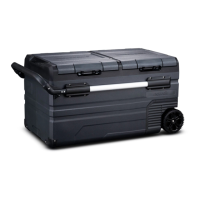

 To Next Page