EasyManua.ls Logo

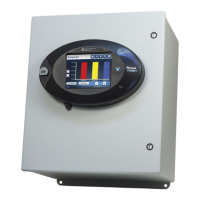
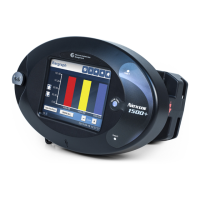
Nexus 1500 - User Manual

Nexus 1500
2 pages
Print Icon
To Next Page IconTo Next Page
Loading...
e
Electro Industries/GaugeTech
Doc # E154702 V.1.02 Q-1
WYE or DELTA Direct 3 Phase, 4-wire
Nexus® 1500 Meter Quick Start Guide
Mechanical Installation
1. Slide the meter into the panel’s cut-out. (See the diagram shown
on the right. You can use either an octagonal or a rectangular cut-out.)
2. From the back of the panel, slide the 4 Mounting Brackets into the
grooves on the top and bottom of the meter housing - 2 fit on the top
and 2 fit on the bottom.
3. Snap the Mounting Brackets into place.
4. Secure the meter to the panel with lock washer and a #8 screw
in each of the 4 mounting brackets.
5. Tighten the screws with a #2 Philips screwdriver.
Do not over-tighten.
NOTE: See the meter’s Installation and Operation Manual for additional wiring configurations.
WYE or DELTA with PTs 3 Phase, 4-wire DELTA Direct 3 Phase, 3-wire DELTA with PTs, 3 Phase, 3-wire
Mounting
Bracket
#8
Screw
Rectangular Cut-out Dimensions
Grooves
Electrical Wiring Diagrams
Question and Answer IconNeed help?

Do you have a question about the Nexus 1500 and is the answer not in the manual?

Summary

Mechanical Installation

Electrical Wiring Diagrams

WYE or DELTA Direct 3 Phase, 4-wire

Diagram illustrating direct connection for WYE or DELTA 3-phase, 4-wire.

WYE or DELTA with PTs 3 Phase, 4-wire

Diagram showing WYE or DELTA 3-phase, 4-wire with Potential Transformers.

DELTA Direct 3 Phase, 3-wire

Diagram for direct connection of DELTA 3-phase, 3-wire configuration.

DELTA with PTs, 3 Phase, 3-wire

Diagram for DELTA 3-phase, 3-wire configuration using Potential Transformers.

Programming the Nexus 1500 Meter

Connecting to the Nexus 1500 Meter

Steps for establishing a connection between the meter and the Communicator EXT software via USB.

CT, PT Ratios and System Hookup

Setting the Current Transformer (CT) and Potential Transformer (PT) ratios and system hookup.

Communication Settings

Configuring communication port settings for the meter.

Overview

The Nexus® 1500 Meter is a device designed for electrical measurement and monitoring, featuring a quick start guide for mechanical installation and initial electrical wiring, as well as programming via a USB Virtual Com Port.

Function Description

The Nexus® 1500 Meter is primarily used for measuring and monitoring electrical parameters in various configurations. It supports different wiring schemes, including WYE or DELTA Direct 3 Phase, 4-wire; WYE or DELTA with PTs 3 Phase, 4-wire; DELTA Direct 3 Phase, 3-wire; and DELTA with PTs, 3 Phase, 3-wire. The device can be configured for specific Current Transformer (CT) and Potential Transformer (PT) ratios, as well as system hookup types (e.g., Wye). Communication settings are also configurable, allowing the meter to integrate into various network environments.

Important Technical Specifications

  • Mechanical Dimensions (Cut-out): The meter requires a rectangular cut-out with dimensions of 7.63 inches by 4.56 inches. It can also accommodate an octagonal cut-out.
  • Mounting: The meter is secured using four #8 screws with lock washers, fastened into mounting brackets from the back of the panel.
  • Electrical Wiring:
    • CTs: The wiring diagrams illustrate connections for current transformers (CTs) for phases A, B, C, and Neutral (N).
    • PTs: Potential transformer (PT) connections are shown for Va, Vb, Vc, and Vn (neutral), with an auxiliary voltage (Vaux) connection also indicated.
    • Service: The diagrams detail connections for the service input.
  • Communication Ports: The meter supports multiple communication interfaces:
    • USB Virtual Com Port: Used for programming and configuration.
    • Optical Port: Supports Modbus RTU protocol, with configurable address, baud rate (e.g., 57600), data bits (8), parity (None), stop bits (1), and Tx Delay (0ms).
    • RS-485 Port 1 & 2: Supports Modbus RTU protocol, with configurable address (e.g., 2), baud rate (e.g., 57600), data bits (8), parity (None), stop bits (1), and Tx Delay (0ms). RS-485 Port 2 can be configured as a Slave.
    • Main Network Card: Supports IP Address (e.g., 192.168.0.50), Subnet Mask (e.g., 255.255.255.0), and Default Gateway (e.g., 192.168.0.1).
    • Optional Ethernet Ports: For additional network connectivity.
    • ANSI Optical Port: Another option for communication.
  • Baud Rates: Common baud rates include 115200 for USB serial communication and 57600 for optical and RS-485 ports.
  • CT/PT Ratios: Configurable primary and secondary current ratios (e.g., 100.00/1.00 for CTs) and primary and secondary voltage ratios (e.g., 120.00/120.00 for PTs).
  • Operational Frequency Range: 20Hz to 65Hz.

Usage Features

  • Easy Mechanical Installation: The quick start guide provides clear, step-by-step instructions for mounting the meter into a panel cut-out using mounting brackets and #8 screws. It emphasizes not to over-tighten the screws.
  • Flexible Wiring Configurations: The device supports a variety of common 3-phase wiring configurations, accommodating both direct connections and those involving potential transformers (PTs). This flexibility makes it suitable for diverse electrical systems.
  • Software-Based Configuration: The Nexus® 1500 Meter is programmed using the Communicator EXT software, which is provided on an enclosed CD. This software allows users to connect via a USB Virtual Com Port and configure various operational parameters.
  • User-Friendly Interface: The Communicator EXT software features a graphical interface for setting up the device. Users can access screens for CT/PT Ratios, System Hookup, and Communication Settings, with clear input fields and pull-down menus.
  • Comprehensive Communication Options: The meter offers multiple ways to connect and configure, including USB, optical, RS-485, and Ethernet, providing versatility for integration into different control and monitoring networks.
  • Detailed Documentation: The quick start guide refers to a more comprehensive "Installation and Operation Manual" and the "Communicator EXT 3.0 User's Manual" for detailed programming instructions and additional wiring configurations, ensuring users have access to in-depth information.
  • System Hookup Selection: Users can easily select the appropriate system hookup (e.g., Wye) from a pull-down menu within the software, simplifying the configuration process for different electrical setups.

Maintenance Features

  • Software Updates: While not explicitly detailed in the quick start guide, software-based configuration typically implies the possibility of firmware updates or software enhancements for the Communicator EXT tool, which can improve functionality or address issues.
  • Troubleshooting Information: The quick start guide directs users to the full manual and the Communicator EXT's help content for detailed programming and troubleshooting information, suggesting that resources are available for diagnosing and resolving issues.
  • Standardized Fasteners: The use of #8 screws and lock washers for mounting means that standard tools and replacement parts can be used for installation and potential re-installation, simplifying maintenance tasks.
  • Clear Wiring Diagrams: The provided electrical wiring diagrams are essential for correct installation and for troubleshooting connection issues, aiding in the maintenance and verification of the meter's setup.

Nexus 1500 Specifications

General IconGeneral
BrandNexus
Model1500
CategoryMeasuring Instruments
LanguageEnglish

Related product manuals