EasyManua.ls Logo

NGH GF30 - User Manual

NGH GF30
4 pages
Print Icon
To Next Page IconTo Next Page
Loading...
1
GF304-StrokeRCGasolineEngines
OwnersOperatingInstructionManual
Dearcustomer:
ThankyouforpurchasingNGHGF304-strokegasolineengine.TheenginehasbeendevelopedbyNGHengineersto
offerallhobbyistsanew4-strokeengine.Youwillbedelightedwithstability,fueleconomy,energysaving,
environmentalprotection,lownoise,largetorqueoutputofyourNGHGF30.Wehopethatyouwillenjoywithyour
engine,andhavemanyfunandsafeflyingexperienceswithitsuse.
SafetyInstructionandWARNINGS!
Pleasereadthisinstructionmanualcarefullybeforeoperatingandbefamiliarwithfeaturesofthisproduct.Improper
operationmaycausedamageoftheproductsevenleadtopropertylossandpersonalinjury.
GF30engineisprecisionproductsmanufacturedbyNGHR&D.Itmustbeoperatedwithcaution.Theoperatorshall
masterknowledgeofinternalcombustionengineaswellasbasicmechanicalability.Thisproductisnotsuggestedfor
usebychildrenwithoutinstructedbyadults.Dontattemptdisassembly,usewithincompatiblecomponentsoraugment
productinanywaywithoutauthorizedapprovalbyourcompany.Itistoreadandfollowallinstructionsandwarnings
ofthismanualbeforeassembly,setuporusetoensureoperatecorrectlyandavoiddamageorseriousinjury.
AgeRecommendation:RCengineisnotatoy!Forbiddenforchildrenunder 15 years.
Theengineisdesignedforuseonamodelradiocontrolairplane.Ifitisusedforanypurpose,wewon'tberesponsible
foritsstabilityandsafety.
·NGHortheirdealersarentresponsibleforanyloss,injuryordamageresultingfromthemiss-useofRCengine.
·Keepawayfromtherotatingpropellerareawhileoperatingtheengine.
·Donotwearlooseclothingneartheengineorthepropeller.
·Donotoperatetheenginenearloosematerialsuchasdirt,gravel,ropes,sand,etc.
·Alwaysrunyourmodelengineinawell-ventilatedarea.Modelenginesproducepossiblyharmfulcarbonmonoxide
fumes.
·Alwaysensurethatthepropellerissecurelyattachedtotheengineshaftandallretainingfastenersaretightened
properlybeforeeachflight.
·Alwaysstandclearofandbehindthepropeller,ensurethefaceandbodyarefarawayfromthepropellerbladeafter
trajectory.Neverallowanyone,tobeinfrontofortothesidesofthepropellerwhenstartingorrunningtheengine.
·Alwaysensurethatsmallpartsinthechildrencanttouchplacetopreventchildrenfromswallowingparts;
·Alwayscheckthepropellernuttightening.
·Gasolineisextremelyflammable.Becarefulofanysparksfromelectricalcontactssuchasfuelpumps,battery
charger,etc.
·Allowyourenginestopandcoolbeforetouchingorfueling.Therunningengineofthesurfacetemperatureishigh,
easytocauseburnsandotherpersonalinjury.
·Besuretocheckwhethertherearelooseboltsbeforeflying.Wheninstallamuffler,themufflerinthethreadsofthe
screwintotheengineexhaust,untiltwistfixed,itisrecommendedtousescrewglue.
·Ensuretheengineandmufflerinaircraftfairingenvironmentwithcoldair,makesuretheenginecooling.
ProductSpecifications:
Type4-strokeaircooledgasolineengineOnlyusedforfixed-wingaircraftmodel
Bore36mm Stroke29.4mm
Volume29.91cc CarburetorWalbroWT962
MixOutput2.68HP/9000rpm RPMRange1600-8500rpm
IgnitionNGHAutomaticadvancingangleignition (RoHSandCECertified)
IgnitionPowerDC4.8V-8.4V 1000mAH SparkplugtypeCM6
Fuel:
92#Unleadedgasoline+Fullysyntheticlubricants
(Non-4-strokelubricants)
Mixratio Gas:Oil=35:1
Recommendedpropeller15x1016×8-1017x6-10
Twoblades
Weightengine1160gignition105gmuffler100g
Question and Answer IconNeed help?

Do you have a question about the NGH GF30 and is the answer not in the manual?

Summary

Safety Instruction and WARNINGS!

General Safety Precautions

Essential safety guidelines for operating the RC engine, including propeller clearance and clothing.

Operation Environment Safety

Safety measures for the operating environment, such as ventilation and avoiding loose materials.

Fuel and Burn Safety

Precautions related to gasoline flammability and engine heat to prevent burns.

Product Specifications

Engine Type and Bore

Details on the engine type, bore, stroke, and displacement for the 4-stroke RC gasoline engine.

Performance Metrics

Specifications for mix output, RPM range, carburetor model, and ignition system.

Fuel and Propeller Recommendations

Information on recommended fuel mix ratio, spark plug type, and propeller sizes.

Weight Specifications

Details on the weight of the engine, ignition unit, and muffler.

Carburetor Setup and Adjustment

Carburetor Setup Procedure

Step-by-step guide to setting up the carburetor, including choke and throttle control.

Factory Setting Status

Overview of the default settings for high-speed needle, idle speed needle, and mixture screw.

Carburetor Adjustment Guide

Instructions for adjusting high speed, idle speed, and mixture for optimal engine performance.

Maintenance and Installation Procedures

Fuel Tank Connection

Diagram and explanation for correctly connecting the fuel tank to the engine's carburetor.

Valve Clearance Adjustment

Guidance on when and how to adjust valve clearance for engine maintenance.

Engine Installation Guidelines

Instructions for mounting the engine on an RC aircraft using rail brackets and firewall.

Engine Operation and Troubleshooting

Starting the Engine

Detailed steps for initiating the engine start sequence on an RC airplane.

Engine Break-in Procedure

Recommended method for breaking in the engine to ensure longevity and performance.

Engine Cooling Requirements

Ensuring adequate airflow for cooling the engine when installed within fairings.

Engine Failure Removal

Troubleshooting steps for common issues like difficult starting or unstable engine speed.

Engine Maintenance Practices

Tips for fuel consumption, extending engine life, and regular cleaning and checks.

Engine Guarantee Information

Details on the warranty coverage, terms, and exclusions for the NGH engine.

Overview

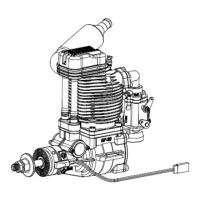
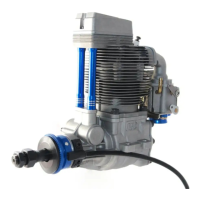
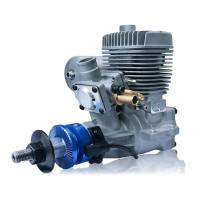
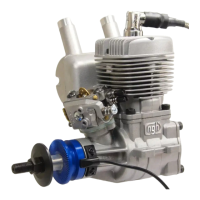
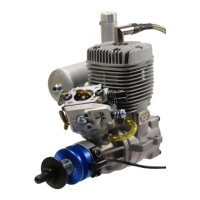
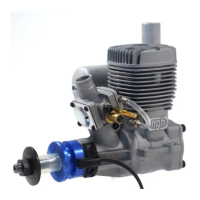
The NGH GF30 4-Stroke RC Gasoline Engine is a precision-engineered power unit designed for use in model radio control airplanes. It offers hobbyists a new 4-stroke engine experience, characterized by stability, fuel economy, energy saving, environmental protection, low noise, and significant torque output. This engine is intended to provide many fun and safe flying experiences.

Function Description

The GF30 engine operates as an internal combustion engine, converting gasoline fuel into mechanical energy to drive a propeller. It utilizes a Walbro WT carburetor, specifically designed for NGH, to ensure stable idle speed and responsive acceleration. The engine's ignition system is an NGH Automatic advancing angle ignition, which optimizes timing for efficient operation across its RPM range. The engine is air-cooled, relying on proper airflow to maintain optimal operating temperatures. Its 4-stroke design contributes to its fuel efficiency and lower emissions compared to typical 2-stroke engines. The engine's valve system, including intake and exhaust valves, is crucial for its operation, and proper valve clearance is essential for performance.

Usage Features

The engine is designed for use on a model radio control airplane and should not be used for any other purpose. It is not a toy and is not recommended for children under 15 years without adult supervision.

Starting the Engine:

  1. Installation: The engine must be securely installed on the RC airplane with the propellers locked.
  2. Initial Setup: The carburetor should be set up initially, and the spark plug, electronic ignition, and sensors connected. Fuel is added to the oil tank, and power and radio control equipment are connected.
  3. Choke Operation: Before the first start, the choke should be closed. Rapidly rotating the propeller draws fuel into the carburetor. Care must be taken not to over-fuel, which can flood the spark plug and make starting difficult.
  4. Ignition and Start: Once fuel is drawn in, the carburetor throttle air inlet should be opened, and the electronic igniter powered on. The engine can then be started using a motor starter.
  5. Carburetor Adjustment: After starting, the carburetor can be adjusted according to specific needs.

Carburetor Adjustment:

The Walbro WT carburetor has several adjustment points:

  • Choke: Used for initial fuel priming.
  • Throttle Control Arm: Controls the engine's turning speed.
  • High Speed Needle (H): Adjusted with the throttle fully open to achieve maximum stable RPM.
  • Idling Speed Needle (L): Adjusted with the throttle at the idle position to achieve a satisfactory low speed.
  • Idle Mixture Adjustment Screw: Fine-tunes the fuel and air mixing ratio at idle for better idle speed and smooth acceleration. Initial factory settings are provided, and a tachometer is recommended for precise adjustments. When adjusting, it's important to ensure the engine runs stably and avoid prolonged operation at its boundary limits. After high-speed and idle-speed adjustments, acceleration performance should be tested by quickly moving the throttle from idle to full. If the engine coughs or stops, further adjustments to the idle speed needle are needed to correct rich or lean fuel mixtures, respectively.

Valve Clearance Adjustment:

After approximately 2 hours of flight, valve clearance adjustment may be necessary. This should be done when the engine is completely cool.

  1. Access: Remove the rocker arm cover.
  2. TDC Alignment: Slowly rotate the propeller by hand until the engine is at Top Dead Center (TDC) compression stroke, indicated by the marker on the camshaft being directly below. Both intake and exhaust valves should be fully closed.
  3. Measurement: Use a small sheet (0.06 - 0.1mm thickness) between the rocker and valve to check the clearance.
  4. Adjustment: Adjust with a hexagonal wrench, then tighten the hex nut. Incorrect valve clearance can degrade performance, leading to unusual sounds or compression loss.

Engine Installation:

The NGH-GF30 engine requires a rail bracket mount on a suitable RC aircraft. This mounting method helps reduce high-frequency vibrations. A firewall on the back of the RC aircraft should be used with metal flat washers or ratchet nuts to prevent the pawl bolt from embedding into plywood. All bolts must be checked for tightness before flight.

Engine Break-in:

A careful break-in process is crucial for increasing the engine's lifespan.

  1. Fuel Mix: Use high-quality synthetic oils and gasoline with a mixing ratio of 35:1.
  2. Propeller: Smaller propellers are recommended for initial break-in.
  3. Run Cycles: After starting, run at medium speed (under 4000rpm) for 15 minutes, then high speed (6500rpm) for 3 minutes, followed by medium speed for 5 minutes, and high speed for 3 minutes. Repeat this cycle 3-5 times. The engine should be fully broken in before using larger load propellers.

Engine Cooling:

If the engine is installed within a fairing, adequate airflow is essential for cooling. The outlet area for air should be 3-5 times larger than the entrance area to ensure effective cooling.

Maintenance Features

General Maintenance:

  • Fuel Consumption and Engine Life: Adjust the engine's highest speed to run at 90% of its maximum output when the throttle is fully open.
  • Carburetor Care: After each flight, empty the carburetor to prevent rubber components from aging and affecting performance. This can be done by running the engine without connecting the fuel pipe until all fuel in the carburetor is exhausted.
  • Spark Plug: Clean carbon deposits on the spark plug and maintain an electrode gap of 0.7mm to 0.8mm. Replace the spark plug if starting is difficult, idle speed is unstable, or the engine flames out at high speed.
  • Engine Surface: Clean the engine surface after each use to ensure better cooling.
  • Fuel Filter: Use a good fuel filter to prevent carburetor blockage, especially if using different brands or types of lubricating oil.
  • Fuel System Check: Regularly inspect the fuel system for leaks (fuel or air).
  • Loose Bolts: Always check for loose bolts before flying.
  • Muffler Installation: When installing the muffler, ensure it is twisted fixed into the engine exhaust threads, and screw glue is recommended. Ensure adequate cold air flow around the engine and muffler within the aircraft fairing for proper cooling.

Troubleshooting (Engine Failure Removal):

If the engine is difficult to start, or if the idle speed is unstable at high speed, check the following:

  • Electrical Circuit and Oil Line: Verify there are no issues with the electrical circuit or fuel lines.
  • Air Leaks: Check if the engine is leaking air.
  • Electronic Ignition: Confirm the electronic ignition is working and has adequate power supply.
  • Spark Plug: Check if the spark plug has flamed out or if its cap is securely in position. Replace with a new spark plug if necessary.

Guarantee:

NGH engines are guaranteed for performance defects due to manufacturing processes, materials, or workmanship. A free change is offered within one year, and a guarantee within two years from the purchase date. This guarantee applies only to the original purchaser and does not cover: normal wear, damage from lack of maintenance, damage from over-speed operation (e.g., using a small propeller), bearing rust, crashes, inappropriate fuel, damage from foreign bodies, unreasonable installation or operating environment, improper dismantling, or any modifications.

NGH GF30 Specifications

General IconGeneral
Bore36mm
Stroke29.4mm
Spark PlugCM6
Operating Voltage4.8-8.4V
CarburetorWalbro
IgnitionCDI

Related product manuals