Need help?
Do you have a question about the NGH GF60i2 and is the answer not in the manual?
Initial configuration and connection of the carburetor components for engine operation.
Fine-tuning the high-speed and idle needles for optimal engine performance.
Wiring instructions for the CDI electronic igniter to the engine cylinders.
Step-by-step procedure for starting the engine safely and correctly.
Procedure for initial engine run-in to ensure longevity and performance.
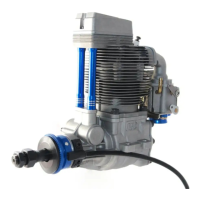
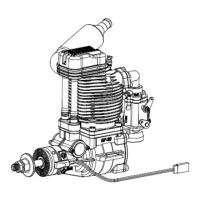
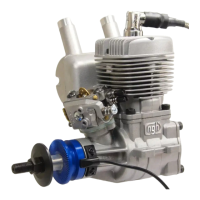
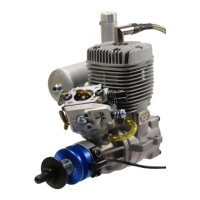
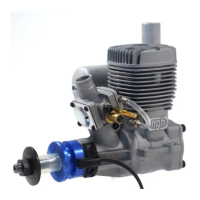
The NGH GF60i2 is a linear double-cylinder, four-stroke gasoline engine specifically engineered for model aircraft enthusiasts and UAV users. Its primary function is to provide reliable power for radio-controlled model aircraft and long-endurance unmanned aerial vehicles, particularly those reminiscent of World War II aircraft. The engine is designed to offer stable performance, high output torque, and exceptionally low vibration, ensuring a smooth and safe flight experience. It achieves efficient combustion of mixed gas, resulting in low fuel consumption and reduced noise levels. Its robust construction ensures high wear resistance and a power-to-weight ratio greater than 2, making it a compact and aesthetically pleasing unit suitable for demanding applications.
For safe and effective use, operators must thoroughly read and understand the provided manual. The engine is a precision product and requires careful handling. It is crucial to use only accessories approved by NGH for maintenance and repairs to prevent damage and ensure safety. This engine is not a toy and is explicitly not suitable for children under 15 years old. When installing the engine on an RC model, users should consult the RC model's manual for specific installation advice. NGH and its distributors disclaim responsibility for property damage or injury resulting from negligent use.
Safety precautions during operation are paramount. Users must always keep clear of the rotating propeller area and avoid wearing loose clothing near the engine or propeller. The engine should never be started on surfaces with loose materials such as dirt, gravel, ropes, or sand. Operation must always occur in a well-ventilated environment, as the engine produces harmful carbon monoxide gas. Before each flight, it is essential to ensure the propeller is firmly fixed to the crankshaft and that all parts are securely in place and fastened. When running or debugging the engine, stand behind the propeller, keeping your face and body out of the propeller blades' path, and ensure no one else stands in front or to the side of the propeller. Small parts must be kept out of reach of children to prevent accidental ingestion. Regularly check that the propeller fastening nut is locked. Gasoline is highly flammable, so exercise extreme caution to prevent sparks from contacting the engine, which could cause fires. Always stop and cool the engine before touching or refueling it, as its surfaces can become hot enough to cause burns. Before flying, check for any loose bolts. When installing the muffler, screw it into the engine exhaust thread until it stops, and using screw glue is recommended for added security. Adequate cold air circulation through the aircraft fairing is necessary to ensure proper engine cooling.
The carburetor is a critical component for engine performance. The Walbro carburetor used in the GF60i2 is matched for excellent idle stability and acceleration sensitivity. After a series of flights, it is best practice to remove all remaining fuel from the carburetor to prevent the aging of its rubber parts. This is achieved by starting the engine without connecting the fuel pipe until all fuel in the carburetor is exhausted. The carburetor's initial settings are factory-calibrated and typically do not require adjustment for the first start. However, if adjustments are needed after the engine has run, they should be based on these factory settings. A high-quality tachometer is essential for accurately judging adjustment results. The adjustment process involves setting the high-speed oil needle for maximum engine speed, then the idle speed needle for a stable low idle, and finally the idle mixture adjustment screw to ensure smooth acceleration and easy starting. If the engine coughs during acceleration, the idle speed needle may be too rich and requires a small clockwise adjustment. If the engine stops abruptly during rapid throttle, the idle speed needle may be too lean and requires a small anticlockwise adjustment.
Valve clearance adjustment is a vital maintenance task for the four-stroke engine. The first adjustment should occur after the engine has run for 2 hours, and subsequent adjustments are required every 8 hours of flight. Before adjusting, ensure the valve mechanism moves freely without jamming. Adjustments must be performed when the engine is completely cool, as thermal expansion affects metal components. The valve clearance is adjusted during the compression stroke when both intake and exhaust valves are fully closed. This involves manually rotating the propeller to align TDC marks on the gears for both front and rear cylinders. A plug of 0.06-0.1mm thickness is inserted between the rocker arm and the valve, and adjustments are made with a hexagonal wrench. After adjustment, the hex nut is tightened, but not excessively. Correct valve clearance is crucial; excessive clearance can lead to increased wear on the tappet and cam, causing abnormal sounds, while insufficient clearance can result in loose valve closure, compression stroke leakage, and difficulty starting the engine.
Engine installation involves mounting the engine on a suitable RC aircraft using four strut connections to minimize high-speed vibration. It is important to ensure a metal flat washer or pawl nut is used on the firewall's back to prevent bolts from loosening from the plywood. Regular checks for loose bolts before flying are mandatory. The CDI electronic igniter connection requires careful attention to the high-voltage wires: "B" for the back cylinder and "F" for the front cylinder. Incorrect connections will prevent spark plug ignition and engine operation.
Starting the engine involves several steps: firmly install the engine on the RC aircraft, lock the propeller, ensure the carburetor is in factory settings, connect the spark plug, electronic igniter, and sensor, fill the fuel tank, and power on the radio control equipment. Turn off the electronic igniter and close the carburetor's choke valve. Quickly rotate the propeller to draw fuel into the carburetor, being careful not to over-prime, which can flood the spark plug. Then, open the choke, turn on the electronic igniter, and use a motor starter to start the engine. Once running, the carburetor can be fine-tuned as needed. During starting and operation, all bystanders, especially children, must remain at least 30 meters away from the rotating engine.
Engine break-in is critical for extending engine life. Use high-quality, full synthetic 2T oils with gasoline at a 35:1 mixing ratio. NGH recommends using smaller propellers for the initial break-in period, followed by approximately 10 flights. The break-in procedure involves running the engine at medium speed (no more than 4000rpm) for 30 minutes, then at high speed (5500 rpm) for 3 minutes, followed by another 10 minutes at medium speed and 3 minutes at high speed, repeating this cycle 3-5 times. A thorough break-in ensures optimal engine performance and longevity before using larger load propellers.
Proper engine cooling is essential. If the engine is installed within a fairing, sufficient airflow must be ensured to cool the engine and maintain air circulation. The exit area for air should be 3-5 times the inlet area for adequate cooling, and if necessary, the rear cylinder should be diverted to keep the rear tank cool.
Troubleshooting common engine issues: If the engine is difficult to start, idles poorly, or has unstable idle speed, check the electrical circuit, oil line, air leaks, electronic ignition function, power supply, and spark plug. Replace the spark plug if it flames out. If a cylinder is not working at low speed, slightly increasing the throttle may resolve the issue.
Engine maintenance is crucial for reducing fuel consumption and extending engine life. Adjust the engine's highest speed to run at 90% of its maximum output when the throttle is fully open. Propeller size affects speed and fuel consumption; larger propellers result in lower speed and higher consumption, while smaller propellers yield higher speed and lower consumption. Always empty fuel from the carburetor after each flight to prevent rubber aging and maintain performance. Periodically clean carbon deposits from the spark plug, maintaining a 0.7mm to 0.8mm gap between electrodes. Replace spark plugs if starting difficulties, unstable idle, or high-speed flameout persist due to carbon deposits. Clean the engine surface after each use to ensure optimal cooling. If the carburetor is seriously blocked, especially from mixing different brands or types of lubricating oil, select a better fuel filter. Prolonged low-speed operation can cause carbon deposits on the spark plug. Regularly inspect the fuel system for oil or air leaks.
NGH provides a guarantee for the GF60i2 engine. Performance defects caused by process, material, or manufacturing flaws are covered by a free change within one year and a guarantee within two years from the purchase date for the original purchaser. This guarantee does not cover normal wear, damage from maintenance failure, damage from over-speed operation with small propellers, bearing rust, crashes, inappropriate fuel, foreign body damage, unreasonable installation or operating environment, improper dismantling, or any modifications.
 General
| Cylinder | Single |
|---|---|
| Spark Plug | CM6 |
| Operating Voltage | 4.8V-8.4V |
| Fuel Mixture | 20-25:1 |
| Cooling | Air Cooled |

 To Next Page