Need help?
Do you have a question about the NGH GT17-Pro and is the answer not in the manual?
RC engine is not a toy. Not for children under 15 years. Not responsible for reliability or safety if used for other purposes.
Details on setting high speed, low speed needles, and idling throttle valve position for initial carburetor setup.
Step-by-step guide for starting the engine, including initial setup, fuel inhalation, and throttle adjustments.
Recommended break-in process using specific oil mix ratios and running speeds for engine longevity.
Ensuring adequate airflow for engine cooling, especially when installed in fairings, with recommended outlet area.
Guidance on diagnosing and resolving common engine issues like difficult starting or unstable idle/high speeds.
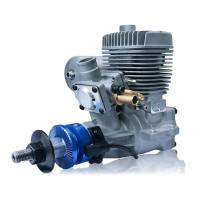
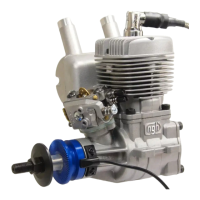
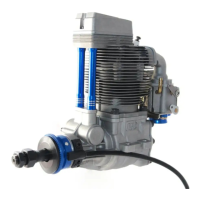
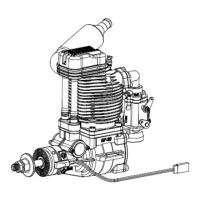
The NGH GT17-Pro 2-Stroke RC Gasoline Engine is a precision-engineered power plant designed specifically for use in model radio control airplanes. Developed by NGH engineers, this engine aims to provide hobbyists with a reliable, fuel-efficient, and powerful solution for their fixed-wing aircraft. Its design emphasizes performance and durability, ensuring an enjoyable and safe flying experience when operated correctly.
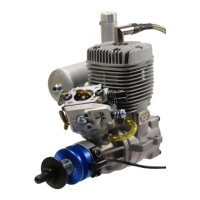
At its core, the GT17-Pro is a two-stroke internal combustion engine that runs on gasoline. It is designed to generate thrust by rotating a propeller, thereby enabling flight for model airplanes. The engine's operation is managed by a carburetor, which mixes fuel and air in precise ratios, and an electronic ignition system that provides the spark necessary for combustion. The NGH 20G-Pro Carburetor is a key component, featuring both high-speed and low-speed needles for fine-tuning the engine's performance across different RPM ranges. An automatic advancing angle ignition system, manufactured by Rcexl, ensures optimal spark timing for efficient combustion and power delivery. This system is designed to be robust and reliable, meeting RoHS and CE certifications. The engine is intended to be mounted on an RC airplane, with the propeller securely attached to the engine shaft, and connected to a fuel tank, electronic ignition, and radio control equipment for operation.
Operating the GT17-Pro requires careful attention to safety and proper setup. Before starting, users must ensure the engine is securely installed on the RC airplane and the propeller is locked in place. The carburetor's initial settings are crucial for a smooth start and optimal performance. The high-speed needle should be set to 1.75 turns from a fully closed position, while the low-speed needle is set according to factory specifications. The air inlet for idling should be positioned as shown in the manual's "View 2" diagram.
To start the engine, the electronic igniter should initially be powered off. The carburetor inlet port must be fully closed. A motor starter is then used to rapidly rotate the propeller, drawing fuel from the tank into the carburetor. It's important not to over-prime the engine, as this can flood the spark plug and make starting difficult. Once fuel is drawn in, the carburetor throttle air inlet is opened, the electronic igniter is powered on, and the motor starter is used again to ignite the engine. After the engine starts, the carburetor can be adjusted to fine-tune its performance according to the user's specific needs.
A critical aspect of using the GT17-Pro is the break-in process. This initial period of operation is vital for extending the engine's life and ensuring optimal performance. NGH recommends using high-quality synthetic oils with a gasoline-to-oil mixing ratio of 25:1. For the break-in, smaller size propellers are suggested for the first approximately 10 flights. The break-in procedure involves a sequence of medium-speed (no more than 4000rpm) and high-speed (7000 rpm) running intervals. Specifically, after starting, the engine should run at medium speed for 15 minutes, followed by high speed for 3 minutes, then medium speed for 5 minutes, and high speed for another 3 minutes. This cycle should be reciprocated 3-5 times for a complete break-in. Adhering to this process carefully will significantly increase the engine's lifespan. Only after a complete break-in should larger load propellers be used.
Proper engine cooling is another essential usage feature. If the engine is installed within an aircraft fairing, adequate airflow must be ensured to prevent overheating. The manual suggests that the outlet area for cooling air should be 3-5 times larger than the entrance area to guarantee sufficient cooling. This prevents performance degradation and potential damage due to excessive heat.
Regular maintenance is key to maximizing the GT17-Pro's lifespan and ensuring consistent performance. To reduce fuel consumption and extend engine life, it's recommended to adjust the engine's highest speed so that it runs at 90% of its maximum output when the throttle is fully open. The fuel supply must be adequate, especially when using larger propellers with significant diameter and screw pitch. Conversely, with smaller loads, the engine speed will be higher, and fuel consumption will be lower.
A crucial maintenance step after each flight is to empty the carburetor. Failing to do so can lead to the aging of the carburetor's rubber components, negatively affecting engine performance. The spark plug also requires regular attention; carbon deposits should be cleaned, and the gap between the electrodes should be maintained between 0.5mm and 0.6mm. If the engine becomes difficult to start, idles unstably, or flames out during high-speed operation, replacing the spark plug is often necessary.
The engine's surface should be cleaned after each use to ensure efficient cooling. The fuel system, including the fuel filter, should be regularly checked to prevent blockages, especially if different brands or types of lubricating oil are mixed. A high-quality fuel filter is recommended. Prolonged low-speed operation can also contribute to carbon deposition on the spark plug, so varying the engine's operating speeds is beneficial. Finally, the fuel system should be routinely inspected to ensure there are no fuel or air leaks, which can impact performance and safety.
The NGH GT17-Pro is designed for durability, and NGH offers a guarantee against performance defects caused by manufacturing processes, materials, or defects. This includes free changes within one year and a guarantee within two years from the purchase date for the original purchaser. However, this guarantee does not cover normal wear, damage due to improper maintenance, damage from over-speed operation (e.g., using small propellers), bearing rust, crashes, use of inappropriate fuel, damage from foreign bodies, damage from unreasonable installation or operating environments, damage from improper disassembly, or any modifications made without company approval. This highlights the importance of adhering to the recommended usage and maintenance guidelines to ensure the engine remains in optimal condition and falls within the scope of the guarantee.
 General
| Spark Plug | CM6 |
|---|---|
| Cylinder | Single |
| Ignition | Electronic Ignition |
| Operating Voltage | 4.8-8.4V |
| RPM Range | 2000 RPM |
| Fuel Type | Gasoline/Oil Mix |

 To Next Page