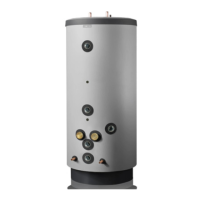
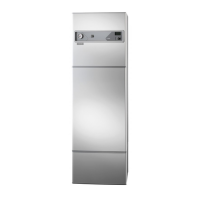
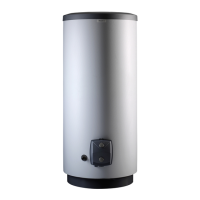
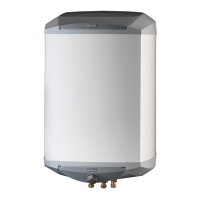
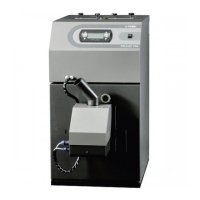
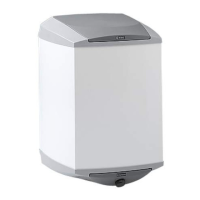
The NIBE VPA 300/200 and VPA 450/300 are unvented water heaters designed for use with ground source or air source heat pump units. They are intended for both central heating and domestic hot water production.
Function Description:
These units serve as unvented water heaters, integrating with heat pump systems to provide efficient central heating and tap water. The VPA models are designed to accommodate the expansion of water resulting from heating within the unit, utilizing an expansion vessel connected between the expansion valve and the cylinder. The system includes a primary circuit (double-jacketed space) for heat transfer from the heat pump and a secondary circuit for domestic hot water. The units can be supplemented with one or two immersion heaters for additional heating, and hot water sensors can be added for display and control.
Important Technical Specifications:
VPA 300/200:
- Maximum water supply pressure: 16 bar
- Operating pressure, tap water: 5.5 bar
- Expansion vessel, tap water, charge pressure: 3.5 bar
- Pressure reduction valve, setting: 3.5 bar
- Max design pressure: 6 bar
- Volume, water heater: 285 litres
- Volume primary double jacket: 200 litres
- Volume expansion vessel: 25 litres
- Mass, unit, filled with water: 660 kg
- Maximum primary working pressure (primary side): 2.5 bar
- Max operating pressure of T&P-valve: 7 bar
- Set opening pressure expansion valve: 6 bar
- Cut out, temperature limiter: 80 °C
- Heating up time from 15 °C to 60 °C, 25 kW power*: 1 h 27 min
- Volume of water drawn off, above 40 °C: 272 litres
- Heat transfer (60/50 °C at 60 °C hot water temperature)*: 10.4 kW
- Heat content at 50 °C: 13.2 kWh
- Heat loss: 3.7 kWh/24 h
- Max temperature, heating fluid: 65 °C
- Max operating temperature T&P-valve: 95 °C
- Maximum power supply: 25 kW
- Discharge capacity of T&P-valve: 25 kW
- Corrosion protection: Copper
- Dimensions: Height 1695 mm, Diameter 757 mm. Cold water inlet and hot water outlet are Ø28 mm Cu-pipe. Pocket tube is Ø15 mm Cu-pipe.
VPA 450/300:
- Maximum water supply pressure: 16 bar
- Operating pressure, tap water: 5.5 bar
- Expansion vessel, tap water, charge pressure: 3.5 bar
- Pressure reduction valve, setting: 3.5 bar
- Max design pressure: 6 bar
- Volume, water heater: 450 litres
- Volume primary double jacket: 300 litres
- Volume expansion vessel: 25 litres
- Mass, unit, filled with water: 1010 kg
- Maximum primary working pressure (primary side): 2.5 bar
- Max operating pressure of T&P-valve: 7 bar
- Set opening pressure expansion valve: 6 bar
- Cut out, temperature limiter: 80 °C
- Heating up time from 15 °C to 60 °C, 25 kW power*: 2 h 34 min
- Volume of water drawn off, above 40 °C: 407 litres
- Heat transfer (60/50 °C at 60 °C hot water temperature)*: 9.2 kW
- Heat content at 50 °C: 20.9 kWh
- Heat loss: 4.8 kWh/24 h
- Max temperature, heating fluid: 65 °C
- Max operating temperature T&P-valve: 95 °C
- Maximum power supply: 25 kW
- Discharge capacity of T&P-valve: 25 kW
- Corrosion protection: Copper
- Dimensions: Height 1930 mm, Diameter 860 mm. Cold water inlet and hot water outlet are Ø28 mm Cu-pipe. Pocket tube is Ø15 mm Cu-pipe.
*Primary flow to achieve maximum capacity VPA 300/200: 2000 l/h, VPA 450/300: 2800 l/h.
Tested according to standard EN 12897:2006.
Usage Features:
- Installation: The water heater is designed for upright installation only. It must be placed on a firm base, preferably a concrete floor or foundation, capable of bearing its weight. Adjustable feet allow for horizontal and stable setup. The installation area should maintain a temperature between 10 °C and 30 °C to prevent frost damage.
- Pipe Connections: Installation must comply with current norms. Essential valves include a safety valve, shut-off valve, non-return valve, and vacuum valve. An overflow pipe from the safety valve must be routed to a suitable drain, ensuring it is frost-proof and visible. Discharge pipes from tundishes require a vertical section of at least 300 mm before any elbows or bends.
- Electrical Connections: Electrical installation and servicing must be performed by a qualified electrician in accordance with current regulations.
- Immersion Heaters: The VPA can be fitted with one or two immersion heaters (G2" connection, max length 650 mm). The temperature limiter (161) and shut-off valve (162) for these heaters connect to 230V.
- Sensors: A hot water sensor can be added for display and control, positioned in the dedicated pocket tube. Sensors provided with the heat pump/control module should be used; otherwise, they must be ordered from the manufacturer.
- Filling the Water Heater: Fill by opening a hot water tap in the system, then fully opening the cut-off valve on the incoming cold water. Once only water flows from the hot water tap (no air-water mixture), the tap can be shut off.
- Filling the Heating System: Connect necessary valves between the cold water pipe and the heating system. Open the filling valve to fill the primary part of the VPA. Monitor the pressure gauge; once the set pressure is reached, air and water will emerge from the pressure relief valve. Turn the pressure relief valve until the boiler pressure is within the normal working range (0.5 - 1.5 bar). Vent the double-jacketed space by opening the air nipple (6) (300/200 model). Continue topping up and venting until all air is removed and the pressure is correct.
- Hard Water Areas: The operating temperature of 50-60 °C generally prevents issues in hard water areas.
- Cleaning the System: After filling, operate the VPA at maximum normal temperature for at least one hour, then drain and refill the system.
Maintenance Features:
- General Inspection: Regularly check the condition of the casing, electrical connections, and pipe connections. Correct any faults immediately.
- Hot Water Heater Inspection: Check the expansion relief valve, T&P valve, discharge pipe, and expansion vessel. Correct any faults.
- Safety Valves: Regularly check the function of the safety valves by turning the knob anti-clockwise to ensure water flows through the valve. Release the knob to close it; if it doesn't close automatically, turn it slightly anti-clockwise.
- Servicing: Any servicing must be carried out by a competent person. Contact the main supplier for service, providing the manufacturing number and installation date.
- Emptying Water Heater: Empty through the siphon in the cold water connection (1). Open a hot water tap and loosen a pipe coupling on the hot water side to allow air in.
- Emptying Heating System: Empty the double-jacketed space through the siphon on the docking connection (5). Open the air nipple (6) to supply air.
- Cleaning: Inspect and clean the water heater using an endoscope. The hot water connection (2) must be removed for access.
- Warranty: Completion of the Service Interval Record section of the Benchmark Checklist is a condition of warranty. Full terms and conditions are available on the NIBE website.
- Safety Warnings: Users are warned not to remove or adjust any component part of the unvented water heater and to contact the installer for faults, such as hot water flow from the discharge pipe. Installers are warned to use only manufacturer-recommended replacement parts and to ensure thermal cut-outs are installed if immersion heaters are present. The installation is subject to building regulation approval, and the local Authority must be notified.

 Need help?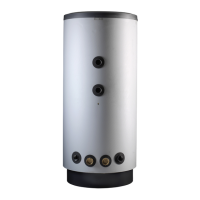

 To Next Page
 General