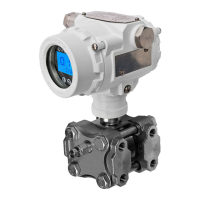
The OleumTech® OTC Wireless Hydrogen Sulfide (H2S) Transmitter is a self-contained, battery-powered device designed for continuous air quality monitoring and alarm generation when H2S concentration levels exceed user-configured setpoints. It is part of the OleumTech® OTC Wireless Sensor and I/O Network, providing a reliable, scalable, and safe solution for industrial control and monitoring applications.
Function Description:
The transmitter integrates an individually calibrated modular H2S sensor, which can be easily and quickly replaced. It offers two configurable alarm setpoints (high and high-high) and, with the WT-H2S-A option, provides two solid-state relay outputs for third-party alarm annunciation. The device includes helpful sensor maintenance tags such as bump test count, total days since last successful bump test, and calibration. A local user interface with an LCD display and external scroll button allows for device configuration, instant data access, bump tests, and alarm acknowledgments. The wireless transmitters communicate with an assigned wireless gateway, forming a highly scalable network. They are Intrinsically Safe and certified for use in Class I, Division 1 (Zone 0) hazardous locations. The transmitters offer separate controllable transmit intervals for normal and alarm states, with event-triggered transmissions for alarm state changes. Alarm states are latchable.
Important Technical Specifications:
- H2S Measurement Range: 0 to 100 ppm (Maximum Overload: 200 ppm)
- Resolution: 0.1 ppm
- Response Time (T90): < 45 Seconds
- Temperature Range:
- Operating: -40 °C to 50 °C (-40 °F to 122 °F)
- Storage (Recommended): 10 °C to 30 °C (50 °F to 86 °F)
- Pressure Range: 1 ± 0.1 atm
- Humidity: 15 to 90% RH Non-Condensing
- Expected Operating Life (Sensor Module): 2 Years
- Calibration: Field calibratable, 2 points (zero and custom: 10-50 ppm in 5 ppm increments)
- Power Source: Self-Contained, Internal 3.6 Vdc Lithium Battery (SX1000-BP3)
- Internal Battery Life: Up to 5.11 Years @ 60 Min Interval, Up to 2.35 Years @ 1 Min Interval (life based on user-defined reporting intervals)
- Wireless Communication:
- Radio Bands: 900 MHz / 915 MHz (FHSS, FSK, AES Encryption 256-bit/128-bit), 2.4 GHz (DSSS, AES Encryption 128-bit), 868 MHz (LBT-AFA, AES Encryption 128-bit)
- Bit Rate: 9600 bps / 115.2 kbps (900/915 MHz), 250 kbps (2.4 GHz), 80 kpbs (868 MHz)
- Output Power (Max): 10 mW (900/915 MHz), 63 mW (2.4 GHz), 25mW (868 MHz)
- Receiving Sensitivity: -110 dBm @ 9600 bps, -100 dBm @ 115.2 kbps (900/915 MHz); -101 dBm @ 250 kbps (2.4 GHz); -106 dBm @ 80 kbps (868 MHz)
- RF Range: Up to 7500 Feet / 1.4 Miles / 2.3 km (900/915 MHz), Up to 1.9 Miles / 3.1 km (2.4 GHz), Up to 1.5 Miles / 2.4 km (868 MHz) with Clear Line of Sight
- Enclosure: Type 4X Aluminum, IP66, rugged design
- Dimensions:
- WT-H2S: 138 mm (W) x 259 mm (H) x 115 mm (D)
- WT-H2S-A: 379 mm (H)
- Weight: 2.7 kg (WT-H2S), 3.4 kg (WT-H2S-A)
- Certifications: FCC Part 15 (USA), IC ICES-003 (Canada), Class I, Division 1, Groups A, B, C, D T3C; Ex ia IIC T3; Class I, Zone 0; AEx ia IIC T3; ATEX Sira 13ATEX2142X; IECEx SIR 13.0054X.
Usage Features:
- Local LCD Display: 32-character (16x2 lines) display with 4 function keys and an external scroll button for viewing PPM level, alarm status, battery voltage, and RF status.
- Push Button Interface: Allows access to the configuration menu by holding F2.
- Sensor Module Replacement: The modular H2S sensor can be easily replaced. The process involves setting the transmitter to "Replace Sensor Mode" via the LCD menu, removing the sensor housing cover, detaching the old module, and attaching a new one.
- Sensor Calibration: Users can calibrate the H2S Sensor Module for zero level and a span from 10 to 50 ppm in 5 ppm increments using the transmitter's LCD user interface. A 600-second (10-minute) window is provided for calibration.
- Bump Test: Performed using the external scroll button and the SX1000-BTK kit. A countdown timer initiates the test, and an "OK" message confirms success when the H2S detection level meets the set minimum bump test level (High-High alarm limit).
- Alarm Relay Outputs (WT-H2S-A only): Two solid-state relay outputs for Alarm 1 (high level) and Alarm 2 (high-high level), intended to trigger external alarm annunciation controllers.
- RF Security: Supports AES encryption (256-bit for 900 MHz, 128-bit for 868 MHz, 915 MHz, and 2.4 GHz) and Site Authentication to prevent crosstalk and enhance security.
- Firmware Updates: Firmware can be upgraded via the OleumTech Firmware Update Utility, connecting the transmitter to a PC using the SX1000-CC2 cable.
- Software Configuration (BreeZ® Software): Allows for project file creation, RF settings configuration (frequency, channel, group), gateway setup, and transmitter parameter configuration (transmit interval, alarm limits, latch alarms).
- Modbus Polling: The BreeZ Software can poll the wireless gateway's Modbus holding registers to view the transmitter's process data for troubleshooting and diagnostic purposes.
Maintenance Features:
- Battery Monitoring: Monitor battery power level and replace the Battery Pack (SX1000-BP3) when it reaches ≤ 2.90 Vdc.
- Sensor Module Life: Sensor module cartridges are guaranteed for up to 2 years from the installation date and cannot be recalibrated; they should be replaced.
- Cleaning: To prevent static discharge, wipe the outer casing with a damp cloth only.
- Sensor Port: Ensure the H2S sensor opening is not obstructed by any debris.
- Grounding: Effective earth grounding is crucial for safety, static electricity prevention, and protection from lightning/electrical surges. Grounding screw connections are located on the outside of the housing.
- Housing Integrity: All housing entries and covers MUST be tightly sealed and fastened to protect against moisture and external environmental elements. Check O-rings for damage or wear and lubricate if dry.
- Troubleshooting: The manual provides a comprehensive troubleshooting guide for symptoms related to battery/power, radio/antenna communication, hardware connection, configuration, and measurement issues.

 Need help?
 General

 To Next Page