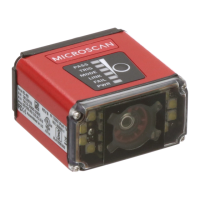
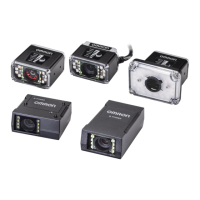
The LVS® 95XX is a series of barcode verifiers manufactured by Omron Microscan, designed to ensure the quality and compliance of barcodes with various industry standards. This device is crucial for businesses that rely on accurate barcode scanning for inventory, logistics, and product tracking, as it helps prevent costly errors and rejections due to unreadable or non-compliant barcodes.
Function Description
The LVS® 95XX verifiers are designed to analyze and grade 1D and 2D barcodes according to ISO/IEC 15416, ISO/IEC 15415, and GS1 standards, among others. The primary function is to capture an image of a barcode and then perform a detailed analysis of its various parameters, such as symbol contrast, modulation, decodability, minimum reflectance, and quiet zone. This analysis results in a grade (typically A, B, C, D, or F) that indicates the barcode's quality and its likelihood of being successfully read by scanners.
The device supports a wide range of barcode symbologies, including EAN/UPC, GS1-128, Data Matrix, and QR Code, making it versatile for diverse applications. It can verify barcodes on various surfaces and materials, including labels, packaging, and direct part marks (DPM). The LVS® 95XX software provides a comprehensive interface for users to configure verification settings, view detailed reports, and manage calibration data.
Key functionalities include:
- Barcode Grading: Assigns a quality grade to barcodes based on international standards.
- Parameter Analysis: Breaks down the barcode quality into individual parameters, allowing users to identify specific issues.
- Reporting: Generates detailed reports that can be saved, printed, or exported, providing documentation of barcode quality.
- Calibration: Utilizes calibrated conformance standard test cards (EAN/UPC, GS1-128, Data Matrix) to ensure accurate and traceable measurements.
- Software Integration: The LVS-95XX software runs on a Windows PC, providing a user-friendly graphical interface for operation and data management.
- User Permissions: Features a robust user management system with different access levels (e.g., administrator, operator) to control system settings and prevent unauthorized changes.
Important Technical Specifications
While specific models within the LVS® 95XX series may have variations, common technical aspects include:
- Connectivity: Typically connects to a host PC via USB, ensuring reliable data transfer.
- Software: Operates with dedicated LVS-95XX software, which is regularly updated to support new standards and features. The software requires a specific version (e.g., 4.3 and later) for optimal performance.
- Database: Utilizes a database (e.g., LVS-95XX.MDB file) to store configuration settings, calibration data, and historical reports.
- Lighting Options: Offers various lighting options (e.g., 30-degree angle lighting) to accommodate different barcode types and surfaces, particularly important for DPM verification.
- Calibration Standards: Adheres to ISO/IEC 15415/15416 standards for calibration, ensuring the accuracy and traceability of verification results.
- Hardware Components: Consists of a camera system for image capture, a light tray for illumination, and a processing unit (often the connected PC) for analysis.
- Error Messaging: The system provides detailed error messages (e.g., "The machine is not authorized to perform this function," "Required not found") to guide users in troubleshooting and resolving issues.
Usage Features
The LVS® 95XX is designed for ease of use while providing comprehensive control over the verification process.
- Setup and Configuration: The "Setup" tab in the software allows users to configure application standards, grading modes (e.g., Auto-sector, Full-sector), and other operational parameters.
- User Accounts: The system supports multiple user accounts with varying permissions, allowing administrators to restrict access to critical settings. This is particularly important in multi-user environments to maintain data integrity and compliance.
- Calibration Process: The calibration process involves using specific calibration cards (EAN/UPC, GS1-128, Data Matrix) to ensure the verifier's accuracy. The software guides the user through selecting the appropriate "Master Grade" code and positioning the card correctly.
- Image Import/Export: Users can import images from files or export verification reports, facilitating data sharing and record-keeping.
- Troubleshooting Guides: The manual provides extensive troubleshooting steps for common issues, such as software installation errors, hardware connection problems, and error messages during verification.
- Regional Support: Omron Microscan emphasizes the importance of contacting local distributors or technical support for assistance, especially for complex issues or regional-specific requirements.
- Language Support: The software can display information in multiple languages, including English and Chinese, enhancing usability for a global audience. However, issues with double-byte characters in the Reference fields may occur, requiring specific system configurations.
- LVS-9510 Specifics: For the LVS-9510 model, specific considerations apply to grading high-gloss labels. The device is designed to achieve better scores with the lid off, as bright overhead lights can impact grading. The lid itself serves as a neutral background, and the red felt cover on the bottom side of the lid serves as a neutral background against the 660 red light.
Maintenance Features
Proper maintenance is essential to ensure the longevity and accuracy of the LVS® 95XX verifier.
- Software Updates: Regularly updating the LVS-95XX software is crucial for maintaining compatibility with new operating systems, addressing bugs, and incorporating new features or compliance standards.
- Calibration: Periodic calibration using certified test cards is a critical maintenance task. The manual specifies that calibration cards should be replaced after two years of usage to ensure accurate measurements. Storing calibration cards in their original packaging, protected from exposure to light, dust, and other contaminants, is recommended.
- Cleaning: Keeping the light tray and camera clean is important to prevent dust or debris from affecting image capture and verification accuracy.
- Database Management: Regularly backing up the LVS-95XX.MDB file is recommended to prevent data loss. If the database becomes too large, it may need to be compressed or rebuilt.
- Hardware Checks: Users are advised to perform basic hardware checks, such as verifying USB connections and ensuring the light tray is functioning correctly.
- Technical Support: For complex issues or hardware malfunctions, contacting Omron Microscan technical support or an authorized distributor is the recommended course of action. They can provide guidance on repairs, part replacements, or advanced troubleshooting.
- Installation Media: Keeping the installation media (installation flash drive) readily available is important for reinstalling the software or performing factory calibration if needed.
- Password Management: Regularly changing administrator passwords and ensuring secure access to the system helps maintain the integrity of the verification process.

 Need help?
 General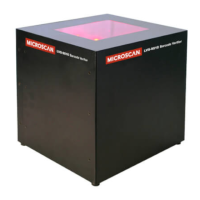

 To Next Page