Sheet No.
Issue Date: August 16, 2012, Rev. A
© 2012
3 of 3
Parts List & Operating Instructions Form No. 565786
1. Connect the shop air supply to the jack. (Shop air should be clean, dry, and regulated at 85–142 psi.)
2. Turn the release knob completely counterclockwise, and place the control rod in Position A.
3. Position the jack under the vehicle using the manufacturer’s recommended lifting points on the chassis.
The jack must be free to roll without any obstructions while lifting or lowering the vehicle. The wheels of
the vehicle must be in the straight-ahead position, with the emergency brake released.
4. Turn the release knob on the jack completely clockwise. Operate the air valve, pump the jack handle, or
pump the foot pedal until the saddle touches the vehicle. Check the placement of the saddle lugs. Finish
lifting the vehicle.
5. Place approved safety stands under the vehicle at points that will provide stable support. Before working on
the vehicle, SLOWLY lower the vehicle onto the safety stands by turning the release knob counterclockwise.
Preventive Maintenance
IMPORTANT: Dirt is the greatest single cause of failure in hydraulic units. Keep the service jack clean
and well lubricated to prevent foreign matter from entering the system. If the jack has been exposed
to rain, snow, sand, or grit, it must be cleaned before it
is used.
1. Store the jack in a well-protected area where it will not be
exposed to corrosive vapors, abrasive dust, or any other
harmful elements.
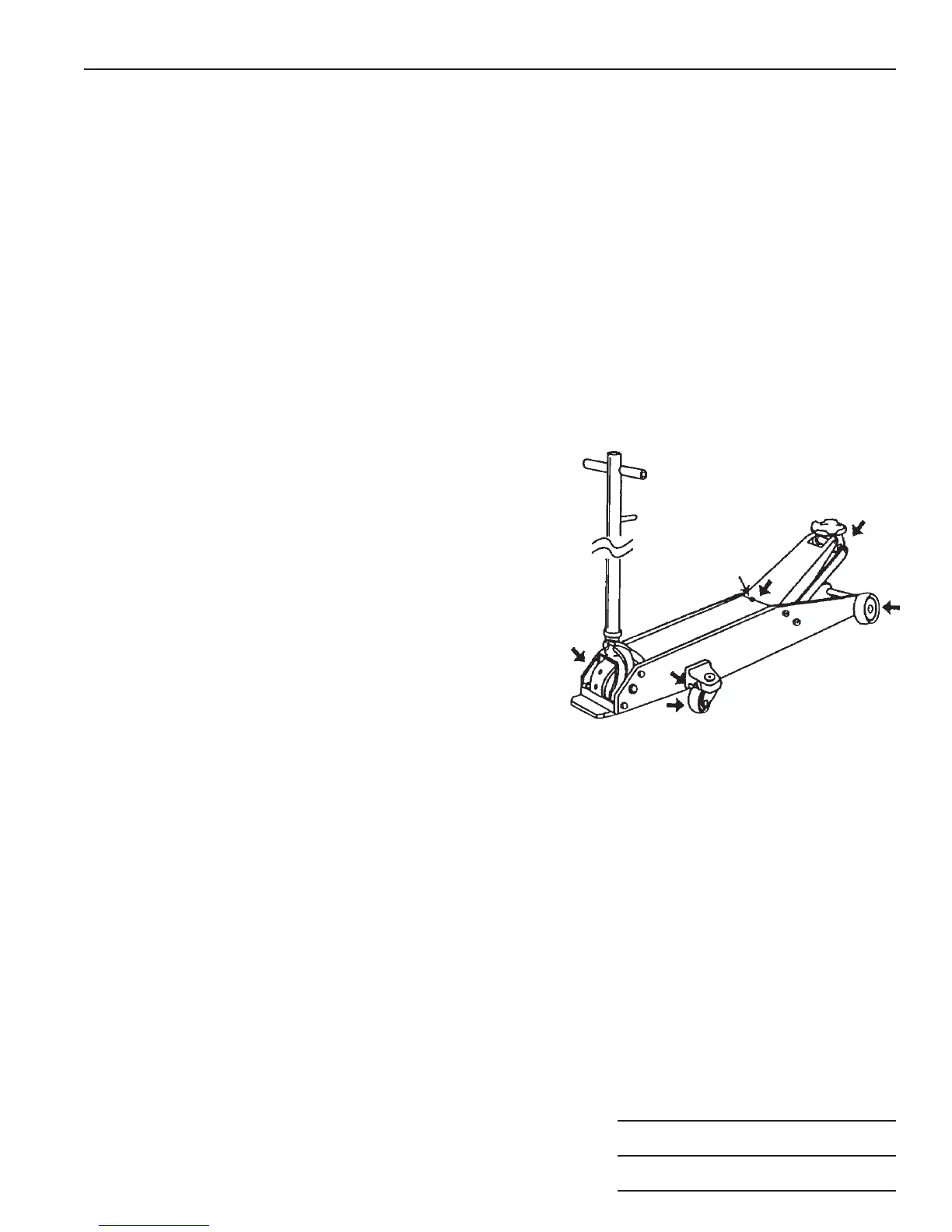
2. Refer to Figure 3, and regularly (at least once per month)
lubricate the moving parts shown.
3. Add grease to upper arm grease nipple (shown) every
three months.
4. If necessary, add approved anti-wear hydraulic jack oil.
IMPORTANT: The use of alcohol, hydraulic brake uid,
detergent motor oil, or transmission oil could damage the
seals and result in jack failure.
5. Inspect the jack before each use. Take corrective action if
any of the following problems are found:
• cracked or damaged housing
• excessive wear, bending, or other damage
• leakinghydraulicuid
• scored or damaged piston rod
• malfunctioning swivel heads or adjusting screws
• loose hardware
• modiedoralteredequipment
Grease Nipple
Figure 3


 To Next Page
 Loading...