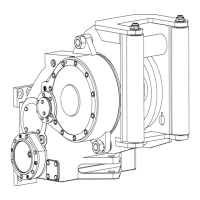
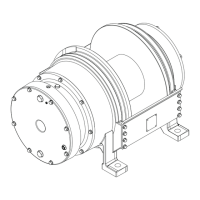
The PACCAR Winch Model H50VS is a hydraulic winch designed for heavy-duty applications, offering robust performance and a range of features for efficient and safe operation. Its primary function is to provide controlled pulling and lifting capabilities, driven by a dedicated hydraulic pump on the tractor. The winch utilizes a unique "Drive-Away" mode, allowing the operator to drive the tractor away from the winch while maintaining control over the winch drum, which is particularly useful for applications requiring precise load management.
Function Description:
The H50VS winch operates by converting hydraulic power from the tractor's hydraulic system into mechanical pulling force. A dedicated piston pump, typically installed on the tractor's transmission or power take-off, supplies hydraulic fluid to the winch. The winch's control system, including a winch control valve and a drive-away valve, regulates the flow of hydraulic fluid to the hydraulic motor, which in turn drives the drum shaft through a series of reduction gears. This design allows for both "Reel-In" and "Reel-Out" operations, providing controlled movement of the wire rope.
A key feature is the "Drive-Away" mode, which allows the operator to drive the tractor away from the winch without losing control of the winch drum. This is achieved by maintaining hydraulic pressure on the multi-disc brake, effectively holding the load secure while the tractor moves. The control system also incorporates a "Brake-On" (neutral) position, ensuring the load is held securely when the winch is not actively operating.
The winch is equipped with a freespool mechanism, which allows the drum to rotate freely when disengaged, facilitating quick deployment of the wire rope. The freespool group, including a clutch and brake, is hydraulically released and spring-engaged, providing a reliable and controlled freespool function.
Important Technical Specifications:
- Hydraulic Motor: The winch is powered by a variable displacement, piston-type hydraulic motor, which allows for precise control over speed and load.
- Maximum Winch Operating Temperature: The manual specifies a maximum winch operating temperature, which is crucial for selecting the appropriate hydraulic oil.
- Oil Viscosity: Recommended oil viscosities vary with ambient temperature:
- 15,000 SUS maximum at cold start-up (requires extended warm-up).
- 3,000 SUS maximum at cold start-up (requires normal warm-up).
- 60 SUS minimum at maximum winch operating temperature (ambient plus 80 °F / 27 °C).
- Gear Weights:
- 1st reduction gear (605): 38 lbs (17.2 kg)
- 2nd reduction gear (606): 22 lbs (10 kg)
- Bull gear (601) and shaft (202): approximately 125 lbs (57 kg)
- Winch drum (201): approximately 240 lbs (109 kg)
- Cartridge assembly: 122 lbs (55 kg)
- Torque: The drum locknut (205) should be torqued to 35 ± 5 lbf-ft (47 ± 7 N-m).
- Pressure:
- Freespool clutch release: 250 psi (1,724 kPa)
- Winch control valve relief pressure: 2000 psi (13,790 kPa) for "Reel-In" and "Reel-Out"
- Brake release port: 87-261 psi (600-1800 kPa)
- Wire Rope: The manual emphasizes the use of wire rope with a minimum of five (5) wraps of cable remaining on the drum barrel to achieve full rated load. Using larger diameter cable may increase strength but also increase vulnerability to bending fatigue failure.
- Spiral Ferrules: The winch is designed for use with six (6) strand, IWRC (Independent Wire Rope Core) type wire rope and re-usable, field-installable spiral ferrules.
Usage Features:
- Control: The winch is typically controlled via a joystick, providing intuitive operation for "Reel-In," "Reel-Out," and "Brake-On" (neutral) functions.
- Safety: The manual highlights numerous safety precautions, including the importance of reading the manual, wearing appropriate PPE (leather gloves), maintaining a safe distance from the wire rope, and ensuring proper load handling. The "Drive-Away" mode enhances safety by allowing the tractor to move while the load is secured.
- Wire Rope Installation: Detailed instructions are provided for installing wire rope and spiral ferrules, emphasizing the importance of maintaining a minimum number of wraps on the drum barrel for safety and optimal performance.
- Warm-Up Procedure: A specific warm-up procedure is outlined for cold weather operation to ensure proper hydraulic system and brake operation, especially when ambient temperatures are below +40°F (5°C). This prevents erratic clutch and brake operation, which could lead to property damage, injury, or death.
Maintenance Features:
- Preventative Maintenance Schedule: The manual outlines a comprehensive preventative maintenance schedule, including regular oil changes, inspections, and lubrication.
- Oil Recommendations: Specific oil recommendations are provided based on prevailing ambient temperatures, including HTF Type C3/C4 SAE 30, CAT TO4 SAE30, CAT TO4 SAE 10W30, HTF Type C4/C4 SAE 10, CAT TO4 SAE 10W, and CAT TO4 SAE 5W20 spc. The oil must possess high temperature oxidation stability, rust and corrosion protection, good dispersant and detergent characteristics, anti-wear additives, and be compatible with nitrile base seals.
- Oil Level Check: The oil level should be checked every 250 hours or monthly, with the winch positioned on a flat, level surface and the drum level.
- Greasing: Grease fittings are located on the side of the winch case and require NLGI #2 EP (extreme pressure) grease with a Lithium complex base.
- Hydraulic Filter: The hydraulic oil filter should be replaced at the same interval as the tractor hydraulic oil filters.
- Vent Plug: The vent plug, located in the left-hand gear cover, should be removed and cleaned when the oil is changed.
- Mounting Fasteners: All winch mounting fasteners should be checked and tightened after the first 100-250 hours of operation, and then every 1800 operating hours or six (6) months.
- Inspection: A thorough inspection of all wear items and components is recommended every 10,000 hours or four (4) years, requiring disassembly of the winch.
- Service Precautions: The manual emphasizes the importance of cleanliness, using genuine factory replacement parts, inspecting machined surfaces, lubricating O-rings and oil seals, using sealing compound on fasteners, and thoroughly cleaning all parts during service.
- Troubleshooting Guide: A detailed troubleshooting guide is provided to help identify and remedy common issues, such as oil leaks, brake malfunctions, and problems with the freespool system.
- Disassembly and Assembly Procedures: Step-by-step instructions with illustrations are provided for disassembling and assembling various winch components, including the hydraulic motor group, freespool group, lower reduction gear, drum and bull gear, cartridge assembly, pinion carrier, planet carrier, and brake cylinder. These procedures include warnings about component weights and the need for proper lifting equipment.

 Need help?
 General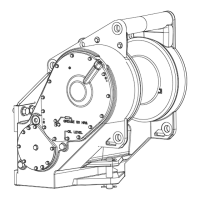

 To Next Page