4 START UP & ROUTINE
CHECKS
4.1 START UP
Before starting the pump for the first time or after
servicing or maintenance work, check the
following - failure to do so could damage
equipment or cause injury to personnel.
• Pump and pipes are clear of welding flash
or other debris.
• All pump head and mounting bolts are
tight.
• All pipe connections are secure
• All guards, safety and protection devices,
are in place and effective.
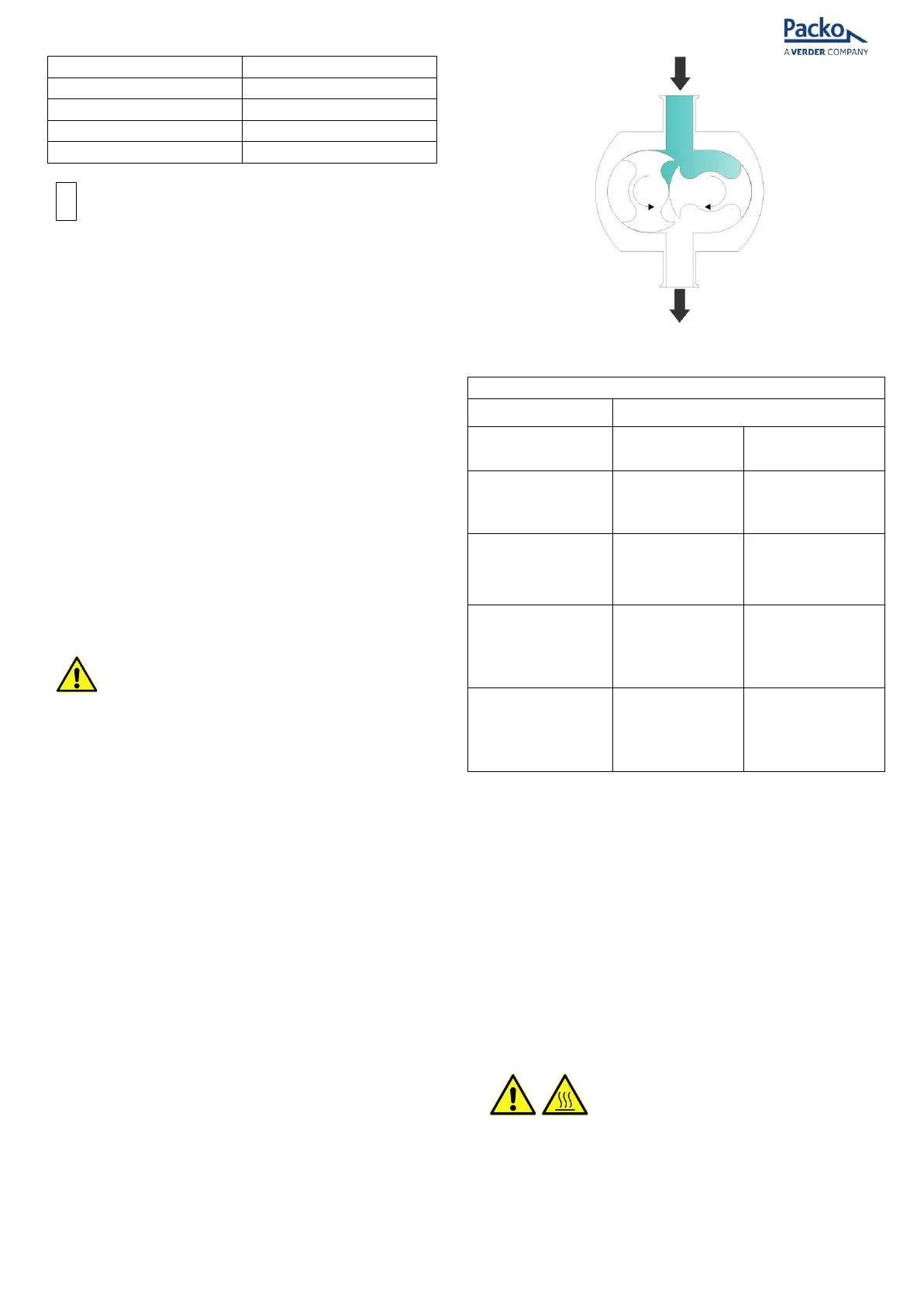
• Check the motor is wired for the correct
direction of rotation (Figure 16 and Table
3 - Direction of flow)
• Flushing fluid, if required, is flowing.
(See 3.11 SEALS AND FLUSHING )
ATTENTION
Do not use HP or LH pumps to flush the system
the first time. Flush the whole system with
suitable cleaning agents before starting the pump,
using another more suitable pump if necessary.
Be aware that heavy or metal debris tends to
collect at the lowest point in the system.
• All valves are open - NEVER run the
pump against a closed valve.
• Pipes and pump head, if heated, are to
normal operating temperature.
• Pump is correctly lubricated.
(See 3.14 LUBRICATION)
Figure 16 - Direction of rotation - viewed from pump
head (Principle applies to all mounting orientations)
Table 3 - Direction of flow
When possible, start the pump slowly and
increase speed gradually.
• Listen for unexpected noises.
• Check for leaks.
• Check that the pump gives the desired
flow rate, using the pumped media at
normal operating speed.
• Do not continue to run the pump if the
fluid is not flowing; dry running can
damage seals.
(See 3.11 SEALS AND FLUSHING)
ATTENTION
• Observe the pump during the first few
hours of operation - check for noises and
excessive heating of pump, e.g. if above
80°C (176°F), unless pumping hot liquids



 To Next Page