EasyManua.ls Logo

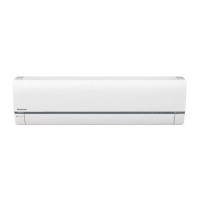
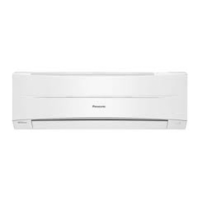
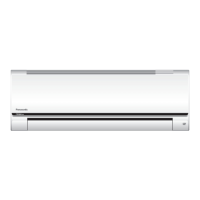
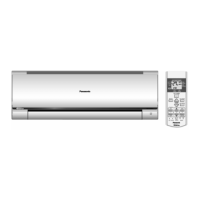
Panasonic CS-PS24NKV - User Manual

Panasonic CS-PS24NKV
108 pages
Print Icon
To Next Page IconTo Next Page
Loading...
© Panasonic Appliances Air-Conditioning (M) Sdn. Bhd. 2012.
Unauthorized copying and distribution is a violation of law.
Order No: PHAAM1201103C3
Indoor Unit Outdoor Unit
CS-PS9NKV
CS-PS12NKV
CS-PS18NKV
CS-PS24NKV
CU-PS9NKV
CU-PS12NKV
CU-PS18NKV
CU-PS24NKV
WARNING
This service information is designed for experienced repair technicians only and is not designed for use by the general public.
It does not contain warnings or cautions to advise non-technical individuals of potential dangers in attempting to service a product.
Products powered by electricity should be serviced or repaired only by experienced professional technicians. Any attempt to
service or repair the products dealt with in this service information by anyone else could result in serious injury or death.
PRECAUTION OF LOW TEMPERATURE
In order to avoid frostbit, be assured of no refrigerant leakage during the installation or repairing of refrigerant circuit.

Table of Contents

Questions and Answers

  • J
    Judy RoseSep 7, 2025
    What causes IPM overheating in Panasonic Air Conditioner?
    • D
      Daniel SmithSep 7, 2025
      IPM overheating in Panasonic Air Conditioner can be caused by IPM overheats due to short circuit of hot discharge air flow - inspect airflow paths and resolve blockages. It can also be caused by IPM overheats due to defective of outdoor fan motor - check and repair or replace fan motor; IPM overheats due to defective of internal circuitry of IPM - inspect and repair or replace the internal circuitry; IPM overheats due to defective IPM temperature sensor - replace the faulty temperature sensor.
  • T
    Tanya BlairAug 22, 2025
    Why is my Panasonic CS-PS24NKV's refrigeration cycle abnormal?
    • K
      Kevin OdomAug 22, 2025
      An abnormal refrigeration cycle in your Panasonic Air Conditioner can be caused by several factors: a refrigerant shortage due to leakage (inspect for leaks and recharge the refrigerant), poor compressor performance (check, repair, or replace the compressor), a closed 2/3 way valve (ensure the valve is open), or faulty indoor intake air or indoor pipe temperature sensors (replace faulty temperature sensors).
  • A
    Amanda GarciaSep 4, 2025
    What triggers the power factor correction protection in my Panasonic Air Conditioner?
    • S
      Stanley MillerSep 5, 2025
      The power factor correction protection in your Panasonic Air Conditioner can be triggered by a DC voltage peak due to a power supply surge (investigate power supply issues), a DC voltage peak due to non-uniform compressor windings (check and ensure uniform windings), or a faulty outdoor PCB (check and replace the outdoor PCB).
  • A
    Anne MuellerSep 3, 2025
    Why is there a capacity rank mismatch between indoor and outdoor units on my Panasonic CS-PS24NKV Air Conditioner?
    • T
      Timothy WrightSep 3, 2025
      A capacity rank mismatch between the indoor and outdoor units of your Panasonic Air Conditioner can occur if wrong models are interconnected (confirm correct model compatibility), wrong indoor or outdoor unit PCBs are mounted (ensure correct PCBs are installed), indoor or outdoor unit PCBs are defective (check and replace defective PCBs), there's a signal transmission error due to wrong wiring (verify and correct wiring connections), or a signal transmission error due to broken wires (inspect and repair broken wires).
  • S
    Sandra RogersSep 2, 2025
    What does output over current detection mean on a Panasonic CS-PS24NKV Air Conditioner?
    • L
      Lisa GonzalesSep 2, 2025
      Output over current detection on your Panasonic Air Conditioner suggests a DC peak due to compressor failure (inspect and repair or replace the compressor), a DC peak due to defective power transistor(s) (check and replace the power transistors), or a DC peak due to a defective outdoor unit PCB (check and replace the outdoor PCB).
  • A
    Angela RhodesAug 31, 2025
    How to fix abnormal communication between indoor and outdoor units on a Panasonic CS-PS24NKV Air Conditioner?
    • C
      christopher12Sep 1, 2025
      Abnormal communication between the indoor and outdoor units of your Panasonic Air Conditioner could be due to a faulty indoor unit PCB (check and replace indoor unit PCB), a faulty outdoor unit PCB (check and replace outdoor unit PCB), a signal transmission error due to wrong wiring (verify and correct wiring connections), a signal transmission error due to broken wires (inspect and repair broken wires), or a signal transmission error due to a disturbed power supply waveform (investigate power supply issues).
  • J
    Jessica YoderAug 30, 2025
    What causes cooling high pressure abnormality in Panasonic CS-PS24NKV?
    • P
      Patrick ColemanAug 30, 2025
      Cooling high pressure abnormality in Panasonic Air Conditioner can be caused by outdoor pipe temperature rise due to short circuit of hot discharge air flow - inspect airflow paths and external obstructions. It can also be caused by outdoor pipe temperature rise due to defective of outdoor fan motor - check and repair or replace fan motor; outdoor pipe temperature rise due to defective outdoor pipe temperature sensor - replace the faulty temperature sensor; outdoor pipe temperature rise due to defective outdoor unit PCB - check and replace the outdoor PCB.
  • G
    gsotoAug 29, 2025
    What causes input over current detection in my Panasonic Air Conditioner?
    • J
      Joshua TorresAug 29, 2025
      Input over current detection in your Panasonic Air Conditioner can be due to several reasons: over-current caused by compressor failure (inspect and repair or replace the compressor), a defective outdoor unit PCB (check and replace the outdoor PCB), a defective inverter main circuit electrolytic capacitor (inspect and replace defective capacitors), or excessive refrigerant (check for proper refrigerant levels).
  • S
    Sarah BakerAug 27, 2025
    What causes refrigeration cycle abnormality in Panasonic CS-PS24NKV Air Conditioner?
    • H
      hreynoldsAug 28, 2025
      Refrigeration cycle abnormality in Panasonic Air Conditioner can be caused by refrigerant shortage (refrigerant leakage) - inspect for leaks and recharge refrigerant. It can also be caused by poor compression performance of compressor - check and repair or replace the compressor; 2/3 way valve closed - ensure valve is open; detection error due to faulty indoor intake air or indoor pipe temperature sensors - replace faulty temperature sensors.
  • A
    Adam BowmanAug 26, 2025
    Why does my Panasonic Air Conditioner activate indoor freeze prevention in cooling or soft dry mode?
    • A
      Amanda MooreAug 27, 2025
      The activation of indoor freeze prevention in cooling or soft dry mode in your Panasonic Air Conditioner can occur due to a clogged air filter in the indoor unit (inspect and clean or replace the air filter), dust accumulation on the indoor unit heat exchanger (clean the heat exchanger), an air short circuit (check and resolve airflow obstructions), a detection error from a faulty indoor pipe temperature sensor (replace the defective temperature sensor), or a detection error from a faulty indoor unit PCB (check and replace the primary PCB).

Summary

Safety Precautions

Specification

Location of Controls and Components

3.1 Indoor Unit

Identifies controls and components within the indoor unit, including front panel and air filters.

3.2 Outdoor Unit

Identifies controls and components located on the outdoor unit, showing air inlet and outlet.

3.3 Remote Control

Details the layout and functions of the remote control for operating the air conditioner.

Dimensions

4.1 Indoor Unit

Provides detailed dimensional drawings and specifications for the indoor unit (CS-PS9/12NKV).

4.2 Outdoor Unit

Provides detailed dimensional drawings and specifications for the outdoor unit (CU-PS9/12NKV).

Refrigeration Cycle Diagram

5.1 CS-PS9 NKV CU-PS9 NKV CS-PS12 NKV CU-PS12 NKV

Illustrates the refrigeration cycle for CS-PS9/12NKV and CU-PS9/12NKV models.

5.2 CS-PS18 NKV CU-PS18 NKV CS-PS24 NKV CU-PS24 NKV

Illustrates the refrigeration cycle for CS-PS18/24NKV and CU-PS18/24NKV models.

Block Diagram

6.1 CS-PS9 NKV CU-PS9 NKV

Presents the electrical block diagram for CS-PS9NKV and CU-PS9NKV units.

6.2 CS-PS12 NKV CU-PS12 NKV

Presents the electrical block diagram for CS-PS12NKV and CU-PS12NKV units.

6.3 CS-PS18 NKV CU-PS18 NKV

Presents the electrical block diagram for CS-PS18NKV and CU-PS18NKV units.

6.4 CS-PS24 NKV CU-PS24 NKV

Presents the electrical block diagram for CS-PS24NKV and CU-PS24NKV units.

Wiring Connection Diagram

7.1 Indoor Unit

Illustrates the wiring connections between indoor unit components and power supply.

7.2 Outdoor Unit

Shows the wiring connections for the outdoor unit, including sensors and compressor.

Electronic Circuit Diagram

8.1 Indoor Unit

Depicts the electronic circuit diagram for the indoor unit, showing controller and sensors.

8.2 Outdoor Unit

Presents the electronic circuit diagram for the outdoor unit, including control board and sensors.

Printed Circuit Board

9.1 Indoor Unit

Shows the layout and components of the main printed circuit board for the indoor unit.

9.2 Outdoor Unit

Illustrates the layout and components of the main printed circuit board for the outdoor unit.

Installation Instruction

10.1 Select the Best Location

Guides on choosing the optimal installation site for indoor and outdoor units, considering clearances.

10.2 Indoor Unit

Provides instructions for fixing the installation plate and drilling holes for the indoor unit.

10.3 Outdoor Unit

Details procedures for installing the outdoor unit and connecting the piping.

Operation Control

11.1 Basic Function

Explains the fundamental operation, inverter control, and temperature shifting processes.

11.2 Indoor Fan Motor Operation

Describes manual and auto fan speed settings and feedback control for the indoor fan.

11.3 Outdoor Fan Motor Operation

Explains the operation sequence of the outdoor fan motor relative to the compressor.

11.4 Airflow Direction

Details control of vertical and horizontal airflow directions, including vane angles.

11.5 Timer Control

Explains how to set ON and OFF timers for the air conditioner's operation.

11.6 Random Auto Restart Control

Describes the auto-restart function after power interruption, with random patterns.

11.7 Indication Panel

Explains the meaning of the LED indicators (Power, Timer) on the unit.

Protection Control

12.1 Restart Control (Time Delay Safety Control)

Explains the 3-minute delay for compressor restart after operation stops for safety.

12.2 30 Seconds Forced Operation

Details the compressor's minimum 30-second operation period for oil circulation.

12.3 Total Running Current Control

Describes protection against excessive total running current and compressor shutdown.

12.4 IPM (Power Transistor) Prevention Control

Outlines protection measures for the IPM module against overheating and overcurrent.

12.5 Low Pressure Prevention Control (Gas Leakage Detection)

Details protection against low pressure and potential gas leakage using sensor readings.

12.6 Compressor Tank Temperature Rise Protection Control

Explains protection against compressor tank temperature rise, triggered by specific conditions.

12.7 Low Frequency Protection Control 1

Describes a control for low compressor frequency, adjusting it to prevent issues.

12.8 Low Frequency Protection Control 2

Details a second control for low compressor frequency based on temperature conditions.

12.9 Outdoor Air Temperature Control

Regulates compressor frequency based on outdoor air temperature to optimize performance.

12.10 Cooling Overload Control

Protects against cooling overload by limiting pipe temperature and restricting operation.

12.11 Freeze Prevention Control

Prevents freezing of the indoor heat exchanger by stopping the compressor at low temps.

12.12 Freeze Prevention Control 2

A secondary freeze prevention control that monitors conditions for activation.

12.13 Dew Prevention Control

Prevents dew formation at the indoor unit discharge by adjusting fan speed.

12.14 Odor Cut Control

Aims to reduce odors released from the unit by adjusting fan and compressor operation.

Servicing Mode

13.1 Auto Off;On Button

Explains how to use the Auto OFF/ON button for servicing operations like auto operation and test runs.

13.2 Remote Control Button

Details functions of SET, RESET, and TIMER buttons on the remote for servicing purposes.

Troubleshooting Guide

14.1 Refrigeration Cycle System

Guides diagnosis of malfunctions related to the refrigeration cycle based on pressure and temperature.

14.2 Breakdown Self Diagnosis Function

Explains how to use the unit's self-diagnosis feature to retrieve error codes via the remote.

14.3 Error Code Table

Lists error codes, their abnormality/protection control, judgment, and primary verification locations.

14.4 Troubleshooting Flowchart

Provides step-by-step flowcharts for troubleshooting specific error codes like H11.

Disassembly and Assembly Instructions

15.1 CS-PS9;12 NKV

Instructions for disassembling and assembling the indoor unit for CS-PS9/12NKV models.

15.2 CS-PS18;24 NKV

Instructions for disassembling and assembling the indoor unit for CS-PS18/24NKV models.

Technical Data

16.1 Operation Characteristics

Provides performance data and operating characteristics graphs for various models.

Exploded View and Replacement Parts List

17.1 Indoor Unit

Shows exploded views and lists replacement parts for the indoor unit.

17.2 Outdoor Unit

Provides exploded views and lists replacement parts for the outdoor unit.

Panasonic CS-PS24NKV Specifications

General IconGeneral
BrandPanasonic
ModelCS-PS24NKV
CategoryAir Conditioner
LanguageEnglish

Related product manuals