EasyManua.ls Logo

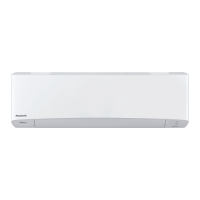
Panasonic CS-RU18YKA - User Manual

Panasonic CS-RU18YKA
40 pages
Print Icon
To Next Page IconTo Next Page
Loading...
English
中文
Operating Instructions
Air Conditioner
Model No.
Indoor Unit Outdoor Unit
CS-RU18YKA
CS-RU24YKA
CU-RU18YKA
CU-RU24YKA
ACXF55-32320
操作說明書
空調器
2-19
在操作空調器前,請細讀此操作說明,並保存此書以備日後參
考。
安裝前,安裝人員應:
閱讀安裝說明,並要求顧客保留此安裝説明以備將來參考。
取出包裝在室内機箱子的遙控器。
如果將本空調器轉讓給新的用戶或送往回收廠,請務必將
本説明書一并交出。
Operating Instructions
Air Conditioner
20-37
Before operating the unit, please read these operating
instructions thoroughly and keep them for future reference.
Before installation, the installer should:
Read the Installation Instructions, then request the customer
keep them for future reference.
Remove the remote control packed with the indoor unit.
If the equipment is transferred to a new user or delivered
to a recycling plant, be sure also to hand over the manual.
Question and Answer IconNeed help?

Do you have a question about the Panasonic CS-RU18YKA and is the answer not in the manual?

Overview

This document is an operating manual for a Panasonic air conditioner, specifically models CS-RU18YKA (indoor unit) / CU-RU18YKA (outdoor unit) and CS-RU24YKA (indoor unit) / CU-RU24YKA (outdoor unit). It provides detailed instructions for operation, safety precautions, maintenance, and troubleshooting.

Function Description

The Panasonic air conditioner is designed to provide efficient cooling and dehumidification for indoor spaces. It features a new built-in Network Adaptor, allowing users to control the unit remotely from anywhere. The unit incorporates nanoe™X and nanoe™-G TECHNOLOGY for air purification, which automatically activates upon startup to remove viruses and bacteria from the surroundings.

Important Technical Specifications

  • Refrigerant Type: R32 (mildly flammable refrigerant). Special precautions are detailed for handling R32, including specific piping, installation, and service tools, and the requirement to replace conventional piping and flare nuts with R32 and R410A compatible parts when replacing an R22 model. The charging port thread diameter for R32 and R410A is 1/2 inch.
  • Temperature Selection Range: 16.0 °C ~ 30.0 °C / 60 °F ~ 86 °F.
  • Recommended Energy Saving Temperature (COOL mode): 26.0 °C ~ 28.0 °C / 79 °F ~ 82 °F.
  • Operating Conditions (COOL mode):
    • Indoor (DBT/WBT): Max 32 (89.6) / 23 (73.4), Min 16 (60.8) / 11 (51.8)
    • Outdoor (DBT/WBT): Max 46 (114.8) / 26 (78.8), Min 16 (60.8) / 11 (51.8)
  • Power Supply: The unit requires proper earthing and should not use modified cords or shared power outlets.
  • Remote Control: Uses AAA or R03 batteries (x2).

Usage Features

  • Operation Modes:
    • AUTO: The unit automatically selects an operation mode based on room temperature. The POWER indicator blinks initially.
    • COOL: Provides efficient comfort cooling.
    • DRY: Operates at low fan speed for gentle cooling/dehumidification.
  • Clock Setting: The remote control allows setting the time in either 12-hour (am/pm) or 24-hour format.
  • Airflow Direction (AIR SWING): Adjustable for upper and lateral directions. The flap should not be adjusted manually. In COOL/DRY mode, the horizontal flap is fixed at the middle position initially and swings up/down automatically once the desired temperature is achieved.
  • Fan Speed (FAN SPEED): Includes AUTO FAN, which adjusts speed automatically based on the operation mode, and QUIET mode for reduced airflow noise.
  • POWERFUL/ECO Modes:
    • POWERFUL: Quickly reaches the desired temperature and automatically stops after 20 minutes.
    • ECO: Reduces power consumption for energy saving without sacrificing comfort.
  • nanoe™X and nanoe™-G TECHNOLOGY: Automatically starts with the unit to provide fresher and cleaner air. It can also be manually turned ON/OFF via the remote control and can operate even when the unit is OFF. If a power failure occurs, this operation resumes immediately upon power restoration.
  • nanoe™X Filter Deactivation: Activates once a day after the unit is turned off (standby mode) based on accumulated operation time. It runs for 2.5 hours in COOL/DRY mode (low fan speed, flap slightly open) or 2 hours in nanoe™ TECHNOLOGY mode (flap open) to remove viruses/bacteria.
  • Sleep Mode: Provides a comfortable sleeping environment by automatically adjusting the temperature and dimming the indoor unit indicator. It can be set with an activation timer (0.5 to 9 hours) and has priority over the OFF timer.
  • Timer Function: Allows setting two different ON/OFF times daily. The nearest timer setting activates in sequence and repeats daily.
  • Auto Restart Control: After a power failure, the unit automatically restarts with the last operation mode and airflow direction. This feature is not applicable when the timer is set.
  • Wireless LAN: The unit has a built-in wireless LAN module for network connectivity, enabling remote control.

Maintenance Features

  • Regular Cleaning: Essential for optimal performance and to prevent "H 99" error codes.
  • Indoor Unit: Wipe gently with a soft, dry cloth. Coils and fans should be cleaned periodically by an authorized dealer.
  • Outdoor Unit: Clean debris around the unit and clear any blockages from the drain pipe.
  • Front Panel: Wash gently and dry. It can be removed by raising it, sliding it to the right, and pulling it out. To close, hold horizontally, match and push in, then close down and press both ends and the center.
  • nanoe™-G Generator: Clean every 2 weeks with a dry cotton bud. Do not touch during operation.
  • Air Filters: Wash/rinse gently with water every 2 weeks. Dry thoroughly in the shade, away from fire or direct sunlight. Replace damaged filters.
  • Seasonal Inspection (after extended non-use): Check batteries, ensure no obstructions around air inlets/outlets, and run in COOL mode for 15 minutes to verify temperature difference.
  • Preparation for Extended Non-Use: Activate nanoe™ TECHNOLOGY mode for 2-3 hours to remove moisture and prevent mold growth. Turn off power, unplug the unit, and remove remote control batteries.

Safety Precautions

The manual emphasizes strict adherence to safety instructions to prevent injury or damage, categorized as WARNING (severe injury/death) and CAUTION (injury/property damage).

  • General Safety: Do not use modified cords, share power outlets, operate with wet hands, or over-bend the power cord. Stop use and disconnect power if abnormalities occur (e.g., frequent ELCB trips, burning smell, abnormal noise, water leakage, hot power cord/plug, uncontrolled fan speed, unit stops unexpectedly, fan continues to run).
  • Indoor/Outdoor Unit: Not for use by persons with reduced capabilities or children without supervision. Consult authorized dealer for cleaning, repair, installation, removal, disassembly, and reinstallation. Use only specified refrigerant type. Do not use means to accelerate defrosting other than recommended. Do not install in explosive/flammable atmospheres. Do not insert fingers/objects into rotating parts. Avoid touching the outdoor unit during lightning. Avoid prolonged exposure to cold airflow. Do not sit or step on the unit. Do not wash with water, benzine, thinner, or scouring powder. Do not use for preserving food, animals, plants, artwork, or other objects. Do not use combustible equipment near airflow outlet. Do not touch sharp aluminum fins. Do not switch ON during floor waxing. Do not install in oily/smoky areas. Do not dismantle for cleaning. Do not step on unstable benches. Do not place vases/water containers on the unit. Ensure proper drainage pipe connection. Aerate room regularly after long use or with combustible equipment. Check installation rack for deterioration.
  • Remote Control: Keep away from infants and small children. Do not use rechargeable (Ni-Cd) batteries. Remove batteries for long periods of non-use. Insert new batteries with correct polarity.
  • R32 Refrigerant Specifics:
    • The appliance is filled with R32 (mildly flammable). Leakage exposed to an ignition source poses a fire risk.
    • Install and operate in a room with floor area larger than Amin (m²) and away from ignition sources.
    • Refrigerant may not have an odor; suitable flammable gas detectors are recommended.
    • Keep ventilation openings clear.
    • Do not pierce or burn the pressurized appliance. Do not expose to heat, flame, sparks, or other ignition sources.
    • Operation, maintenance, repair, and recovery must be performed by trained and certified personnel.
    • Refrigerating circuit parts should not be near heat sources or open flames.
    • Regularly check alarms, mechanical ventilation, and detectors.
    • Maintain a logbook of checks.
    • Ensure no obstructions in occupied space ventilations.
    • Personnel must be instructed on system construction, supervision, operation, maintenance, safety measures, and refrigerant handling.
    • Personnel must have knowledge of flammable refrigerant legislation, handling skills, and continuous training.
    • Piping in occupied spaces must be protected from accidental damage.
    • Ensure no foreign matter (oil, water) enters piping. Seal openings during storage.
    • Prevent excessive vibration/pulsation in piping.
    • Protect devices, piping, and fittings from environmental effects.
    • Design and install long piping runs securely to minimize hydraulic shock.
    • Protect the system from accidental rupture due to moving furniture or reconstruction.
    • Field-made refrigerant joints indoors must be tightness tested (sensitivity of 5g/year or better under 0.25 times max allowable pressure).
    • Installation must comply with minimum room area requirements.
    • Quantify, measure, and label refrigerant charge effects for field charging.
    • Minimize pipe-work, avoid dented pipes and acute bending.
    • Protect pipe-work from physical damage.
    • Comply with national gas regulations, state municipal rules, and legislation.
    • Ensure mechanical connections are accessible for maintenance.
    • Keep ventilation openings clear if mechanical ventilation is required.
    • Follow disposal precautions and national regulations.
    • Contact local municipal offices for proper handling.
  • Servicing:
    • System inspected, supervised, and maintained by trained/certified personnel.
    • Ensure refrigerant charge matches room size.
    • Ensure no refrigerant leaks.
    • Qualified personnel must hold a valid certificate from an industry-accredited assessment authority.
    • Servicing only as recommended by the manufacturer. Maintenance/repair with assistance from other skilled personnel must be supervised by a competent person.
  • Work on Flammable Refrigerant Systems:
    • Perform safety checks to minimize ignition risk.
    • Work under controlled procedures to minimize flammable gas/vapor presence.
    • All maintenance staff must be instructed and supervised.
    • Avoid confined spaces; maintain at least 2 meters safety distance.
    • Wear appropriate protective equipment.
    • Keep all ignition sources and hot metal surfaces away.
  • Checking for Refrigerant Presence:
    • Use appropriate refrigerant detectors (non-sparking, sealed, intrinsically safe).
    • Ventilate area immediately and stay upwind if leakage/spillage occurs.
    • Notify downwind persons, isolate hazard area, and keep unauthorized personnel out.
  • Fire Extinguisher Presence:
    • Have appropriate fire extinguishing equipment (dry powder or CO2) available for hot work or near the charging area.
  • No Ignition Sources:
    • No smoking or ignition sources during work involving flammable refrigerants.
    • Keep all ignition sources away from installation, repair, removal, and disposal sites.
    • Survey area for flammable hazards/ignition risks before work.
    • Display "No Smoking" signs.
  • Ventilated Area:
    • Ensure open or adequately ventilated area before breaking into system or hot work.
    • Maintain ventilation during work.
    • Ventilation should safely disperse released refrigerant externally.
  • Checks to Refrigerating Equipment:
    • Electrical components must be fit for purpose and correct specification.
    • Follow manufacturer's maintenance/service guidelines. Consult technical department if in doubt.
    • Verify refrigerant charge, ventilation machinery, and outlets.
    • Check for refrigerant in secondary circuits if indirect.
    • Markings must be visible and legible.
    • Piping/components must be protected from corrosive substances.
  • Checks to Electrical Devices:
    • Include initial safety checks (capacitor discharge, no live components exposed, earth bonding continuity).
    • Follow manufacturer's maintenance/service guidelines. Consult technical department if in doubt.
    • No electrical supply if a fault compromises safety until dealt with.
    • Use temporary solutions if fault cannot be corrected immediately but operation is necessary.
    • Inform owner of equipment issues.
  • Repairs to Sealed Components:
    • Disconnect electrical supplies before removing sealed covers.
    • If power is necessary, use permanent leak detection.
    • Ensure casing is not altered, cables are not damaged, connections are correct, seals are intact, and glands are fitted correctly.
    • Apparatus must be mounted securely.
    • Seals/sealing materials must not be degraded.
    • Replacement parts must be manufacturer-specified.
    • Intrinsically safe components do not need isolation.
  • Repair to Intrinsically Safe Components:
    • Do not apply permanent inductive or capacitance loads exceeding permissible voltage/current.
    • Only intrinsically safe components can be worked on live in flammable atmospheres.
    • Test apparatus must be at correct rating.
    • Replace components only with manufacturer-specified parts.
  • Cabling:
    • Check for wear, corrosion, excessive pressure, vibration, sharp edges, or other adverse environmental effects.
    • Consider aging or continual vibration from compressors/fans.
  • Detection of Flammable Refrigerants:
    • Do not use potential ignition sources (e.g., halide torch, naked flame) for leak detection.
  • Leak Detection Methods:
    • Use detection equipment with sensitivity of 5g/year or better under 0.25 times max allowable pressure.
    • Electronic leak detectors can be used but may need recalibration in a refrigerant-free area.
    • Detectors must not be ignition sources and suitable for the refrigerant.
    • Set detection equipment to a percentage of LFL (max 25%) and calibrate to the refrigerant.
    • Leak detection fluids (bubble method, fluorescent agents) are suitable, but avoid chlorine-containing detergents.
    • Remove/extinguish all naked flames if a leak is suspected.
    • Recover refrigerant from the system or isolate it if brazing is required due to a leak.
  • Removal and Evacuation:
    • Use conventional procedures, but follow best practices due to flammability.
    • Procedure: remove refrigerant -> purge with inert gas (OFN) -> evacuate -> purge with inert gas -> open circuit.
    • Recover refrigerant into correct recovery cylinders.
    • Purge system with OFN multiple times until no refrigerant remains.
    • Do not use compressed air or oxygen.
    • Ensure vacuum pump outlet is not near ignition sources and has ventilation.
  • Charging Procedures:
    • Prevent contamination of different refrigerants.
    • Use short hoses/lines.
    • Keep cylinders in appropriate positions.
    • Earth refrigerating system before charging.
    • Label system upon charging.
    • Do not overfill the system.
    • Pressure test with OFN before recharging.
    • Leak test after charging and before commissioning.
    • Perform follow-up leak test before leaving site.
    • Dissipate static electricity during transfer by grounding and bonding containers/equipment.
  • Decommissioning:
    • Technician must be familiar with equipment details.
    • Recover all refrigerants safely.
    • Take oil/refrigerant samples for analysis before re-use.
    • Ensure electrical power is available.
    • Familiarize with equipment operation.
    • Electrically isolate the system.
    • Ensure mechanical handling equipment, personal protective equipment, competent supervision, and conforming recovery equipment/cylinders are available.
    • Pump down refrigerant system if possible.
    • If vacuum is not possible, use a manifold to remove refrigerant from various parts.
    • Place cylinder on scales before recovery.
    • Operate recovery machine according to instructions.
    • Do not overfill cylinders (max 80% liquid charge).
    • Do not exceed max working pressure of cylinder.
    • Remove cylinders and equipment promptly after filling, close isolation valves.
    • Do not charge recovered refrigerant into another system unless cleaned/checked.
    • Dissipate static electricity during transfer.
  • Labelling:
    • Label equipment as decommissioned and emptied of refrigerant, with date and signature.
    • Label equipment stating it contains flammable refrigerant.
  • Recovery:
    • Remove all refrigerants safely.
    • Use appropriate recovery cylinders.
    • Ensure correct number of cylinders for total system charge.
    • Cylinders must have pressure relief valve and shut-off valves in good working order.
    • Evacuate and cool recovery cylinders if possible.
    • Recovery equipment must be in good working order, with instructions, and suitable for flammable refrigerants.
    • Use calibrated weighing scales.
    • Hoses must have leak-free disconnect couplings and be in good condition.
    • Check recovery machine before use.
    • Return recovered refrigerant to supplier in correct cylinder, with Waste Transfer Note.
    • Do not mix refrigerants.
    • If compressors/oils are removed, evacuate to an acceptable level.
    • Perform evacuation before returning compressor to suppliers.
    • Use only electric heating for compressor body to accelerate process.
    • Drain oil safely.

Panasonic CS-RU18YKA Specifications

General IconGeneral
BrandPanasonic
ModelCS-RU18YKA
CategoryAir Conditioner
LanguageEnglish

Related product manuals