Why does my Panasonic Air Conditioner have a peculiar odor?
- EekingSep 23, 2025
The peculiar odor from your Panasonic Air Conditioner may be due to damp smells emitted by the wall, carpet, furniture, or clothing in the room.
Why does my Panasonic Air Conditioner have a peculiar odor?
The peculiar odor from your Panasonic Air Conditioner may be due to damp smells emitted by the wall, carpet, furniture, or clothing in the room.
Why my Panasonic CU-3E18PBE Air Conditioner makes water flowing sound?
If you hear a water flowing sound during the operation of your Panasonic Air Conditioner, it is due to the flow of refrigerant inside the unit.
Why POWER indicator blinks during HEAT mode on Panasonic Air Conditioner?
If the POWER indicator on your Panasonic Air Conditioner blinks during HEAT mode and there's no warm air, with the flap closed, it means the unit is in defrost mode and AIR SWING is set to AUTO.
What to do if the Panasonic Air Conditioner stops and the TIMER indicator blinks?
If the TIMER indicator on your Panasonic Air Conditioner is blinking and the unit stops, use the remote control to retrieve the error code.
Why does mist emerge from the indoor unit of my Panasonic CU-3E18PBE Air Conditioner?
The mist emerging from the indoor unit is a condensation effect resulting from the cooling process.
How to improve HEAT/COOL mode efficiency in Panasonic CU-3E18PBE Air Conditioner?
If the HEAT or COOL mode on your Panasonic Air Conditioner isn't working efficiently, ensure the temperature is set correctly. Also, close all doors and windows, clean or replace the filters, and clear any obstructions at the air inlet and outlet vents.
Why outdoor unit emits water from Panasonic Air Conditioner?
The emission of water or steam from the outdoor unit of your Panasonic Air Conditioner is due to condensation or evaporation occurring on the pipes.
What does it mean when the POWER indicator blinks before my Panasonic Air Conditioner is switched on?
The blinking POWER indicator before the unit is switched on is a preliminary step in preparation for operation when the ON timer has been set on your Panasonic Air Conditioner.
Why does mist emerge from my Panasonic Air Conditioner's indoor unit?
The mist that emerges from your Panasonic Air Conditioner's indoor unit is a condensation effect due to the cooling process.
What to do if Panasonic Air Conditioner remote control does not work?
If the remote control for your Panasonic Air Conditioner isn't working, first, ensure the batteries are inserted correctly. If the display is dim or the transmission signal is weak, try replacing the batteries.
Warnings and cautions regarding appliance use, injury, and property damage.
Safety precautions for remote control, Network Adaptor, and power supply.
Warning about the risks associated with flammable refrigerant R32.
Requirements for personnel handling refrigerants and safety for refrigerating circuits.
Guidelines for installation space, piping protection, and compliance with regulations.
Requirements for service personnel and safety procedures before starting work.
Procedures for checking refrigerant, fire extinguishers, ignition sources, and ventilation.
Checks for refrigerating equipment, electrical components, and earth bonding.
Safety for component repair, cabling, and flammable refrigerant detection.
Acceptable leak detection methods and procedures for refrigerant removal.
Procedures for charging refrigerant and decommissioning the equipment.
Requirements for labelling and recovering refrigerant safely.
Instructions on how to retrieve and interpret error codes displayed by the unit.
Conditions requiring consultation with an authorized dealer for service.
Warnings and cautions regarding appliance use, injury, and property damage.
Safety precautions for remote control, Network Adaptor, and power supply.
Warning about the risks associated with flammable refrigerant R32.
Requirements for personnel handling refrigerants and safety for refrigerating circuits.
Guidelines for installation space, piping protection, and compliance with regulations.
Requirements for service personnel and safety procedures before starting work.
Procedures for checking refrigerant, fire extinguishers, ignition sources, and ventilation.
Checks for refrigerating equipment, electrical components, and earth bonding.
Safety for component repair, cabling, and flammable refrigerant detection.
Acceptable leak detection methods and procedures for refrigerant removal.
Procedures for charging refrigerant and decommissioning the equipment.
Requirements for labelling and recovering refrigerant safely.
Instructions on how to retrieve and interpret error codes displayed by the unit.
Conditions requiring consultation with an authorized dealer for service.
| Outdoor unit weight | 71000 g |
|---|---|
| Outdoor units quantity | 1 |
| Outdoor unit noise level | 47 dB |
| Outdoor unit dimensions (WxDxH) | 875 x 320 x 795 mm |
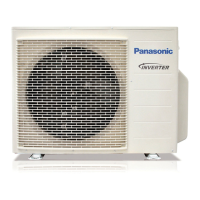
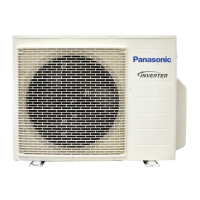
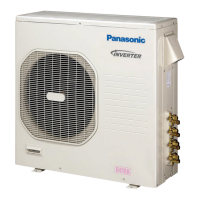
| Type | Air conditioner outdoor unit |
| Ionizer | No |
| Inverter technology | Yes |
| Refrigerating medium | R410A |
| Cooling capacity (max) | 18000 BTU/h |
| Air conditioner functions | Cooling, Heating |
| Cooling capacity in watts (max) | 7300 W |
| Cooling capacity in watts (min) | 1800 W |
| Heating capacity in watts (max) | 8300 W |
| Heating capacity in watts (min) | 1600 W |
| Cooling energy efficiency (EER, W/W) | 4.33 |
| Heating energy efficiency (COP, W/W) | 4.69 |
| Seasonal efficiency rating (cooling) (SEER) | 7 |
| Seasonal efficiency rating (heating) (SCOP) (Average heating season) | 4 |
| Noise level | 61 dB |
| Power consumption (cooling) (max) | - W |
| Power consumption (heating) (max) | 2110 W |
| Power consumption (heating) (min) | 320 W |
| Annual energy consumption (cooling) | 260 kWh |
| Annual energy consumption (heating) (Average heating season) | 1680 kWh |


Loading...