What causes the water flowing sound during operation in my Panasonic CU-3E18PBE?
- DDawn ThomasSep 13, 2025
The water flowing sound you hear during the operation of your Panasonic Air Conditioner is due to the refrigerant flow inside the unit.
What causes the water flowing sound during operation in my Panasonic CU-3E18PBE?
The water flowing sound you hear during the operation of your Panasonic Air Conditioner is due to the refrigerant flow inside the unit.
What does it mean when the POWER indicator blinks before my Panasonic Air Conditioner is switched on?
The blinking POWER indicator before the unit is switched on is a preliminary step in preparation for operation when the ON timer has been set on your Panasonic Air Conditioner.
Why Panasonic Air Conditioner operation is delayed after restarting?
The delay in operation of your Panasonic Air Conditioner after restarting is a protection mechanism for the unit’s compressor.
Why dusts accumulated on the wall near Panasonic Air Conditioner?
If you notice dust accumulating on the wall near your Panasonic Air Conditioner, it is due to air circulation or static electricity generated by the air conditioner.
Why POWER indicator blinks before turning on Panasonic CU-3E18PBE Air Conditioner?
The POWER indicator blinking before the unit is switched on indicates a preliminary step in preparation for operation when the ON timer has been set on your Panasonic Air Conditioner.
Why TIMER indicator is always on Panasonic Air Conditioner?
The TIMER indicator on your Panasonic Air Conditioner remains on because the timer setting repeats daily once it has been set.
Why indoor fan stops during heating in Panasonic CU-3E18PBE?
If the indoor fan stops occasionally during heating operation of your Panasonic Air Conditioner, it is to avoid unintended cooling effect.
Why indoor fan stops during automatic speed on Panasonic CU-3E18PBE Air Conditioner?
If the indoor fan of your Panasonic Air Conditioner stops occasionally during automatic fan speed setting, it helps to remove the surrounding odour.
Why airflow continues after stopping Panasonic Air Conditioner?
If airflow continues even after your Panasonic Air Conditioner has stopped, it's extracting remaining heat from the indoor unit, which can take up to 30 seconds.
Why the room has a peculiar odour when using Panasonic Air Conditioner?
If you notice a peculiar odour in the room when using your Panasonic Air Conditioner, it may be due to damp smells emitted by the wall, carpet, furniture, or clothing.
Warnings and cautions regarding appliance use, injury, and property damage.
Safety precautions for remote control, Network Adaptor, and power supply.
Warning about the risks associated with flammable refrigerant R32.
Requirements for personnel handling refrigerants and safety for refrigerating circuits.
Guidelines for installation space, piping protection, and compliance with regulations.
Requirements for service personnel and safety procedures before starting work.
Procedures for checking refrigerant, fire extinguishers, ignition sources, and ventilation.
Checks for refrigerating equipment, electrical components, and earth bonding.
Safety for component repair, cabling, and flammable refrigerant detection.
Acceptable leak detection methods and procedures for refrigerant removal.
Procedures for charging refrigerant and decommissioning the equipment.
Requirements for labelling and recovering refrigerant safely.
Instructions on how to retrieve and interpret error codes displayed by the unit.
Conditions requiring consultation with an authorized dealer for service.
Warnings and cautions regarding appliance use, injury, and property damage.
Safety precautions for remote control, Network Adaptor, and power supply.
Warning about the risks associated with flammable refrigerant R32.
Requirements for personnel handling refrigerants and safety for refrigerating circuits.
Guidelines for installation space, piping protection, and compliance with regulations.
Requirements for service personnel and safety procedures before starting work.
Procedures for checking refrigerant, fire extinguishers, ignition sources, and ventilation.
Checks for refrigerating equipment, electrical components, and earth bonding.
Safety for component repair, cabling, and flammable refrigerant detection.
Acceptable leak detection methods and procedures for refrigerant removal.
Procedures for charging refrigerant and decommissioning the equipment.
Requirements for labelling and recovering refrigerant safely.
Instructions on how to retrieve and interpret error codes displayed by the unit.
Conditions requiring consultation with an authorized dealer for service.
| Outdoor unit weight | 71000 g |
|---|---|
| Outdoor units quantity | 1 |
| Outdoor unit noise level | 47 dB |
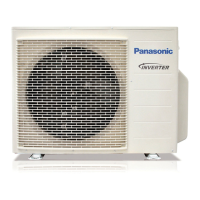
| Outdoor unit dimensions (WxDxH) | 875 x 320 x 795 mm |
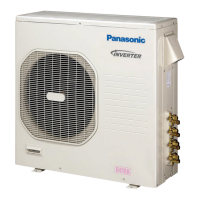
| Type | Air conditioner outdoor unit |
| Ionizer | No |
| Inverter technology | Yes |
| Refrigerating medium | R410A |
| Cooling capacity (max) | 18000 BTU/h |
| Air conditioner functions | Cooling, Heating |
| Cooling capacity in watts (max) | 7300 W |
| Cooling capacity in watts (min) | 1800 W |
| Heating capacity in watts (max) | 8300 W |
| Heating capacity in watts (min) | 1600 W |
| Cooling energy efficiency (EER, W/W) | 4.33 |
| Heating energy efficiency (COP, W/W) | 4.69 |
| Seasonal efficiency rating (cooling) (SEER) | 7 |
| Seasonal efficiency rating (heating) (SCOP) (Average heating season) | 4 |
| Noise level | 61 dB |
| Power consumption (cooling) (max) | - W |
| Power consumption (heating) (max) | 2110 W |
| Power consumption (heating) (min) | 320 W |
| Annual energy consumption (cooling) | 260 kWh |
| Annual energy consumption (heating) (Average heating season) | 1680 kWh |


Loading...