
 Need help?
Do you have a question about the Panasonic KX-DT333 and is the answer not in the manual?
Displays information and menu options for the telephone.
Inserts pauses in stored numbers or for programming this unit.
Sets Call Forwarding or Do Not Disturb on your extension.
Used to establish a multiple party conversation.
Used to make or receive intercom calls.
Receives incoming calls hands-free or mutes microphone/handset.
Used for speed dialing or storing program changes.
Used to transfer a call to another party.
Used to redial the last dialed number.
Leaves a message waiting indication or calls back.
Connection port for a telephone headset.
Disconnects current call and makes another without hanging up.
Used to place a call on hold.
Used for performing hands-free operations.
Used to assign the selected item.
Used for hands-free conversations.
Adjusts volume, contrast, or selects desired items.
Used to cancel the selected item.
Seize a line or perform an assigned feature.
Screen that can be adjusted to the desired angle.
Select items displayed on the bottom line of the display.
Indicates call status, new messages, and ring.
Adjusts speaker, handset, headset, and ringer volumes, and LCD contrast.
Customizes the telephone's ring tone.
Configures the LCD backlight for different modes.
Explains common icons used in the manual.
Instructions for calling extensions and outside parties.
Redials the last dialed number.
Methods for storing and dialing numbers quickly.
Stores and dials personal speed dial numbers.
Stores and dials system-wide speed dial numbers.
Making calls to the doorphone.
Putting calls on hold and retrieving them.
Transferring calls to extensions or outside parties.
Adding parties to a call to create a conference.
Configures the Do Not Disturb feature for calls.
Setting a timed reminder for the telephone.
Configures call forwarding for all calls, busy, or no answer.
Accessing directories, logs, and menus using the LCD.
How to enter alphabetic characters and digits using dialing buttons.
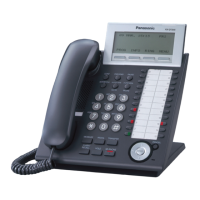
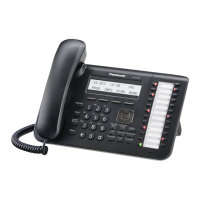
This document provides a comprehensive user quick reference guide for the KX-DT333 Digital Telephone, a device designed for efficient communication in a professional setting. The telephone features a Liquid Crystal Display (LCD) that serves as the primary interface for accessing various functions and directories.
The KX-DT333 Digital Telephone is a robust communication tool equipped with a range of features to manage calls, set up conferences, and customize user preferences. Its core functionality revolves around making and receiving calls, both internal (intercom) and external (outside lines). The device supports call forwarding, do not disturb settings, and timed reminders, allowing users to manage their availability and schedule effectively. Conference calling is a key feature, enabling multiple parties to participate in a single conversation. The telephone also includes a speakerphone for hands-free operation and a headset jack for private conversations.
The telephone's design incorporates a user-friendly interface with clearly labeled buttons and an intuitive navigation system.
The telephone allows for the entry of alphabetic characters and digits using the dialing buttons. Repeatedly pressing a dialing button cycles through different characters. The Navigator keys can be used to move the cursor, and the TRANSFER button deletes characters. A Soft button (S1) can toggle between two character tables (Standard and Option modes) for a wider range of characters, including special symbols and accented letters.
While the document primarily focuses on usage, some aspects touch upon maintenance-related features:
The KX-DT333 Digital Telephone is designed for a seamless communication experience, offering a comprehensive suite of features to enhance productivity and connectivity within an organizational environment.
 General
| Programmable Keys | 24 |
|---|---|
| Speakerphone | Yes |
| Headset Port | Yes |
| Backlight | Yes |
| Wall Mountable | Yes |
| Compatibility | Panasonic PBX Systems |
| Volume Control | Yes |
| Mounting | Desk or Wall |
| Speed Dial | Yes |
| Type | Digital Proprietary Telephone |
| Power Source | Powered by the PBX |





 To Next Page

