EasyManua.ls Logo

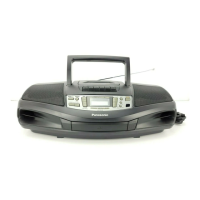
Panasonic RX-DS16 - User Manual

Panasonic RX-DS16
16 pages
Print Icon
To Next Page IconTo Next Page
Loading...
Portable
Stereo
CD
System
RX-DS16
Operating
Instructions

Other manuals for Panasonic RX-DS16

Question and Answer IconNeed help?

Do you have a question about the Panasonic RX-DS16 and is the answer not in the manual?

Summary

Precautions and Safety

Safety Guidelines

Covers power source, plug polarization, cord protection, and non-use periods.

Installation Environment

Details on operating environment, avoiding water, condensation, and heat.

Placement Guidelines

Instructions for ventilation, foreign material, magnetism, stacking, and surface.

Maintenance and Cleaning

How to clean the unit's cabinet, panel, and controls.

Service and Repair

Information on damage requiring service and user servicing limitations.

Power Source Options

Using Household AC Outlet

Connecting the unit to a standard AC power outlet.

Using Batteries

Instructions for inserting and replacing main batteries.

Memory Back-up Batteries

Details on installing and the purpose of memory back-up batteries.

Control Panel and Features

Location of Controls Overview

Identification and reference page for various buttons and controls.

Adjusting Deep-Bass (XBS)

How to activate and adjust the XBS for enhanced low-frequency sound.

Basic Operations

One-Touch Play Function

Starting playback of radio, CD, or tape with a single button press.

Turning Off the Unit

Methods for switching the unit off from different operating modes.

Listening Through Headphones

Connecting and using headphones for private listening.

Radio Operations

Presetting Radio Broadcasts

Programming and storing FM/AM stations into memory.

Tuning Radio Stations

Selecting programmed stations or manually tuning for reception.

Antenna Adjustment

Optimizing FM and AM reception by adjusting the antenna.

Reducing FM Stereo Noise

Setting the unit to monaural to reduce interference.

CD Playback Modes

Sequential CD Playback

Playing all tracks on a CD in order until it stops.

Repeat and Random Play

Options for repeating single tracks, all tracks, or playing randomly.

Programmed CD Playback

Creating a custom playlist of up to 24 tracks from a CD.

Tape Playback

Playing Cassette Tapes

Inserting and playing normal position Type I cassette tapes.

Tape Control Functions

Using play, stop, pause, fast forward, rewind, and search.

Recording Operations

Preparing for Recording

Instructions for using normal tapes and avoiding interference.

Recording from Radio Broadcasts

Steps to record audio from FM or AM radio stations.

Recording from CDs

Steps to record audio from a CD to a cassette tape.

Timer and Maintenance

Using the Sleep Timer

Setting the unit to turn off automatically after a set time.

Cleaning the Unit Surfaces

Guide on how to clean the exterior of the unit.

Improving Sound Quality

Recommendation for cleaning tape heads for better sound.

CD and Cassette Tape Care

Handling and Storing CDs

Precautions for handling, cleaning, and storing CDs to prevent damage.

Cassette Tape Selection

Guidelines for choosing compatible cassette tapes and avoiding issues.

Tape Slack and Erasure Prevention

Tips for managing tape slack and preventing accidental erasure.

Listening Cautions and Specifications

Safe Listening Practices

Recommendations for setting a safe listening volume to protect hearing.

Technical Specifications

Detailed technical data for radio, CD, tape, and general components.

Product Service Information

Guidance on when and how to seek professional servicing.

Troubleshooting Guide

Common Operational Problems

Solutions for issues like no operation, error messages, and tape switching.

CD Playback Issues

Troubleshooting for CD playback not starting or skipping.

Tape Recording and Playback Problems

Resolving issues with recording, noise, tape ejection, and head cleanliness.

Radio Reception Problems

Solutions for poor radio tuning and noise during AM reception.

Summary

Precautions and Safety

Safety Guidelines

Covers power source, plug polarization, cord protection, and non-use periods.

Installation Environment

Details on operating environment, avoiding water, condensation, and heat.

Placement Guidelines

Instructions for ventilation, foreign material, magnetism, stacking, and surface.

Maintenance and Cleaning

How to clean the unit's cabinet, panel, and controls.

Service and Repair

Information on damage requiring service and user servicing limitations.

Power Source Options

Using Household AC Outlet

Connecting the unit to a standard AC power outlet.

Using Batteries

Instructions for inserting and replacing main batteries.

Memory Back-up Batteries

Details on installing and the purpose of memory back-up batteries.

Control Panel and Features

Location of Controls Overview

Identification and reference page for various buttons and controls.

Adjusting Deep-Bass (XBS)

How to activate and adjust the XBS for enhanced low-frequency sound.

Basic Operations

One-Touch Play Function

Starting playback of radio, CD, or tape with a single button press.

Turning Off the Unit

Methods for switching the unit off from different operating modes.

Listening Through Headphones

Connecting and using headphones for private listening.

Radio Operations

Presetting Radio Broadcasts

Programming and storing FM/AM stations into memory.

Tuning Radio Stations

Selecting programmed stations or manually tuning for reception.

Antenna Adjustment

Optimizing FM and AM reception by adjusting the antenna.

Reducing FM Stereo Noise

Setting the unit to monaural to reduce interference.

CD Playback Modes

Sequential CD Playback

Playing all tracks on a CD in order until it stops.

Repeat and Random Play

Options for repeating single tracks, all tracks, or playing randomly.

Programmed CD Playback

Creating a custom playlist of up to 24 tracks from a CD.

Tape Playback

Playing Cassette Tapes

Inserting and playing normal position Type I cassette tapes.

Tape Control Functions

Using play, stop, pause, fast forward, rewind, and search.

Recording Operations

Preparing for Recording

Instructions for using normal tapes and avoiding interference.

Recording from Radio Broadcasts

Steps to record audio from FM or AM radio stations.

Recording from CDs

Steps to record audio from a CD to a cassette tape.

Timer and Maintenance

Using the Sleep Timer

Setting the unit to turn off automatically after a set time.

Cleaning the Unit Surfaces

Guide on how to clean the exterior of the unit.

Improving Sound Quality

Recommendation for cleaning tape heads for better sound.

CD and Cassette Tape Care

Handling and Storing CDs

Precautions for handling, cleaning, and storing CDs to prevent damage.

Cassette Tape Selection

Guidelines for choosing compatible cassette tapes and avoiding issues.

Tape Slack and Erasure Prevention

Tips for managing tape slack and preventing accidental erasure.

Listening Cautions and Specifications

Safe Listening Practices

Recommendations for setting a safe listening volume to protect hearing.

Technical Specifications

Detailed technical data for radio, CD, tape, and general components.

Product Service Information

Guidance on when and how to seek professional servicing.

Troubleshooting Guide

Common Operational Problems

Solutions for issues like no operation, error messages, and tape switching.

CD Playback Issues

Troubleshooting for CD playback not starting or skipping.

Tape Recording and Playback Problems

Resolving issues with recording, noise, tape ejection, and head cleanliness.

Radio Reception Problems

Solutions for poor radio tuning and noise during AM reception.

Overview

This document provides comprehensive operating instructions for the Panasonic RX-DS16 Portable Stereo CD System, covering its functions, usage, and maintenance.

Function Description

The Panasonic RX-DS16 is a portable stereo system designed for playing CDs, listening to radio broadcasts (FM and AM), and playing/recording cassette tapes. It features a compact disc player with sequential, repeat, random, and program play modes, allowing users flexibility in how they listen to their music. The radio tuner supports both FM and AM bands, with the ability to preset up to ten stations for each band, making it easy to access favorite broadcasts. For cassette tapes, the system supports playback and recording, with automatic recording level adjustment. A notable feature is the XBS (eXtra Bass System) for enhancing low-frequency sound, providing a deeper bass experience. The system also includes a sleep timer, allowing users to set the unit to automatically turn off after a specified period, which is convenient for listening before falling asleep.

Usage Features

Power Sources: The RX-DS16 can be powered by a household AC outlet using the included power cord or by eight R20/LR20 (D, UM-1) batteries for portability. For memory backup, four R6/LR6 (AA, UM-3) batteries are required to preserve preset radio stations and programmed CD tracks in case of power interruption or battery failure. It's crucial to ensure correct battery polarity during installation. When using AC power, it's recommended to keep the AC cord plugged in to prolong the life of the memory backup batteries.

One-Touch Play: The system offers a convenient one-touch play feature. From standby mode, pressing the appropriate button (Tuner, CD Play/Pause, or Tape Play) will automatically start playback of the previously heard radio station, the first track of an inserted CD, or the tape from its last position, respectively. To turn off the unit, the TAPE/OFF button is used, with an additional STOP/EJECT press if a tape is currently playing or traveling.

Headphone Listening: For private listening, headphones (not included) can be connected to the PHONES jack. Users are advised to turn down the volume before connecting headphones to prevent hearing damage and to avoid prolonged listening at high volumes.

Radio Operations:

  • Presetting Radio Broadcasts: Up to ten FM and ten AM stations can be programmed. This involves selecting the desired band (FM or AM), entering programming mode by pressing MEMORY, tuning to the desired station using the tuning buttons, and then saving it to a preset channel.
  • Listening to Programmed Stations: After presetting, users can easily tune in by selecting the band and then using the tuning buttons to cycle through the preset channels.
  • Listening to Unprogrammed Stations (Manual Tuning): For stations not preset, users can select the band, clear the preset indicator, and then manually tune using the tuning buttons. An automatic tuning feature allows the system to scan and stop at stations with good reception.
  • Antenna Adjustment: For optimal FM reception, the telescopic antenna should be extended and adjusted. For AM reception, rotating the unit itself helps improve signal quality.
  • FM Stereo/Monaural: In areas with weak FM stereo signals, the FM MODE/BP button can be used to switch to monaural reception, which reduces noise.

CD Operations:

  • Sequential Play: After inserting a CD (label facing upward) and closing the tray, pressing the Play/Pause button starts playback from the first track, continuing to the last.
  • Stopping/Pausing: The STOP/CLEAR button stops playback, while the Play/Pause button pauses and resumes it.
  • Searching/Skipping: Users can search forward or backward within a track by holding the corresponding search buttons, or skip to the next/previous track by tapping them.
  • Repeat Play: The CD PLAY MODE button allows users to repeat a single track, all tracks, or programmed tracks.
  • Random Play: This mode plays all tracks on the CD in a random order.
  • Program Play: Up to 24 tracks can be programmed for playback in a desired sequence. The system displays the total number of tracks and total play time. If the total programmed time exceeds 120 minutes, an indicator will appear, but tracks can still be programmed and played. The program is retained even if the unit is turned off.

Tape Operations:

  • Playback: After loading a tape (side to be played facing upward, exposed tape facing the user), pressing the Play button starts playback.
  • Stopping/Pausing: The STOP/EJECT button stops playback, and the PAUSE button temporarily stops and resumes it.
  • Fast Forward/Rewind: These functions are available in stop mode. During playback, they act as search functions, resuming play when released.
  • Full Auto-Stop: The system automatically releases the buttons when the tape reaches the end during any operation.
  • Recording:
    • From Radio: Load a tape, tune to the desired radio station, and press the REC button. The recording level is set automatically.
    • From CD: Load a tape, insert a CD, press Play/Pause, then press REC. CD play starts simultaneously with recording.
    • Recording Favorite Tracks: Users can program desired CD tracks and then record them onto a tape.
    • Beat Proof Function (AM Recording): To reduce noise during AM recording, the FM MODE/BP button can be used to select a position with the least noise.
    • Leader Tape: Recording cannot be made on the leader tape portion of a cassette.

Sleep Timer: The sleep timer allows users to set the unit to turn off automatically after 30, 60, 90, or 120 minutes. This feature works for radio and CD playback. If recording is in progress, the radio or CD will stop, but the tape will continue until its end.

Maintenance Features

General Cleaning: The cabinet, panel, and controls should be cleaned with a soft cloth lightly moistened with a mild detergent solution. Abrasive pads, scouring powder, alcohol, or benzine should not be used.

CD Handling and Storage:

  • Handling: Always hold CDs by the edges. Avoid touching the recorded surface or writing on the label side with sharp instruments. Do not use cleaning sprays, solvents, or attach stickers.
  • Cleaning: If a CD is dirty, wipe it from the center outward with a soft, dry, lint-free cloth. If moisture forms on a CD (e.g., from a cold to warm environment), wipe it off before use.
  • Storage: Store CDs in their cases to protect them from dust, scratches, and warping. Avoid direct sunlight, humid/dusty locations, heat sources, or strong magnetic fields.

Cassette Tape Handling and Storage:

  • Tape Slack: Before inserting a tape, ensure there is no slack to prevent breakage.
  • Erasure Prevention: To prevent accidental erasure of a recording, break out the tabs on the cassette using a screwdriver or similar object.
  • Cleaning Tape Heads: Periodically clean the tape heads and other parts that contact the tape with a cotton swab. Do not use alcohol for head cleaning.
  • Tape Types: While the unit can play Normal position (TYPE I) tapes, it may not fully utilize the characteristics of High position (TYPE II) or Metal position (TYPE IV) tapes. Caution should be exercised with tapes exceeding 100 minutes and endless tapes, as they are more prone to getting caught or winding around revolving parts.
  • Storage: Avoid storing tapes in high temperatures (above 35°C/95°F), high humidity (above 80%), strong magnetic fields (near speakers or TVs), or direct sunlight, as these conditions can erase recordings or damage the tapes.

Product Service: Users are advised not to attempt to remove covers or repair the unit themselves. All servicing should be referred to qualified service personnel. For product service or information, users can contact authorized service centers.

Panasonic RX-DS16 Specifications

General IconGeneral
TypePortable Stereo System
BrandPanasonic
ModelRX-DS16
TunerFM/AM
CD PlayerYes
Cassette DeckYes
AC OperationYes
Speaker Type2-way speakers
Battery OperationYes (6 x D batteries)

Related product manuals