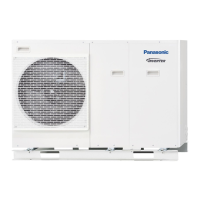
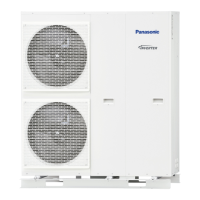
This document serves as a supplement to the service manual for Panasonic mono bloc air conditioner units, specifically models WH-MDC05F3E5, WH-MDC06G3E5, and WH-MDC09G3E5. It addresses a critical update concerning the "Protection Control" feature, providing revised information that supersedes previous instructions found in the original service manuals (Order Nos. PAPAMY1311029CE and PAPAMY1508107CE). The primary purpose of this supplement is to ensure that service technicians are equipped with the most current and accurate data regarding the device's operational parameters, particularly those related to safeguarding the unit under varying environmental conditions.
The core of this supplement focuses on the "Protection Control" mechanism, a fundamental aspect of the air conditioner's design that ensures its longevity and reliable operation. This control system is engineered to prevent damage to the unit by regulating its performance based on external factors, thereby maintaining optimal functionality and preventing premature wear or failure of components. The document specifically details changes to the "Outside Temperature Current Control," which is a key component of the overall protection strategy. This control system dynamically adjusts the maximum current value the unit can draw, or even initiates a compressor stop, in response to the ambient outdoor temperature. Such adjustments are crucial for protecting the compressor and other electrical components from overstress, especially during extreme cold or heat, which could otherwise lead to system malfunction or permanent damage.
The "Outside Temperature Current Control" feature is designed to operate within predefined temperature thresholds, ensuring that the air conditioner functions efficiently and safely across a broad range of climatic conditions. The supplement presents a direct comparison between the "Old" and "New" control logic, highlighting the modifications made to these thresholds. Understanding these changes is paramount for service technicians, as it directly impacts diagnostic procedures, troubleshooting, and the overall assessment of the unit's performance. For instance, if a unit exhibits unexpected behavior or shuts down, a technician must refer to the updated control parameters to accurately determine if the behavior is a normal protective response or indicative of an actual fault.
Under the "Old" control scheme, the system would regulate the maximum current value when the outdoor temperature was between 14°C and 23°C. Below 14°C, the current regulation would continue, but a compressor stop would be initiated if the outdoor temperature dropped to -25°C or lower. Similarly, on the warmer side, current regulation would occur between 12°C and 21°C, with a compressor stop at -28°C. These thresholds were established to protect the unit from operating outside its safe limits.
The "New" control scheme introduces revised temperature thresholds, reflecting potential optimizations in the unit's design, improved component resilience, or updated operational strategies to enhance efficiency or reliability. In the updated logic, the maximum current value is still regulated when the outdoor temperature is between 14°C and 23°C. However, the compressor stop threshold for colder temperatures has been adjusted. The compressor will now stop if the outdoor temperature reaches -20°C or lower, which is a less extreme cold threshold compared to the previous -25°C. This change suggests a more conservative approach to protecting the compressor in very cold conditions, potentially extending its lifespan or preventing issues that might arise at slightly higher cold temperatures than previously anticipated. On the warmer side, the current regulation still occurs between 12°C and 21°C, but the compressor stop threshold has been revised to -23°C. This adjustment indicates a different operational envelope for the unit under certain conditions, which technicians must be aware of. The graphical representations provided in the supplement clearly illustrate these changes, offering a visual aid for technicians to quickly grasp the updated operational boundaries.
For service technicians, this supplement is an indispensable resource. When diagnosing issues related to the air conditioner's operation, particularly those involving unexpected shutdowns or reduced performance during extreme temperatures, consulting this document is crucial. A technician troubleshooting a unit that has stopped operating in cold weather, for example, would need to verify the outdoor temperature against the "New" compressor stop threshold of -20°C. If the temperature is at or below this point, the shutdown is a normal protective function, not a fault. Conversely, if the unit stops at a temperature above -20°C, it would indicate a potential malfunction requiring further investigation.
The "Protection Control" system, as detailed in this supplement, is a key usage feature of the Panasonic mono bloc air conditioners. It ensures that the device operates within its design limits, preventing damage from environmental stressors such as excessively low or high temperatures. This automatic regulation minimizes the risk of component failure, reduces the need for costly repairs, and contributes to the overall reliability and longevity of the air conditioning unit. The ability of the unit to self-regulate its current draw and initiate a compressor stop based on outdoor temperature is a sophisticated safety mechanism that protects the internal components, especially the compressor, which is often the most expensive part to replace.
From a maintenance perspective, understanding these protection controls is vital for accurate diagnostics and effective servicing. Technicians must be able to differentiate between a system operating as intended under protective measures and a system experiencing a genuine fault. Misinterpreting a protective shutdown as a malfunction could lead to unnecessary component replacements or incorrect repairs, wasting time and resources. Therefore, this supplement serves as a critical reference for maintenance procedures, guiding technicians to correctly interpret the unit's behavior and apply appropriate troubleshooting steps. It reinforces the importance of staying updated with manufacturer-issued revisions to ensure that all service and maintenance activities are performed according to the latest specifications.
The document also includes a general warning emphasizing that the service information is intended for experienced repair technicians only. This highlights the complexity of the systems involved and the potential dangers associated with servicing electrical products. It underscores the manufacturer's commitment to safety by advising against non-technical individuals attempting repairs, as this could lead to serious injury or death. This warning is a standard but crucial reminder of the professional expertise required to handle such equipment.
In summary, this supplement provides essential updates to the "Protection Control" system for Panasonic mono bloc air conditioners, specifically detailing revisions to the "Outside Temperature Current Control." These changes, particularly the adjusted temperature thresholds for current regulation and compressor stops, are critical for service technicians to accurately diagnose, troubleshoot, and maintain the units. The protection control system is a fundamental usage feature that ensures the air conditioner's safe and reliable operation across various environmental conditions, contributing to its durability and performance. For maintenance, this document is indispensable for correctly interpreting the unit's behavior and performing effective repairs, ensuring that the air conditioners continue to provide optimal comfort and efficiency while adhering to the latest safety and operational standards.


 To Next Page
 General