EasyManua.ls Logo

Parker S4A-DN - User Manual

Parker S4A-DN
4 pages
Print Icon
To Next Page IconTo Next Page
Loading...
1
Refrigerating Specialties Division
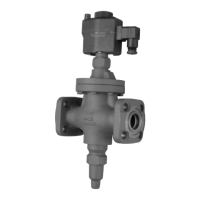
SOLENOID VALVE
Type S4A-DN
Port Size 20-100mm (3/4”-4”)
FOR AMMONIA, R12, R22, R502
AND OTHER COMMON REFRIGERANTS
FEATURES
Standard Coil Housing Meets NEMA 3R and
NEMA 4-Rain Tight
Coil Housing Surpasses NEMA Salt Spray Test
Plunger-Needle Assembly Same for
S4A,S5A,S6N,S6A,S8F
Molded Class “B” Coil Construction
Same Coil Fits Most Refrigerating Specialties
Solenoid Valves
Pilot Light Available
Stainless Steel Needle
Manual Opening Stem
Design Pressure (PS): 28 bar (406 PSIG)
Complies with Pressure Equipment Directive 97/23/EC
BULLETIN DN30-94B
Type S4A-DN
January 2007
Installation and Service Information
ISO 9001 CERTIFIED
Description
This heavy duty solenoid valve is suitable for Ammonia, R-12, R-22,
and R-502, other refrigerants, certain oils and other fluids approved
for use in refrigeration. The S4A is a pilot operated, semi-steel bodied
valve. The valve may be opened by means of the manual opening
stem for servicing or in case of electrical power failure.
The Type S4A Solenoid Valve is furnished with FPT Internal NPT (U.S.
Standard Taper Pipe Thread), Socket Weld, Weld Neck or ODS (solders
over copper tubing of given diameter) connections. The valve may be
easily removed from between the flanges for servicing.
It is advisable to install a strainer upstream of each valve to prevent
entrance of foreign material into the valve and the rest of the system.
Refrigerating Specialties strainers are available to close-couple to valve
inlets.
Purpose
Type S4A is a spring closing valve, suitable for use in refrigerant liquid,
hot gas or suction lines in a temperature range of -50° to 105°C (-60°
to 220°F).
Principles of Operation
The Type S4A is a pilot operated solenoid. The valve in its closed
position, with the solenoid coil de-energized and the plunger needle
and main port plug in the seated position, is shown in Figure 1.
Electrical energization of the solenoid coil forms a magnetic field,
pulling up the plunger which strikes the needle, lifting it off its seat.
Upward motion of the needle permits entrance of the fluid from the
valve inlet M through Port N and down through the pilot port to the top
of the power piston. This forces the piston downward and pushes the
main port plug open, thereby permitting flow of the refrigerant through
the valve. The closing spring meanwhile is held in a compressed
position.
De-energization of the solenoid coil permits the spring-assisted needle
to drop back into its seat, stopping the flow through the pilot port.
Bleed-off, through the bleed hole in the piston, decreases the pressure
above the piston and allows the closing spring to force the main port
plug upward into a closed position to stop the flow. The pressure
difference across the valve, acting upon the area of the valve seat,
plus the force of the closing spring, holds the main port plug in a
tightly closed position.
Manual Opening Stem
The manual opening stem on the Type S4A is for the purpose of
opening the valve without energizing the solenoid coil. Refer to the
applicable exploded view and parts list for location of the stem and
other related parts. For access to stem the seal cap on the bottom of
the valve must be removed. This must be done with caution as
refrigerant may have been trapped inside the seal cap. To open the
valve manually, turn the stem counterclockwise as far as it goes. To
reset for automatic operation turn the stem clockwise until only the
flats on the end of the stem protrude from the packing nut.
Fig. 1
310226

Question and Answer IconNeed help?

Do you have a question about the Parker S4A-DN and is the answer not in the manual?

Overview

The Parker Solenoid Valve, Type S4A-DN, is a heavy-duty, pilot-operated, semi-steel bodied valve designed for use with Ammonia, R-12, R-22, R-502, and other common refrigerants, as well as certain oils and other approved fluids in refrigeration systems. It is suitable for refrigerant liquid, hot gas, or suction lines within a temperature range of -50°C to 105°C (-60°F to 220°F).

Function Description:

The S4A-DN operates as a pilot-operated solenoid valve. In its closed position, with the solenoid coil de-energized, the plunger needle and main port plug are seated. When the solenoid coil is electrically energized, a magnetic field is formed, pulling up the plunger. This action strikes the needle, lifting it off its seat. The upward motion of the needle allows fluid to enter from the valve inlet (M) through Port N and then down through the pilot port to the top of the power piston. This pressure forces the piston downward, which in turn pushes the main port plug open, allowing the refrigerant to flow through the valve. During this process, the closing spring is held in a compressed state.

Upon de-energization of the solenoid coil, the spring-assisted needle drops back into its seat, stopping the flow through the pilot port. Fluid then bleeds off through a hole in the piston, reducing the pressure above the piston. This allows the closing spring to force the main port plug upward into a closed position, stopping the flow. The combined pressure difference across the valve seat and the force of the closing spring ensure a tight seal.

Important Technical Specifications:

  • Port Size: 20-100mm (3/4"-4")
  • Refrigerants: Ammonia, R12, R22, R502, and other common refrigerants.
  • Design Pressure (PS): 28 bar (406 PSIG)
  • Temperature Range: -50°C to 105°C (-60°F to 220°F)
  • Coil Housing: Meets NEMA 3R and NEMA 4-Rain Tight standards, and surpasses NEMA Salt Spray Test.
  • Coil Construction: Molded Class "B"
  • Needle Material: Stainless Steel
  • Compliance: Complies with Pressure Equipment Directive 97/23/EC.
  • Body Material: Ductile Iron GGG 40.3
  • Cover Bottom Material: Ductile Iron GGG 40.3 or 1-7/8 RD 1215 Steel
  • Adapter Assembly Material: Ductile Iron GGG 40.3
  • Sleeve, Solenoid Tube Material: AISI 1117 CRS BARSTOCK

Usage Features:

  • Manual Opening Stem: The valve is equipped with a manual opening stem, allowing it to be opened without energizing the solenoid coil. This feature is useful for servicing or in the event of electrical power failure. To open manually, the stem is turned counterclockwise until it stops. For automatic operation, the stem is turned clockwise until only the flats on its end protrude from the packing nut.
  • Coil Compatibility: The same coil fits most Refrigerating Specialties Solenoid Valves.
  • Pilot Light: A pilot light is available for visual indication of valve status.
  • Connection Types: Furnished with FPT Internal NPT (U.S. Standard Taper Pipe Thread), Socket Weld, Weld Neck, or ODS (solders over copper tubing of given diameter) connections.
  • Ease of Removal: The valve can be easily removed from between flanges for servicing.

Maintenance Features:

  • Strainer Recommendation: It is advisable to install a strainer upstream of each valve to prevent foreign material from entering the valve and the rest of the system. Refrigerating Specialties strainers are available for close-coupling to valve inlets.
  • Coil Housing Removal Clearance: Allow 100mm (4") above the valve for removal of the coil housing and coil.
  • Manual Opening Stem Clearance: Allow 25mm (1.0") below the valve to operate the manual opening stem.
  • Coil Replacement: The solenoid coil is designed for long life and powerful opening force. The coil housing meets NEMA 3R and 4 requirements and has passed NEMA salt spray tests. The molded Class "B" coil construction is rated for continuous operation at 105°C (220°F) ambient temperature. The coil is designed to operate with line voltage between 85% to 110% of the voltage rating. Operation with voltage outside this range may result in coil burnout or sluggish operation.
  • Troubleshooting:
    • Failure to Open: Check for incorrect line voltage, electrical circuit control issues, debris in the pilot seat or main valve seat, or a damaged plunger/needle assembly.
    • Failure to Close: Check for debris in the pilot seat or main valve seat, or a damaged plunger/needle assembly.
    • Leakage Through Valve: Check for debris in the pilot seat or main valve seat.
    • Overheating: An overheated solenoid coil indicates an issue with the coil itself (e.g., incorrect voltage, shorted turns, or continuous operation at high ambient temperatures).
  • Service Parts: Parker Hannifin Refrigeration Specialties Division provides replacement parts and kits.
  • Warranty: The product carries a warranty against defects in materials and workmanship for a period of one year from the date of shipment. This warranty is void if the product has been improperly installed, field modified, misused, or damaged.
  • O.D.S. Connections: Ranges with ODS connections are not suitable for ammonia service.
  • Hot Gas and Liquid Lines: For hot gas and liquid lines, it is necessary that certain precautions be taken to avoid damage from thermal expansion and contraction. Temperature increase in a solid liquid section will cause a large pressure increase. To prevent this, a relief valve, a gauge port, or a valve should be installed. All hand valves isolating such sections should be marked. If the liquid is removed, check valves should not be upstream of the solenoid valves, or regulators with electric shut-off, nor should hand valves upstream of the solenoid valves be closed until the liquid has been removed. It is advisable to properly install thermal relief or pressure limiting devices.
  • Protection of People and Products: All refrigerant must be removed from the section to be worked on before a valve, strainer, or other device is opened for service.

Parker S4A-DN Specifications

General IconGeneral
BrandParker
ModelS4A-DN
CategoryControl Unit
LanguageEnglish

Related product manuals