012-04049J h/e Apparatus and h/e Apparatus Accessory Kit
1
®
Experimental data for the radiation of light by a hot,
glowing body showed that the maximum intensity of
emitted light also departed dramatically from the clas-
sically predicted values (Wien's Law). In order to rec-
oncile theory with laboratory results, Planck was
forced to develop a new model for light called the
quantum model. In this model, light is emitted in
small, discrete bundles or quanta.
The relationship between the classical and quantum theo-
ries for the emission of light can be investigated using the
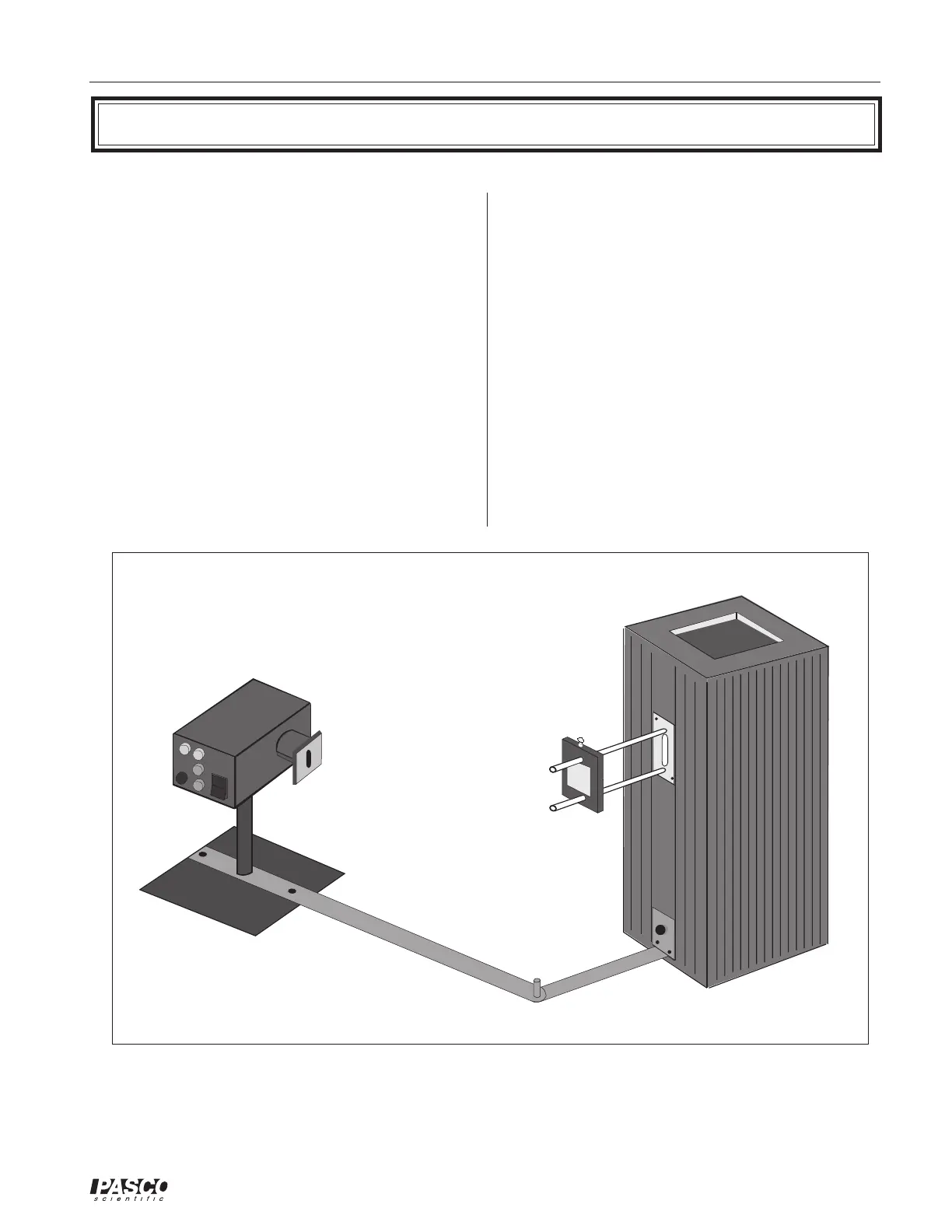
PASCO scientific h/e Apparatus. Using the Apparatus in
combination with the PASCO Mercury Vapor Light
Source (Model OS-9286) allows an accurate determina-
tion of the h/e ratio and thus a determination of h,
Planck's constant.
The emission and absorption of light was an early subject
for investigation by German physicist Max Planck. As
Planck attempted to formulate a theory to explain the
spectral distribution of emitted light based on a classical
wave model, he ran into considerable difficulty. Classical
theory (Rayleigh-Jeans Law) predicted that the amount of
light emitted from a black body would increase dramati-
cally as the wavelength decreased, whereas experiment
showed that it approached zero. This discrepancy became
known as the ultraviolet catastrophe.
Introduction
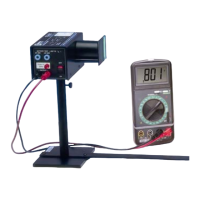
Figure 1. The h/e Apparatus Shown With the Accessory Kit and Mercury Vapor Light Source


 To Next Page