Short protocol Homogeniser Precellys
®
24 / 24-Dual
PEQLAB_v0314_E
27
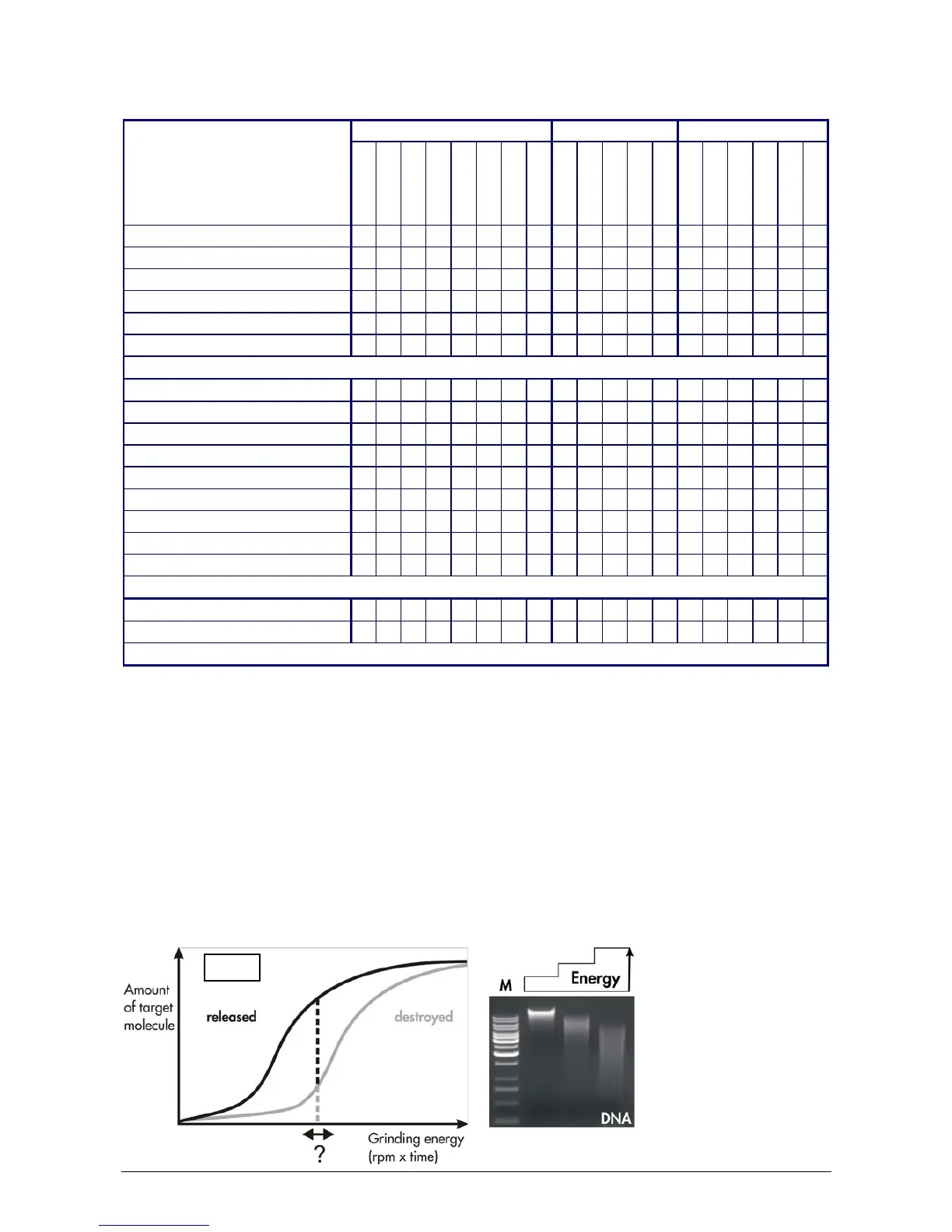
Which lysis kit matches the starting material?
human & animal tissue plant tissue microorganisms/cells
Skeletal muscle
Lung, heart
Liver, kidney
Brain
Connective
tissue
Hair
Finger nails
Bones
Crop seeds
Small seeds
Stem
Roots
Leaves
Soil samples
Fungi
Cell culture
Yeast
Bacteria
Spores
Ceramic Kit 5.0/2.8 mm, 7 ml (CK50L) x x x x x x x x x
Ceramic Kit 2.8 mm, 7 ml (CK28L)*
x x x x x x x x x x x x x
Keramik-Kit 1.4 mm, 7 ml (CK14L) x x x x x x
Glass/Ceramic Kit, 7 ml (SKL)*
x x x
x*
x
Ceramic Kit 0.1 mm, 7 ml (CK01L) x x x x x
Glass Kit 0.1/0.5 mm, 7 ml (VKML) x x x x
*if needed, grinding efficiency can be improved by adding single ceramic beads 5.0 mm or 6.8 mm (CK50P or CK68P) manually.
Steel Kit 2.8 mm, 2 ml (MK28, MK28R*) x x x x
Ceramic Kit 6.8 mm, 2 ml (CK68R*) x x x x
Ceramic Kit 5.0/2.8 mm, 2 ml (CK50R*) x x x x x x x x x
Ceramic Kit 2.8 mm, 2 ml (CK28, CK28R*) x x x x x x x x x x x
Ceramic Kit 1.4/2.8 mm, 2 ml (CKM) x x x x x x x x x x x
Ceramic Kit 1.4 mm, 2 ml (CK14) x x x x x x
Glass/Ceramic Kit, 2 ml (SK38) x x x x x x
Glass Kit 0.5 mm, 2 ml (VK05) x x x x x
Glass Kit 0.1 mm, 2 ml (VK01) x x x x
*MK28R & CK28R tubes are mechanically reinforced, however, prone to stronger embrittlement in liquid nitrogen.
Ceramic Kit 1.4 mm, 0.5 ml (CK14S) x x x x x x x x x x
Glass Kit 0.5 mm, 0.5 ml (VK05S) x x x x x
0.5 ml tubes are ideally suited for small sample volumes < 100 μl or < 10 mg.
Further user tips
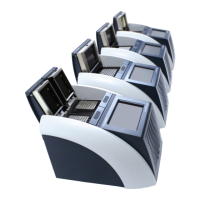
To preserve the integrity of the target molecule homogenisation should never be more powerful than
required (see Fig. A). For example, excessive grinding can cause shearing of genomic DNA (see Fig. B).
Frictional heat occurring during homogenising generally has no negative effect on nucleic acids. How-
ever, any heat should be avoided if native proteins will be analysed. For this purpose the optional use of
the Cryolys Cooling Module for the Precellys
®
24/Precellys
®
24-Dual is recommended. If using foaming
lysis buffers grinding energy must be increased, because the beads are slowed down by the foam. The
reagent peqGOLD TriFast
™
has a very high lysis potential for the isolation of RNA, DNA or proteins.
While its ingredients (amongst others phenol and GTC) effectively support cell lysis, it is almost non-
foaming. For starting material like soil samples, bacteria, yeast, fungi, animal and plant tissue optimised
kit combinations are available for the homogenisation and downstream nucleic acid isolation using sil-
ica-based centrifugation columns (see 'TECHNICAL SUPPORT and ORDERING INFORMATION').
Fig. B) Mechanical stability of DNA.
Genomic DNA from
Arabidopsis
leaves was isolated using the
peqGOLD Plant DNA Mini Kit (ho-
mogenised in the Precellys
®
24). After-
wards aliquots of the same amount
were exposed increasing grinding
energies in CK14 tubes using the
homogeniser Precellys
®
24 and sepa-
rated on an agarose gel ('M' = peq-
GOLD 1 kb DNA-ladder).
Fi


 To Next Page