
 Need help?
Do you have a question about the Philips 32PHT5853S/67 and is the answer not in the manual?
Details on pixel display properties and main fuse replacement procedures.
Covers risks of electric shock, fire, injury, overheating, and battery safety.
Information on product recycling and environmental protection use period.
Identifies the control panel buttons and indicator on the TV.
Detailed explanation of all buttons and their functions on the remote control.
Instructions for switching the TV on, off, and to standby mode.
Guide to selecting external sources and viewing content from connected devices.
How to switch channels and adjust TV volume using the remote control.
Accessing the TV menu to change language, picture, and sound settings.
Customizing picture settings, styles, formats, and manually adjusting parameters.
Adjusting sound settings, selecting sound modes, and customizing audio output.
Using EPG, scheduling recordings, and configuring Philips EasyLink for device control.
Setting timers, managing EDID versions, Quick Boot, and software updates.
Connecting USB devices to play media files like pictures, videos, and music.
Customizing slide play settings, listening to music, and watching videos.
Proper procedure for removing USB storage devices to prevent damage.
Steps for automatic channel searching and manual channel installation.
Scanning for digital channels and adjusting analog TV frequency for better reception.
Connecting the TV to the internet and accessing Smart TV features.
Selecting and configuring wired or Wi-Fi network connection types.
Setting up wired connections via cable and wireless connections via Wi-Fi.
Using screen sharing for multi-screen interaction and disconnecting devices.
Details on display resolutions, supported media formats, and sound power.
Information on power supply, consumption, and operating environment temperature.
Guidelines and warnings for mounting the TV using VESA-compatible mounts.
Solutions for TV not switching on, remote control issues, and channel list problems.
Addressing issues like no picture, sound problems, and poor reception quality.
Resolving problems with HDMI devices, sound disruptions, and network connection failures.
Guidance on contacting Philips Customer Service for unresolved issues.
Information on open source software used in the TV and how to obtain source code.
Details on licenses governing the open source software packages used.
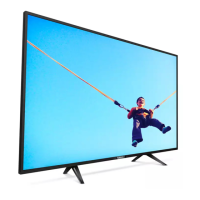
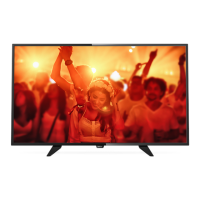
This document serves as a comprehensive user manual for a Philips 5800 Series LCD/LED TV, offering guidance on its operation, features, and maintenance.
The Philips 5800 Series TV is designed to provide a versatile entertainment experience, allowing users to watch broadcast content, access smart TV features, and play multimedia files from connected devices. It integrates various functionalities to enhance viewing and listening, including picture and sound customization, channel management, and network connectivity. The TV supports both analog and digital channels, offering an electronic program guide (EPG) for easy navigation of broadcast schedules and program information.
A key feature is its Smart TV capability, which allows users to connect to the internet and access a range of applications from an App store. This expands the TV's utility beyond traditional broadcasting, enabling streaming services, web browsing, and other online content. The TV also supports screen sharing, allowing content from mobile devices to be displayed on the larger TV screen, with synchronized audio playback through the TV's speakers.
For connectivity, the TV is equipped with HDMI ports, supporting Philips EasyLink (HDMI CEC) for integrated control of compatible devices using a single remote. It also offers USB ports for playing multimedia files (pictures, videos, music) directly from external storage devices. Network connectivity is available through both wired (Ethernet) and wireless (Wi-Fi) options, facilitating internet access and smart TV functions.
The TV includes a recording function for digital TV mode, allowing users to schedule and record programs onto a connected USB storage device. This feature adds convenience for users who wish to watch programs at a later time.
The TV's usage is primarily controlled via a remote control, which features dedicated buttons for power, volume, channel selection, source input, menu access, and smart TV functions. Navigation keys allow users to browse menus and select options. Numeric keys enable direct channel input.
Basic Operation:
Picture and Sound Customization:
Smart TV and Connectivity:
Additional Features:
The manual emphasizes several aspects of maintenance to ensure the longevity and safe operation of the Philips 5800 Series TV.
Safety Precautions:
Screen Care:
Troubleshooting and Support:
Software and Firmware:
Environmental Considerations:
 General
| Display Technology | LED |
|---|---|
| Smart TV | Yes |
| Refresh Rate | 60 Hz |
| Wi-Fi | Yes |
| Screen Size | 32 inches |
| Resolution | 1366 x 768 pixels |


 To Next Page