Need help?
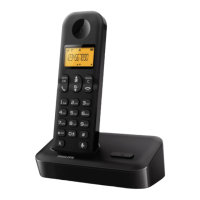
Do you have a question about the Philips DECT 221 and is the answer not in the manual?
General safety guidelines for using telephone equipment, covering fire, electric shock, and injury risks.
Details on electrical supply voltage, phase, and handset battery specifications (NiMH AAA).
Guidance on proper disposal, recycling, and potential interference with medical equipment or other devices.
Step-by-step guide for connecting the base unit, charger, and handset to power and phone line.
Instructions on how to charge the handset and indicators for battery status.
Explanation of the phone's digital security system for preventing unauthorized access and ensuring secure communication.
Procedure for pairing a new handset with the DECT 221/225 base station.
Overview of the handset keys and their functions, including navigation and call handling.
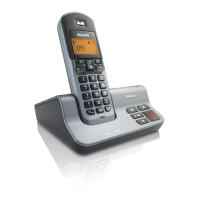
Identification of the DECT 221 and DECT 225 base station models and their features.
Explanation of various icons displayed on the handset screen, indicating battery, call status, and messages.
Overview of the phone's menu structure and available functions for settings and customization.
Basic steps to initiate a call using the TALK key and dialing the number.
Method for dialing a number before establishing the call, allowing for editing and review.
Methods for redialing numbers from the call list and using off-hook redialing.
How to dial numbers stored in the phonebook.
Methods to end an ongoing call.
How to receive an incoming call using the TALK key.
Using the loudspeaker for calls and adjusting earpiece/loudspeaker volume.
Temporarily silencing the microphone during a call.
Dialing numbers from the phonebook after seizing the phone line.
Using the recall feature to manage second calls and answer incoming calls during an active call.
How to access and browse stored contacts in the phonebook.
Step-by-step guide to add new contacts to the phonebook.
Procedure for modifying existing contacts in the phonebook.
How to remove individual contacts from the phonebook.
Option to erase all contacts from the phonebook at once.
Accessing the list of incoming calls with caller ID information.
Steps to view details of incoming calls like name, number, date, and time.
How to redial a number directly from the call record list.
Adding incoming call numbers from the call list to the phonebook.
Removing a single entry from the call history.
Erasing all incoming call records simultaneously.
Adding outgoing call numbers to the phonebook.
Removing a single outgoing call record.
Erasing all outgoing call records at once.
Customizing the phone's screen, including handset naming, language, and backlight.
Adjusting handset ring melodies, volume, and key tone.
Selecting between tone and pulse dialing modes for calls.
Setting the appropriate flash duration for operator services and call waiting.
Entering the local area code for proper Caller ID formatting.
Procedure for pairing a new handset with the base station.
Process for removing a handset from the base station.
Restoring the phone's display, sounds, and settings to default values.
Locking the keypad to prevent accidental key presses.
Quickly toggling the handset ringer on or off.
Notification for new voicemail messages.
Using the paging feature to locate a misplaced handset.
Making internal calls between handsets using the intercom function.
Making an inquiry call to another handset during an external call.
Moving an active external call to a different handset.
Setting up a conference call with two other parties.
Explanation of the display indicators on the answering machine.
How to activate or deactivate the answering machine function.
Managing outgoing messages, including recording and default messages.
Selecting the language for the default outgoing message.
Steps to record, listen to, and delete outgoing messages.
Information about recording and managing incoming caller messages.
How to playback, delete single, or delete all incoming messages.
Listening to callers before they leave a message and adjusting volume levels.
Setting the number of rings before the answering machine answers.
Setting or reviewing the PIN for remote access to the answering machine.
Accessing answering machine functions remotely via phone.
List of factory default settings for handset and answering machine features.
Information on FCC/Industry Canada compliance, REN, and telephone company notification requirements.
Contact information for authorized service centers in the USA and Canada.
Details on FCC rules, potential interference, RF radiation limits, and hearing aid compatibility.
Notes on communication privacy and Industry Canada technical specifications and equipment approval.
 General
| Brand | Philips |
|---|---|
| Model | DECT 221 |
| Category | Cordless Telephone |
| Language | English |

 To Next Page