EasyManua.ls Logo

Philips N4450 - Page 8

Philips N4450
22 pages
Print Icon
To Next Page IconTo Next Page
To Previous Page IconTo Previous Page
Loading...
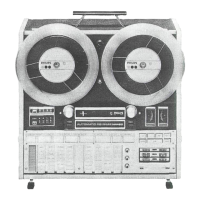
3.11.
TIP-TOUCH
KEYS
N
4450
is
operated
by
relay-controlled
electronic
tip-touch
keys
instead
of
the
conventional
mechanically-operated
push-buttons.
These
tip-touch
keys
respond
to
a
very
light
touch,
after
which
they
are
illuminated.
They
also
have
a
““memory”’,
which
means
that
e.g.
when
playback
is
interrupted
for
fast
winding,
the
relevant
start
key
remains
illuminated,
though
less
bright,
to
remind
you
of
the
direction
of
playback.
Another
advantage
of
these
keys
is
for
example,
during
play-
back
you
may
directly
press
the
start
key
for
the
other
direction
or
one
of
the
fast-winding
keys,
without
first
pressing
the
stop
key.
This
feature
also
ensures
that
when
different
keys
are
pressed
rapidly
after
each
other
the
recorder
and
the
tape
cannot
be
damaged,
as
the
last
command
is
always
carried
out.
In
conjunction
with
the
convenient
slide
potentio-
meters
for
recording
level,
volume,
balance
etc.
these
tip-
touch
keys
provide
for
true
ease
and
rapidity
of
operation.
3.12.
Hi-Fi
AMPLIFIER
The
N
4450
is
a
combination
of
a
Hi-Fi
tape
recorder
and
a
Hi-Fi
amplifier.
In
addition
to
reproduction
of
recordings
made
with
the
tape
recorder,
this
stereo
amplifier
can
also
be
used
for
amplifying
signals
from
all
other
sound
sources
connected
to
it,
such
as
microphone,
record
player,
tuner
etc.,
thus
forming
the
centre
of
a
complete
Hi-Fi
installation.
It
features
a
“SCRATCH”
(noise)
and
RUMBLE
filter
and
also
a
physiology
circuit
(“PHYS”)
which
boosts
the
low
and
high
tones
with
respect
to
the
mid
range.
The
controls
for
volume,
balance,
treble
and
bass
are
con-
veniently
operated
slide
potentiometers.
When
you
wish
to
use
the
amplifier
section
only
and
the
recording
section
is
not
needed,
you
can
render
the
tape
transport
inoperative
(thus
preventing
unnecessary
wear)
by
setting
the
function
selector
(12)
to
“AMP”.
The
amplifier
supplies
2x
20
Watts
continuous
power
(2
x
30
Watts
music
power)
and
is
provided
with
connections
for
loudspeaker
enclosures
with
an
impedance
between
4
and
8
ohms.
3.13.
SPLICING
JIG
Acces
to
the
jig for
editing
and
splicing
the
tape
(Fig.
9)
may
be
gained
by
removing
the
cover
below
the
tape
slot
in
a
forward
direction.
This
built-in
splicing
jig
consists
of
a
guide
slot
for the
tape,
two
tape
clips
and
an
oblique
guide
slot
for
the
anti-mag-
netic
tape
cutter.
It
has
the
advantage
that
the
tape
can
be
edited
with
the
reels
normally
placed
on
the
turntables.
A
very
useful
aid
in
tape-editing
is
the
Philips’
splicing
kit
SK
10
(optionally
available).
3.14.
REMOTE
CONTROL
All
tape
transport
functions
plus
the
recording
function
can
also
be
remote-controlled
with
remote
control
unit
N
6719.
This
remote
control
unit
is
an
optionally
extra
available
and
has
a
lead
of
approx.
7
m
length.
The
tip-touch
keys
on
the
remote
control
unit
correspond
to
the
tip-touch
keys
on
the
recorder
(keys
16
...
22).
The
keys
on
the
remote
control
unit
are
also
of
the
tip-touch
type,
which
illuminate
when
operated
and
have
a
“‘memory’’.
When
the
remute
control
unit
is
connected,
the
remote-control
keys
and
those
on
the
recorder
can
be
used
side
by
side.
The
unit
is
supplied
with
a
mounting
bracket
which
enables
the
unit
to
be
attached
to
a
cabinet,
an
easy-chair
or
a
wall.
3.15.
CONTINUOUS
TAPE
REEL
The
tape
recorder
can
be
used
in
conjunction
with
a
conti-
nuous
tape
reel
type
EL
1907/52
(CE
10).
A
programme
recorded
on
this
continuous
tape
reel
can
be
played
back
continuously
as
the
endless
tape
repeats
itself
indefinitely.
The
continuous
tape
reel
may
be
used,
for
instance,
to
repeat
commercials
in
department
stores
and
supermarkets.
3.16.
SLIDE
SYNCHRONISER
In
the
horizontal
position
of
the
recorder,
it
can
be
used
in
combination
with
slide
synchroniser
N
6400.
This
unit
allows
slides
to
be
synchronised
with
speech
and
music.
3.17.
TELEPHONE
COIL
With
the
aid
of
telephone
coil
N
6708
(not
available
in
Great
Britain),
you
can
record
telephone
conversations
with
this
recorder.
The
telephone
coil
is
then
connected
to
the
recorder
in
a
similar
way
as
a
microphone.
In
various
coun-
tries,
however,
recording
of
telephone
conversations
is
not
permitted
by
law.
Therefore,
should
you
wish
to
do
so,
we
recommend
that
you
first
ask
for
advice.
59

Related product manuals