4 MU1202 / MU1202X
INTRODUCTION
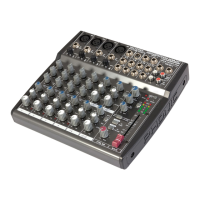
Thank you for choosing one of Phonic’s many quality compact
mixers. The MU1202 and MU1202X Compact Mixers – designed
by the ingenious engineers that have created a variety of mixers
fantastic in style and performance in the past – displays similar
prociency that previous Phonic products have shown; with
more than a few renements, of course. The MU series features
full gain ranges, amazingly low distortion levels, and incredibly
wide dynamic ranges, just showing the dominance these small
machines will have in the mixing World.
We know how eager you are to get started – wanting to get the
mixer out and hook it all up is probably your number one priority
right now – but before you do, we strongly urge you to take a
look through this manual. Inside, you will nd important facts and
gures on the set up, use and applications of your brand new
mixer. If you do happen to be one of the many people who atly
refuse to read user manuals, then we just urge you to at least
glance at the Instant Setup section. After glancing at or reading
through the manual (we applaud you if you do read the entire
manual), please store it in a place that is easy for you to nd,
because chances are there’s something you missed the rst time
around.
FEATURES
Common Features :
●
Audiophile-Quality & ultra low noise
●
4 mono mic/line channels
●
4 stereo channels
●
AUX/EFX sends on each channel
●
75Hz low-cut lter on mono channel
●
3-band EQ on each channel
●
+48V phantom power on mic channels
●
Control room/Phones source matrix for maximum monitor
exibility
●
EFX/AUX send cue for monitoring individual channel
●
Balanced TRS outputs
●
Optional rack-mounting kit
MU1202X :
●
32/40-bit digital effect processor with 16 effects plus one
main parameter control and tap delay
●
Separate EFX route control
GETTING STARTED
1. Ensure all power is turned off on your mixer. To totally ensure
this, the power supply should not be connected to the unit.
2. All faders and level controls should be set at the lowest
level and all channels switched off to ensure no sound is
inadvertently sent through the outputs when the device is
switched on. All levels can be altered to acceptable degrees
after the device is turned on using the channel setup
instructions.
3. Plug any necessary equipment into the device’s various
outputs. This could include ampliers and speakers,
monitors, signal processors, and/or recording devices.
4. Plug the supplied power cable into the inlet on the back of the
device and then into a power outlet of a suitable voltage.
5. Turn the power switch on and follow the channel setup
instructions to get the most out of your equipment.
CHANNEL SETUP
1. To ensure the correct audio level of the input channel is
selected, each of the level input controls of the Mixer should
be turned counterclockwise or down as far as they will go.
2. No input other than the one being set should have any
device plugged in. This will ensure the purest signal is used
when setting channels.
3. Set the level control of the channel you are setting to the 0
dB mark.
4. Ensure the channel has a signal sent to it similar to the signal
that will be sent when in common use. For example, if the
channel is using a microphone, then you should speak or
sing at the same level the performer normally would during
a performance; if a guitar is plugged into the channel, then
the guitar should also be strummed as it normally would be
(and so on). This ensures levels are completely accurate
and avoids having to reset them later.
5. Set the gain so the Level Meter indicates the audio level is
around 0 dB.
6. This channel is now ready to be used; you can stop making
the audio signal.
7. You can repeat the same process for other channels. Or
not, it’s your call.


 To Next Page