Preface
x LIFEPAK 12 Defibrillator/Monitor Operating Instructions
ABOUT AUTOMATED EXTERNAL DEFIBRILLATION
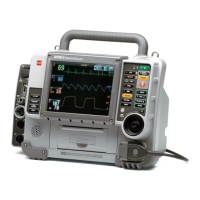
The following considerations and guidelines apply when using the LIFEPAK 12 defibrillator/monitor as
an automated external defibrillator (AED).
Operator Considerations
The LIFEPAK 12 defibrillator/monitor, when in AED mode, is a semiautomatic defibrillator that uses a
patented Shock Advisory System
™
. This software algorithm analyzes the patient’s electrocardiographic
(ECG) rhythm and indicates whether or not it detects a shockable rhythm. The LIFEPAK 12
defibrillator/monitor in AED mode requires operator interaction in order to defibrillate the patient.
The LIFEPAK 12 defibrillator/monitor in AED mode is intended for use by personnel who are
authorized by a physician/medical director and have, at a minimum, the following skills and training:
• CPR training.
• AED training equivalent to that recommended by the American Heart Association.
• Training in the use of the LIFEPAK 12 defibrillator/monitor in AED mode.
Indications
The AED mode is to be used only on patients in cardiopulmonary arrest. The patient must be
unconscious, pulseless, and not breathing normally before using the defibrillator to analyze the
patient’s ECG rhythm. In AED mode, the LIFEPAK 12 defibrillator/monitor is not intended for use on
pediatric patients less than 8 years old.
Contraindications
None known.
ABOUT DEFIBRILLATION THERAPY
A direct current defibrillator applies a brief, intense pulse of electricity to the heart muscle. The
LIFEPAK 12 defibrillator/monitor delivers this energy through disposable electrodes or standard
paddles applied to the patient’s chest.
Defibrillation is only one aspect of the medical care required to resuscitate a patient with a shockable
ECG rhythm. Depending on the situation, other supportive measures may include:
• Cardiopulmonary resuscitation (CPR)
• Administration of supplemental oxygen
• Drug therapy
Successful resuscitation is related to the length of time between the onset of a heart rhythm that does
not circulate blood (ventricular fibrillation, pulseless ventricular tachycardia) and defibrillation. The
American Heart Association has identified the following as critical links in the chain of survival from
cardiac arrest:
• Early access
• Early CPR by first responders or bystanders
• Early defibrillation
• Early advanced life support
The physiological state of the patient may affect the likelihood of successful defibrillation. Thus, failure
to resuscitate a patient is not a reliable indicator of defibrillator performance. Patients will often exhibit
a muscular response (such as jumping or twitching) during an energy transfer. The absence of such a
response is not a reliable indicator of actual energy delivery or device performance. For further
information, refer to the booklet, Defibrillation: What You Should Know.
The biphasic defibrillation waveform used in this device has been clinically tested only on adults; it has
not been tested on pediatric patients.


 To Next Page