Need help?
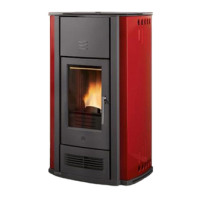
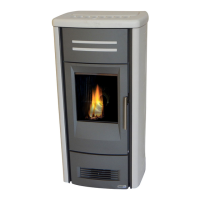
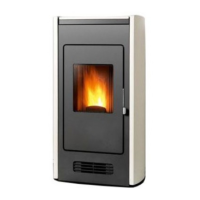
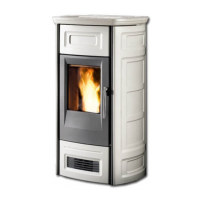
Do you have a question about the Piazzetta P955 and is the answer not in the manual?
Requirements for installing a vertical flue pipe for proper exhaust.
Requirements for flue chambers to collect solid matter and condensate.
Specifications for the chimney stack to ensure proper dispersion of combustion products.
Ensures the stove has adequate air for proper combustion.
Guidelines for selecting a safe and suitable location for the appliance.
Checking and ensuring the floor can support the stove's weight.
Matching the appliance's heating output to the room's requirement.
Critical distances to maintain from heat-sensitive materials and walls.
Rules for installing the flue system, ensuring airtightness and safety.
Procedures and safety measures for connecting to existing chimneys.
Requirements for installing an external flue pipe system.
Measures to prevent fires related to stove installation and use.
Details on recommended fuel type, length, diameter, and moisture content.
Key technical specifications including consumption, power, and dimensions.
Information on the appliance's rating plate and its importance.
Technical drawings and dimensions for the P950 model.
Technical drawings and dimensions for the P955 model.
Technical drawings and dimensions for the P956 model.
Wiring diagram illustrating the stove's electrical connections.
Guidelines on using high-quality wood pellets for optimal performance.
Precautions and steps to take before installing the stove.
Function and verification of the external pressure switch during installation.
Explanation of the patented system for heat distribution to adjoining rooms.
Guidance on assembling the stove's cladding.
Examples and guidelines for ducting hot air to heat multiple rooms.
How to connect the stove to the power supply and room sensor.
Steps for connecting an external thermostat to the stove's electronic board.
Instructions for installing the optional Y-element for ducting air to other rooms.
Safe and efficient method for loading wood pellets into the hopper.
Comprehensive guide to operating the stove using the remote control.
Procedure for initial stove ignition and break-in period.
Detailed steps for starting, operating, and adjusting the stove.
Describes the three phases of the stove's startup cycle.
How to diagnose and resolve issues related to failed ignition.
Adjusting power, fan speed, and temperature during standard operation.
How the external thermostat interacts with the stove's internal settings.
Safe steps for turning off and cooling down the stove.
Stove behavior and automatic restart after electrical power interruptions.
Description of the physical control panel buttons and their functions.
Guide to changing the language displayed on the remote control.
Accessing and utilizing the remote control's programming menus.
Instructions for setting the stove's internal clock and date.
Setting up automatic start/stop schedules for daily, weekly, or weekend operation.
Setting up a daily timer program for one operating cycle.
Setting up weekly timer programs, specifying days and times.
Configuring timer schedules specifically for Friday, Saturday, and Sunday.
How the Multicomfort feature optimizes heat distribution using room sensors.
Enabling or disabling audible signals for remote control commands.
Understanding the various status indicators and error messages on the display.
Adjusting the unit's transmission to prevent interference between multiple stoves.
Detailed explanation of the Multifuoco system's fan settings and heat distribution capabilities.
Monitors flue gas outlet pressure for safe operation.
Thermostats that prevent overheating of the pellet hopper and stove housing.
Monitors flue gas temperature to ensure safe operation and detect issues.
Measures ambient room temperature for optimal heating control.
Procedure for safely opening the stove door for maintenance.
Installation and use of the humidifier accessory for the P950 model.
Installation and use of the humidifier accessory for P955 and P956 models.
Safe procedures for collecting, storing, and disposing of stove ashes.
Regular cleaning of the grate and its support to ensure efficient combustion.
Procedure for emptying the ash tray.
Detailed steps for cleaning the internal firebox components.
Annual cleaning of the smoke chamber and fan area.
Recommended monthly maintenance for the flue system.
Guidelines for cleaning the stove's ceramic exterior surfaces.
How to clean the stove's enamelled metal components.
Daily cleaning routine for the stove's glass door.
Procedure for safely replacing the stove's glass panel if broken.
Steps to replace the batteries in the remote control.
Annual cleaning of the internal fans, recommending professional service.
Procedures for preparing the stove for extended periods of non-use.
Recommended annual checks and maintenance for optimal performance and safety.
Solutions for problems where the control panel display is not lit.
Troubleshooting issues related to the "ALF 1" safety device and smoke chamber pressure.
Diagnosing and resolving issues indicated by the "ALC" status for temperature cutouts.
Addressing problems indicated by the "NO ACC" status, usually related to ignition.
Troubleshooting issues related to the "MASS TEMP" safety device (flue gas temperature).
Resolving problems indicated by "NO CONN" status for smoke sensors.
Solutions for when the appliance starts but stops after a short period.
Procedure for safely replacing blown fuses in the electronic board and power socket.
Manufacturer's declaration that the pellet stoves comply with EU directives.
 General
| Type of fuel | Pellets |
|---|---|
| Flue Diameter | 80 mm |
| Nominal output | 8.7 kW |
| Power Output | 2.7-8.7 kW |
| Heating Capacity | up to 210 m³ |
| Hopper Capacity | 15 kg |
| Tank capacity | 15 kg |
| Consumption min/max | 2.0 kg/h |
| Burn time min/max | 25 h |
| Weight | 130 kg |

 To Next Page