EasyManua.ls Logo

Pioneer SC-85 - User Manual

Pioneer SC-85
8 pages
Print Icon
To Next Page IconTo Next Page
Loading...
1
Dolby Atmos-enabled Speakers Setup Instructions for
Elite Models SC-85, SC-87, and SC-89
Use this procedure to setup Dolby Atmos-enabled Speakers and update the A/V receiver’s firmware using a
USB storage device. If you have any difficulty carrying out these instructions, please call Pioneer’s Customer
Support Center toll free in the USA at 1-844-679-5350 for assistance.
The first step is to confirm the AVR’s firmware version is 1-290-008-518-121 or newer.
The buttons and connector mentioned in the following procedures are located on the Remote Control or the
AVR’s Front Panel as shown in Figure 1.
Check the Firmware Version
1. Turn on the receiver by pressing the
STANDBY/ON button.
2. If using the Remote, press the MAIN button.
3. Press the HOME MENU button and using the
or button, Select “4. System Setup” and
press the ENTER button.
4. Using the or button, Select “g. Other Setup”
and press the ENTER button.
Remote
AVR Front Panel
Figure 1
Question and Answer IconNeed help?

Do you have a question about the Pioneer SC-85 and is the answer not in the manual?

Summary

Firmware Check and Update

Check Firmware Version

Procedure to verify the current firmware version on the AVR by navigating through the system setup menu.

Firmware Update Requirements

Lists the necessary items, such as a USB storage device, and the location to download firmware files.

Firmware Update Procedure

Step-by-step guide for updating the AVR's firmware using a USB storage device, including important cautions.

Dolby Atmos Speaker Placement and Requirements

Room Requirements for Dolby Atmos

Specifies ideal ceiling characteristics and surface conditions for optimal Dolby Atmos audio reflection.

Equipment Requirements for Dolby Atmos

Lists the necessary compatible receiver/processor and encoded content for experiencing Dolby Atmos.

A;V Receiver Connections

Speaker Connections to AVR

Diagrams and instructions for connecting the Dolby Atmos speakers to the appropriate AVR terminals.

TV and Blu-ray Player Connections

Guide for connecting external audio and video sources, such as a TV and Blu-ray player, to the AVR.

AVR Speaker Setup and Calibration

AVR Speaker Setup Navigation

Steps to access and initiate the speaker setup menu via the AVR's HOME MENU.

Manual Speaker System Configuration

Detailed settings for speaker layout, levels, distances, and frequency reproduction for optimal sound.

Run MCACC Calibration

Instructions for performing automatic room acoustic calibration using the setup microphone for sound optimization.

Confirm Speaker Settings

Verification of the speaker settings after the setup and calibration procedures are completed.

Summary

Firmware Check and Update

Check Firmware Version

Procedure to verify the current firmware version on the AVR by navigating through the system setup menu.

Firmware Update Requirements

Lists the necessary items, such as a USB storage device, and the location to download firmware files.

Firmware Update Procedure

Step-by-step guide for updating the AVR's firmware using a USB storage device, including important cautions.

Dolby Atmos Speaker Placement and Requirements

Room Requirements for Dolby Atmos

Specifies ideal ceiling characteristics and surface conditions for optimal Dolby Atmos audio reflection.

Equipment Requirements for Dolby Atmos

Lists the necessary compatible receiver/processor and encoded content for experiencing Dolby Atmos.

A;V Receiver Connections

Speaker Connections to AVR

Diagrams and instructions for connecting the Dolby Atmos speakers to the appropriate AVR terminals.

TV and Blu-ray Player Connections

Guide for connecting external audio and video sources, such as a TV and Blu-ray player, to the AVR.

AVR Speaker Setup and Calibration

AVR Speaker Setup Navigation

Steps to access and initiate the speaker setup menu via the AVR's HOME MENU.

Manual Speaker System Configuration

Detailed settings for speaker layout, levels, distances, and frequency reproduction for optimal sound.

Run MCACC Calibration

Instructions for performing automatic room acoustic calibration using the setup microphone for sound optimization.

Confirm Speaker Settings

Verification of the speaker settings after the setup and calibration procedures are completed.

Overview

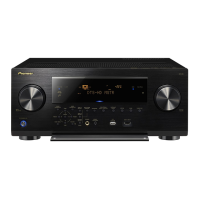
This document provides detailed instructions for setting up Dolby Atmos-enabled speakers and updating the firmware of Elite Pioneer A/V receivers (models SC-85, SC-87, and SC-89). The primary function of these instructions is to guide users through the process of configuring their home theater system to take full advantage of Dolby Atmos immersive audio technology and to ensure their receiver's software is up-to-date.

Device Function Description:

The Pioneer Elite A/V receivers are designed to be the central hub of a home theater system, processing audio and video signals from various sources and delivering them to speakers and a display. With Dolby Atmos capability, these receivers can decode and render object-based audio, creating a more immersive and three-dimensional sound experience by adding height channels. The setup process outlined in the manual ensures that the receiver correctly identifies and utilizes the connected Dolby Atmos-enabled speakers, optimizing the sound field for the listening environment.
Important Technical Specifications (as inferred from the manual):

  • Supported Speaker Configuration: The manual specifically details a 5.1.4 channel setup for Dolby Atmos, which includes front, center, surround, subwoofer, and four height channels (two front height and two rear height).
  • Speaker Types: The setup refers to specific Pioneer Elite speaker models (SP-EBS73, SP-EFS73, SP-EC73, SW-E10), but notes that other brands of Dolby Atmos-enabled speakers can also be used.
  • Subwoofer Configuration: Supports a single subwoofer (SW1 PLUS) or dual subwoofers (SW1+2 PLUS) for enhanced bass reproduction. A second subwoofer can be connected to the Subwoofer 2 PRE OUT.
  • Firmware Version: Requires firmware version 1-290-008-518-121 or newer for Dolby Atmos functionality.
  • USB Storage Device Requirements for Firmware Update: Must be formatted to FAT 16 or 32, with no preinstalled software (like U3) and preferably not a SanDisk device due to potential software upload issues.
  • Room Requirements for Dolby Atmos:
    • Horizontal ceiling.
    • Flat hard surface for audio reflection.
    • Ceiling height between 8 to 14 feet.
  • Equipment Requirements for Dolby Atmos:
    • A Dolby Atmos compatible receiver/processor (the Elite SC-85, SC-87, SC-89 models).
    • Dolby Atmos encoded content (e.g., Blu-ray discs like "Transformers: Age of Extinction").
  • Speaker Crossover Frequency: Recommended setting of 80Hz for optimal integration between speakers and subwoofer.
  • Speaker Size Settings: Front, Center, and Surround speakers are recommended to be set to "SMALL" when a subwoofer is connected.
  • Dolby Enabled Speaker Settings: "TFw" (Top Forward) and "TBw" (Top Backward) are set to "Dolby Sp" for Dolby Atmos-enabled speakers. "TMd" (Top Middle) is set to "NO".

Usage Features:

  • Intuitive On-Screen Display (OSD): The setup process heavily relies on an OSD menu accessible via the HOME MENU button on the remote or front panel. This guides users through various settings like System Setup, Manual SP Setup, and Speaker Setting.
  • Remote Control and Front Panel Operation: Instructions clearly indicate which buttons to use on both the remote control (STANDBY/ON, MAIN, HOME MENU, Navigation ARROWS, ENTER) and the AVR's front panel (USB connector, MCACC SETUP MIC).
  • MCACC (Multi-Channel Acoustic Calibration System) PRO: A key feature for optimizing sound quality. The manual guides users through running MCACC to calibrate speaker outputs, measure speaker-to-ceiling distance, and set the measurement type to "Expert." This automated calibration system adjusts speaker levels, distances, and EQ settings to create the best possible sound field for the specific listening environment.
  • Firmware Update Procedure: A step-by-step guide for updating the receiver's firmware via a USB storage device, ensuring the device has the latest features and bug fixes. This involves downloading firmware files from Pioneer's website, unzipping them, copying them to a USB device, and then initiating the update through the receiver's menu.
  • Speaker Placement Diagrams: Visual aids are provided for a 5.1.4 channel speaker system, illustrating the optimal placement of front, center, surround, subwoofer, and Dolby Atmos-enabled speakers for effective immersive audio.
  • Connection Diagrams: Detailed diagrams show how to connect all speakers, a TV, and a Blu-ray player to the AVR, including specific terminal labels for clarity.

Maintenance Features:

  • Firmware Updates: The ability to update firmware is a crucial maintenance feature, allowing the receiver to receive performance enhancements, bug fixes, and compatibility updates for new audio/video formats or devices. The manual provides a comprehensive guide for this process, including precautions to prevent damage during the update.
  • MCACC Calibration: Regular use of MCACC helps maintain optimal sound performance, especially if speakers are moved or the listening environment changes. It ensures the system is always calibrated for the best possible audio output.
  • Troubleshooting Support: The document provides a toll-free number for Pioneer's Customer Support Center (1-844-679-5350) for users who encounter difficulties, indicating a commitment to user support and device maintenance.
  • Speaker Setting Verification: After initial setup and MCACC, the manual instructs users to verify key speaker settings (Front, Center, Surr set to "SMALL") to ensure proper configuration, which is a form of ongoing system maintenance.

Pioneer SC-85 Specifications

General IconGeneral
BrandPioneer
ModelSC-85
CategorySpeakers
LanguageEnglish

Related product manuals