11
The Jib
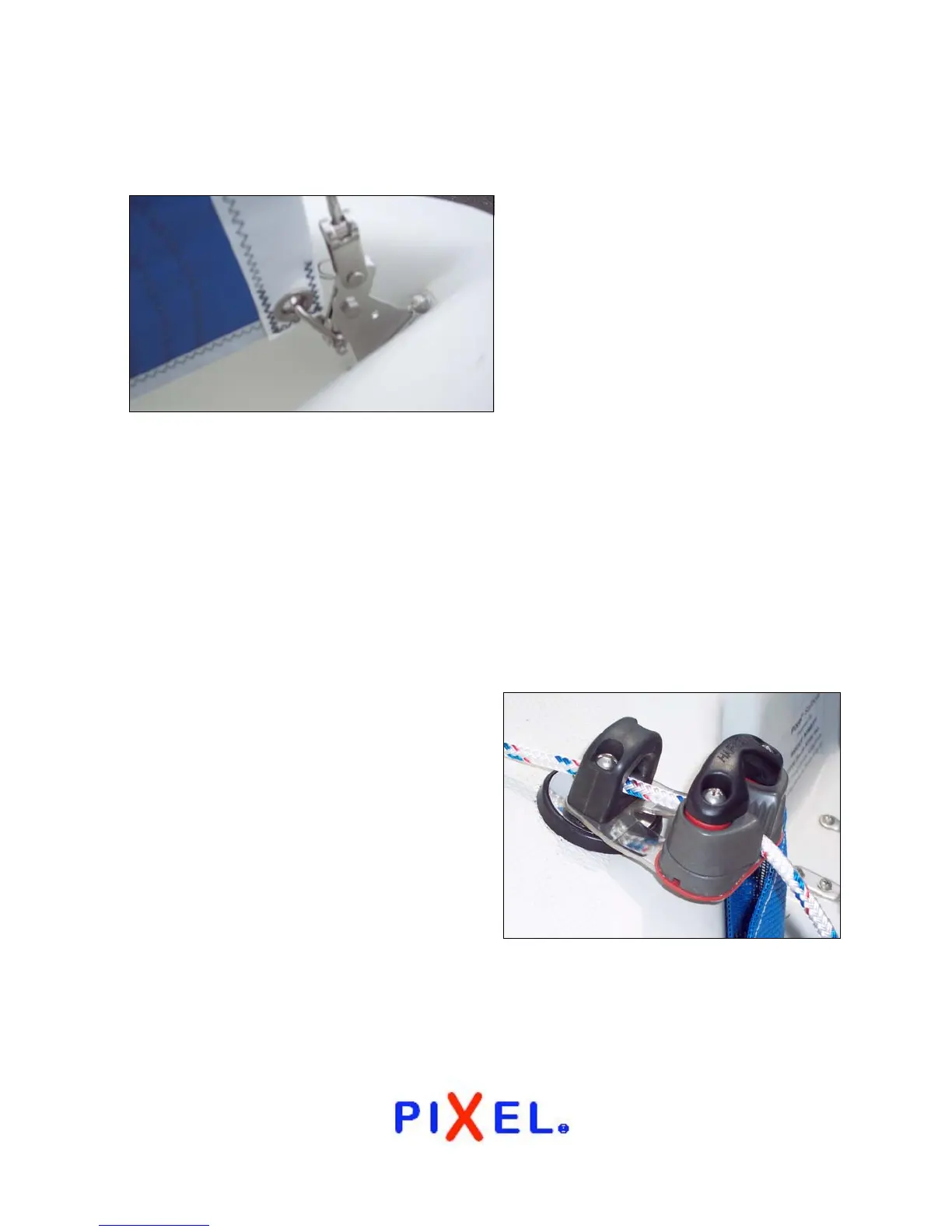
The jib lives in the sailbag with the mainsail. Locate the tack (bottom front
corner) of the jib, which has a long shackle in the sail grommet. The shackle
should be attached to the rear (aft)
hole in the headstay toggle. Next,
locate the jib sheets, attached to
the clew of the sail, and lead them
through their respective
fairlead/camcleats, found on the
deck each side of the mast step.
Remember to tie figure 8 knots in
the ends of the jib sheets.
Next, attach the plastic clips from the jib luff onto the headstay by holding
clip vertically, turn 90 degrees counter-clockwise, push on cable and turn
back 90 degrees clockwise. Last, tie the jib halyard into the grommet in the
head of the jib, and it is ready to hoist.
The Spinnaker
The spinnaker should be packed into the spinnaker turtle (the large blue
mesh bag). The turtle snaps onto 6 snaps on the deck forward of the mast.
Spinnaker sheets are found in the turtle. They are white line with a red
fleck. These lines lead from the sail
back to the Harken blocks tied onto the
deck on either side, then forward to the
cheek blocks just aft of the chainplates,
then inboard to the camcleat. There is
a clamcleat with a hook just forward of
the shroud on each side. These
clamcleats are used as guy hooks for
the afterguy on the side where the
spinnaker pole is attached to the sail.
The Rudder/Tiller/Hiking Stick
The rudder is a “kick-up” design, intended to fold upward in shallow water.
There is a green line attached to the rudder, which should be cleated on the
tiller port side, used to hold the rudder in the down position. When entering
shallow water, it is advisable to loosen this line. If the rudder rotates more


 To Next Page
 Loading...