Need help?
Do you have a question about the PMC DB1 and is the answer not in the manual?
Guidance on seeking assistance from dealers, local agents, or the manufacturer.
Details on completing and returning the guarantee card for product warranty.
Careful handling of speakers during unpacking and retaining packing materials for servicing.
Recommendation for amplifier power output and caution against amplifier clipping.
Describes standard, biwire, and biamp connection configurations for the loudspeaker.
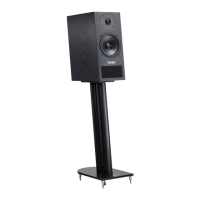
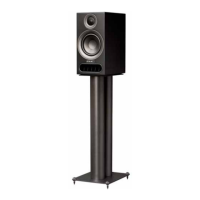
Advice on choosing appropriate stands for studio and home use for optimal positioning.
Guidance on positioning speakers to manipulate room acoustics and response.
Explanation of the break-in period for new loudspeakers to settle drive unit materials.
Instructions for cleaning the loudspeaker cabinets using a damp cloth.
Procedure for contacting support for technical problems and returning units for repair.
The PMC DB1/DB1S is a meticulously engineered loudspeaker designed to deliver high-fidelity audio reproduction. As part of The Professional Monitor Company's range, it embodies careful design and innovative acoustic principles to provide an exceptional listening experience.
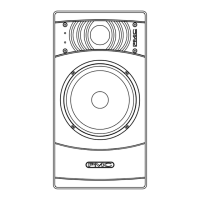
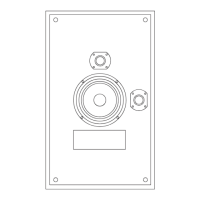
The primary function of the DB1/DB1S loudspeaker is to convert electrical audio signals into sound waves, accurately reproducing the full spectrum of audio content. It is designed for both professional studio environments and home audio setups, offering versatility in its application. The loudspeaker features a two-way design, separating the audio signal into high-frequency (HF) and low-frequency (LF) components, which are then handled by dedicated drivers. This separation ensures precise reproduction across the frequency range, minimizing distortion and maximizing clarity.
The DB1/DB1S is equipped with four binding posts on its rear connection panel, allowing for flexible wiring configurations. These posts accommodate either standard 4mm banana plugs or bare wire, providing options for various cable types. The design supports standard, bi-wire, and bi-amp operation, enabling users to optimize the loudspeaker's performance based on their amplifier setup and preferences. In standard operation, a single cable connects to either the upper or lower set of binding posts, with linking bars ensuring both HF and LF sections receive the signal. For bi-wire operation, the linking bars are removed, allowing separate cables from the amplifier to feed the HF and LF sections independently. Bi-amp operation takes this a step further, utilizing two separate amplifiers—one for the HF driver and one for the LF driver—both fed the same input signal, further enhancing control and fidelity.
The loudspeaker's internal components, including the drive units, are designed to settle over a period of "running in," which optimizes their performance. This ensures that the materials used in the drivers achieve their intended acoustic characteristics, leading to improved sound quality over time.
To maximize the performance of the DB1/DB1S, several usage features and recommendations are provided.
Amplifier Compatibility: It is recommended to use amplifiers with an output between 50 and 100 watts. While more powerful amplifiers can be used, caution is advised to prevent overdriving the loudspeaker, which can lead to damage. The manual emphasizes that a powerful amplifier operating well within its capabilities is generally safer for the speakers than a less powerful one pushed to its limits, as "clipping" (signal distortion from an overdriven amplifier) can be detrimental.
Connection Methods: Before making any connections, it is crucial to ensure the amplifier is switched off. The use of good quality, multi-stranded copper cables with a reasonable cross-sectional area is recommended for optimal signal transfer. For gold-plated binding posts, gold-plated banana plugs are strongly suggested to maintain signal integrity. The flexible connection options (standard, bi-wire, bi-amp) allow users to tailor their setup for desired sound characteristics and system compatibility.
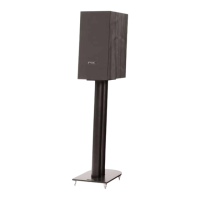
Loudspeaker Placement: The acoustic environment significantly impacts the loudspeaker's performance. Careful positioning can mitigate negative effects and enhance positive ones. For studio use, the DB1S can be mounted on a mixing console's meter bridge or on PMC's dedicated stands behind the console. For home use, stands between 20 and 24 inches in height are recommended. Proximity to room boundaries (floors and walls) can increase low-frequency energy but may also introduce unevenness in the response. Placing a loudspeaker low, near the floor, and in a corner can result in an overly bass-heavy and boomy sound, making the bass slow and ill-defined. Experimentation with placement is encouraged to find the optimal position for the specific room.
Running In Period: New loudspeakers, including the DB1/DB1S, require a period of "running in" for the drive unit materials to settle. Best results are typically achieved after 10 to 20 hours of use, allowing the speakers to reach their full acoustic potential.
Warranty and Support: The DB1/DB1S monitors are guaranteed against defects in material or workmanship for five years from the date of purchase. This warranty covers replacement parts free of charge, provided the failure is not due to misuse, accident, or negligence. For assistance, users should first contact their dealer. If the dealer cannot resolve the issue, the local agent/distributor or The Professional Monitor Co. should be contacted, with the serial number and purchase details ready.
The DB1/DB1S loudspeakers are designed for durability and ease of maintenance, with a focus on protecting the internal components.
Cabinet Cleaning: The loudspeaker cabinets should be cleaned with a damp cloth. Users are advised to take care when using wax or spray polishes, as these may not be suitable for the cabinet finish. There are no user-serviceable parts within the DB1 monitors, meaning internal maintenance should only be performed by qualified technicians.
Packaging Retention: The heavy-duty outer protective cardboard casing and dedicated foam supports used for shipping should be retained. This original packing is crucial for safely returning a unit for servicing if necessary. If the original packing is no longer available, a replacement set can be obtained directly from PMC or through a dealer. This emphasizes the importance of proper packaging to prevent damage during transit.
Troubleshooting and Service: In the unlikely event of a technical problem, users should contact their dealer first, describing the symptoms of the fault. The dealer may be able to suggest an immediate solution. If returning monitors for service, a note detailing the problem symptoms, along with the user's name, address, and telephone number, should be enclosed. This streamlined process ensures efficient diagnosis and repair.
In summary, the PMC DB1/DB1S is a sophisticated loudspeaker offering high-quality audio reproduction through its careful design, flexible usage options, and straightforward maintenance guidelines. Its robust construction and comprehensive support ensure a lasting and enjoyable listening experience for both professional and home users.
 General
| Frequency Response | 50Hz - 25kHz |
|---|---|
| Impedance | 8 Ohms |
| Sensitivity | 87dB |
| Crossover Frequency | 3kHz |
| Power Handling | 100W |


 To Next Page