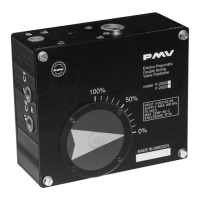
P-1500/P-1700-manual from PMV 14321-99.6
– 6 –
2.2 To increase the actuator travel
IMPORTANT: Always start
from zero! Make zero
adjustment (se 1). Adjust
slowly the control pressure to
the top value and check the
movement of the actuator.
Should you need moretravel:
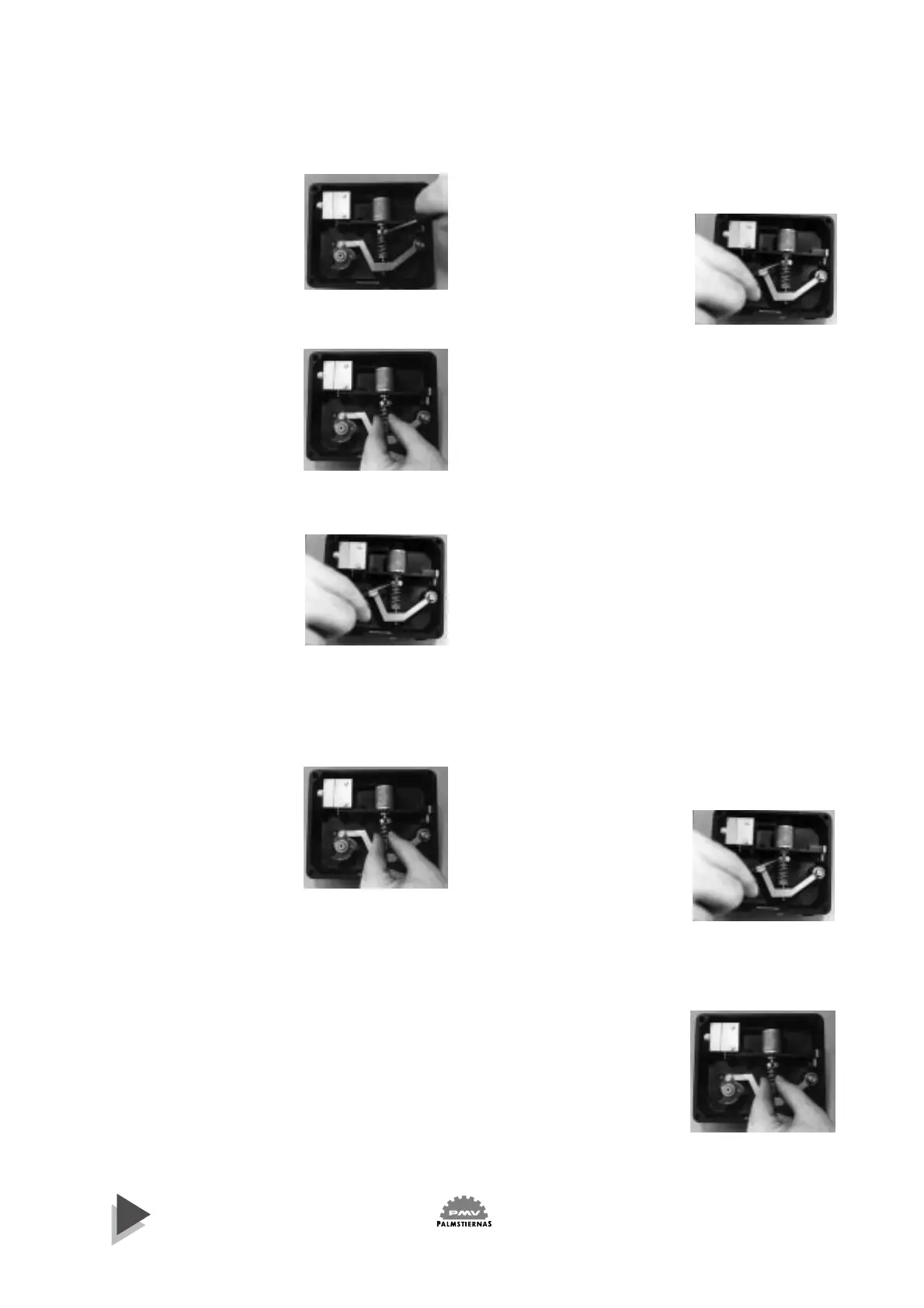
Back off the locking screw
which locks the spring to the
adjusting nut. Fig 5
Turn the spring clockwise to
increase the effective length
of the spring. Tighten the
screw. Fig 6
After making an adjustment
of the effective spring length
you must again start by ma-
king zero adjustments. Should
large adjustments be nec-
essary you must rearrange the
position of nut relative to the
spnng guide in order to be
able to make zero adjustments
Fig 7
Back off the locking screw
which locks the adjusting nut
to the spring guide.
Turn the spring and the spring
guide anticlock-wise until the
end of spring is almost in
contact with the flat of the top
spring guide.
Fig 8
Tighten screw (16).
Be sure the control pressure is
adjusted to minimum value.
When the zero is correctly
adjusted tum once more the
control pressure slowly to top
value and check the
movement of the actuator.
Make further adjustments if
necessary – N.B. a/ways go
back and startfrom the zero
position.
Fig 9
2.3 To reduce the actuator
travel
IMPORTANT: Always start
from zero! Make zero
adjustment (see I. above).
Adjust the control pressure
signal to the top value slowly
and check the movement of
the actuator. Should you need
less travel:
Please notice: Should large
adjustments be required you
must rearrange the position
of the nut relative to the top
spring guide in order to be
able to reduce the effective
length of the spring
Back off the locking screw.
Fig 10
Turn the spring and the top
spring guide clockwise to
allow space for the free end
of the spring when reducing
the amount of effective
spring length.
Fig 11
Figure 5
Figure 6
Figure 7
Figure 8
Figure 9
Figure 10
Figure 11


 To Next Page
 Loading...