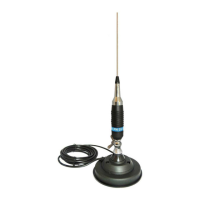
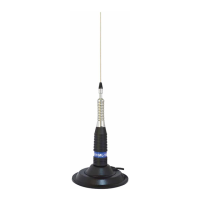
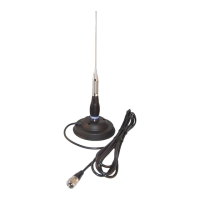
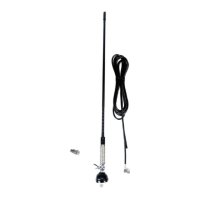
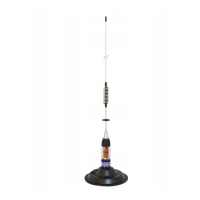
The PNI DBA27 is a base station antenna designed for radio communication, offering a range of features and technical specifications suitable for various applications. It functions as a base station antenna, meaning it is intended for fixed installations to provide reliable signal transmission and reception over a specified frequency range.
Function Description:
The PNI DBA27 serves as a crucial component in a radio communication system, specifically designed for base station applications. Its primary function is to efficiently radiate and receive radio frequency signals within its operational frequency range. As a base station antenna, it is typically mounted in a fixed location, such as on a mast or pole, to establish a stable and wide-ranging communication link. The omnidirectional radiation pattern ensures that signals are transmitted and received equally in all horizontal directions, making it suitable for scenarios where communication is required with mobile or dispersed units around the base station. The vertical polarization is a standard characteristic for many radio communication systems, ensuring compatibility with other vertically polarized antennas. The antenna's design, including its multiple segments and metal rods, contributes to its overall performance and stability. The direct grounding feature is a critical safety aspect, providing protection against lightning strikes and static buildup, thereby safeguarding the connected equipment and ensuring operational continuity.
Important Technical Specifications:
- Frequency Range: 26 - 28 MHz. This indicates the specific band of radio frequencies over which the antenna is designed to operate effectively. This range is commonly associated with CB (Citizens Band) radio and other similar communication services.
- Bandwidth: 5 MHz. This specification denotes the range of frequencies within the operating band over which the antenna maintains acceptable performance. A 5 MHz bandwidth within the 26-28 MHz range suggests good coverage for typical CB channels.
- Polarization: Vertical. This refers to the orientation of the electric field of the radio waves transmitted and received by the antenna. Vertical polarization is standard for many mobile and base station CB radio systems.
- Impedance: 50 Ohm. This is the characteristic impedance of the antenna, which should ideally match the impedance of the transmission line (coaxial cable) and the radio equipment for maximum power transfer and minimal signal loss. 50 ohms is a common standard in radio frequency systems.
- Gain: 5.5 dBi. Gain is a measure of the antenna's ability to direct power in a particular direction compared to an isotropic radiator. A gain of 5.5 dBi indicates that the antenna provides a significant boost in signal strength in its favored directions, enhancing communication range and clarity.
- Radiation: Omnidirectional. This describes the antenna's radiation pattern, meaning it transmits and receives signals equally well in all horizontal directions (360°). This is ideal for base stations that need to communicate with users in various directions.
- Horizontal Beam Width: 360°. This reiterates the omnidirectional nature of the antenna in the horizontal plane.
- Vertical Beam Width: 20°. This indicates the angular width of the main lobe of the antenna's radiation pattern in the vertical plane. A narrower vertical beam can concentrate power more effectively, especially useful for communicating with distant stations on a relatively flat terrain, while a wider beam might be better for hilly areas or communicating with aircraft.
- VSWR (Voltage Standing Wave Ratio): ≤1.5. VSWR is a measure of how efficiently radio frequency power is transmitted from the power source, through the transmission line, and into the antenna. A VSWR of 1.5 or less is generally considered good, indicating minimal reflected power and efficient power transfer.
- Lightning Protection: Direct Grounding. This is a critical safety feature, meaning the antenna is designed to be directly connected to an earth ground, providing a path for lightning strikes and static electricity to safely dissipate, protecting the radio equipment and personnel.
- Connector: SO-239. This specifies the type of coaxial connector used on the antenna. The SO-239 connector is a common type, often used with PL-259 plugs on coaxial cables, particularly in CB and amateur radio applications.
- Dimensions: Ø36 x 6200 mm. This provides the physical dimensions of the antenna, indicating a diameter of 36 mm and a total length of 6200 mm (6.2 meters). This substantial length suggests a robust and high-performing antenna, likely a multi-element design.
- Length: 6200mm. This is the overall physical length of the antenna.
- Radiant Material: Copper. Copper is an excellent electrical conductor, making it an ideal material for the radiating elements of an antenna due to its high conductivity and resistance to corrosion, which contributes to efficient signal transmission.
- Antenna Material: Aluminum alloy. Aluminum alloy is chosen for its lightweight properties, strength, and resistance to corrosion, making it suitable for outdoor antenna structures that need to withstand various weather conditions.
- Operating Temperature: -26°C ~ +80°C. This specifies the environmental temperature range within which the antenna is designed to operate reliably, indicating its suitability for a wide range of climates.
Usage Features:
The PNI DBA27 is designed for straightforward installation and reliable operation. Its segmented design allows for easier assembly and potentially more compact shipping. The installation process involves screwing together multiple segments and securing them with screws, ensuring a sturdy structure. The base of the antenna is fixed to a pole using screws, providing a stable mounting point. The inclusion of three metal rods, which are screwed into place, likely contributes to the antenna's ground plane or structural integrity, enhancing its performance. Finally, connecting the coaxial cable to the SO-239 connector completes the setup, allowing the antenna to be integrated with the radio system. The omnidirectional radiation pattern and vertical polarization make it user-friendly for general base station communication without requiring precise directional aiming. The direct grounding feature simplifies safety measures during installation and operation.
Maintenance Features:
While the manual does not explicitly detail maintenance procedures, several aspects of the antenna's design and materials suggest inherent maintenance considerations:
- Material Durability: The use of copper for radiant elements and aluminum alloy for the antenna structure indicates good resistance to corrosion and weathering. This choice of materials generally leads to a long operational life with minimal degradation from environmental exposure.
- Segmented Design: The segmented construction, secured with screws, allows for individual segments to be inspected or replaced if damaged, potentially simplifying repair processes compared to a single, monolithic structure.
- Direct Grounding: The direct grounding feature is a maintenance-reducing safety aspect, as it continuously protects the antenna and connected equipment from electrical surges, reducing the likelihood of damage that would require repair. Regular inspection of the ground connection would be a recommended maintenance practice.
- Connector Type: The SO-239 connector is a widely used and robust type, generally requiring minimal maintenance beyond ensuring a clean and secure connection.
- Operating Temperature Range: The broad operating temperature range (-26°C to +80°C) implies that the antenna is built to withstand significant thermal variations, reducing the need for temperature-related maintenance or protective measures.
Overall, the PNI DBA27 is a robust, high-performance base station antenna designed for reliable and efficient radio communication within the 26-28 MHz band, with features that prioritize ease of installation, safety, and durability.

 Need help?

 To Next Page
 General