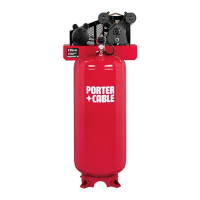
What causes excessive belt wear on my Porter-Cable C7510?
- SSamantha RogersSep 12, 2025
Excessive belt wear on your Porter-Cable Air Compressor can be caused by a loose or tight belt, a loose pulley, or pulley misalignment. Check the belt tension.
What causes excessive belt wear on my Porter-Cable C7510?
Excessive belt wear on your Porter-Cable Air Compressor can be caused by a loose or tight belt, a loose pulley, or pulley misalignment. Check the belt tension.
Why is my Porter-Cable Air Compressor making a squealing sound?
A squealing sound in your Porter-Cable Air Compressor could indicate that the compressor pump has no oil or the belt is loose. Check the oil level and the belt tension.
What to do if the pressure reading drops when using accessories with my Porter-Cable C7510 Air Compressor?
It's normal for some pressure drop to occur on your Porter-Cable Air Compressor when using accessories. If there's an excessive pressure drop, adjust the regulator while the accessory is in use.
Why won't my Porter-Cable C7510 motor run?
If your Porter-Cable Air Compressor motor isn't running, several issues could be the cause. First, allow the motor to cool off so the overload switch can automatically reset. The motor should restart when the tank pressure drops below the pressure switch's cut-in point. Inspect the check valve; if stuck, remove and clean, or replace it. Check the wiring connections inside the pressure switch and terminal box. Ensure the pressure release valve on the pressure switch has unloaded head pressure; if not, replace the switch. Check the fuse box for blown fuses and replace as needed, or reset the circuit breaker. Ensure you're using the correct time-delay fuse and check for low voltage conditions or improper extension cords. Disconnect other appliances from the circuit or operate the compressor o...
Explains the meaning of DANGER, WARNING, and CAUTION safety symbols.
Covers warnings on dust exposure and general air tool safety precautions.
Instructions to prevent fire and explosion risks from the compressor.
Covers air tank integrity and risks from accessory pressure.
Safety measures to prevent injury from flying objects.
Guidelines for electrical safety and proper grounding.
Hazards of breathing compressor air and sprayed materials.
Warnings about touching hot compressor parts.
Risks of injury from contact with moving parts like belts.
Importance of stable placement to prevent falling.
Precautions for safely transporting the air compressor.
Guidelines for safe and alert operation of the compressor.
Definitions of terms used in the manual, such as CFM, SCFM, PSIG.
Detailed specifications and recommended duty cycle for the compressor.
Tools required and steps for unpacking the air compressor.
Procedure for adding the correct type and amount of oil to the pump.
Guidelines for locating and setting up the air compressor.
Instructions for securely mounting the compressor to prevent vibration.
Important considerations for safe and proper electrical wiring.
Details on how to properly ground the air compressor.
Warning on pipe material and tips for system setup.
Familiarization with the air compressor and its components.
Overview of the compressor's main controls and their functions.
Steps for safely shutting down the air compressor.
Essential steps for the initial break-in of the compressor.
Actions to perform before starting the compressor.
Instructions on how to safely start the air compressor.
Schedule of routine maintenance tasks for the user.
Procedure to ensure the safety valve is functioning correctly.
How to drain water condensation from the air tank.
How to check and change the compressor oil.
How to inspect, clean, or replace the air filter.
Procedures for removing the belt guard and replacing the belt.
How to adjust the drive belt tension correctly.
Procedure to ensure proper alignment of pulleys for belt performance.
Annual check of pump valves and head bolt torquing.
Method to check air lines and fittings for leaks.
Safety steps to take before performing service or adjustments.
Detailed steps for replacing or cleaning the check valve.
Explanation of the motor's thermal overload protector and reset.
Steps to prepare the compressor for storage.
Addresses excessive pressure, fitting leaks, check valve leaks.
Troubleshooting leaks in the air tank, welds, or pressure switch.
Addresses regulated pressure drop and safety valve leaks.
Diagnosing low air supply and restricted air intake.
Common causes and corrections for the motor not running.
Addresses knocking, squealing, and excessive belt wear.
Details warranty durations and what is covered.
Outlines user duties, claim process, and warranty exclusions.
| Brand | Porter-Cable |
|---|---|
| Model | C7510 |
| Category | Air Compressor |
| Language | English |


Loading...