9
DEPTH GUIDE
This feature allows you to precisely cut material at a specified depth.
•
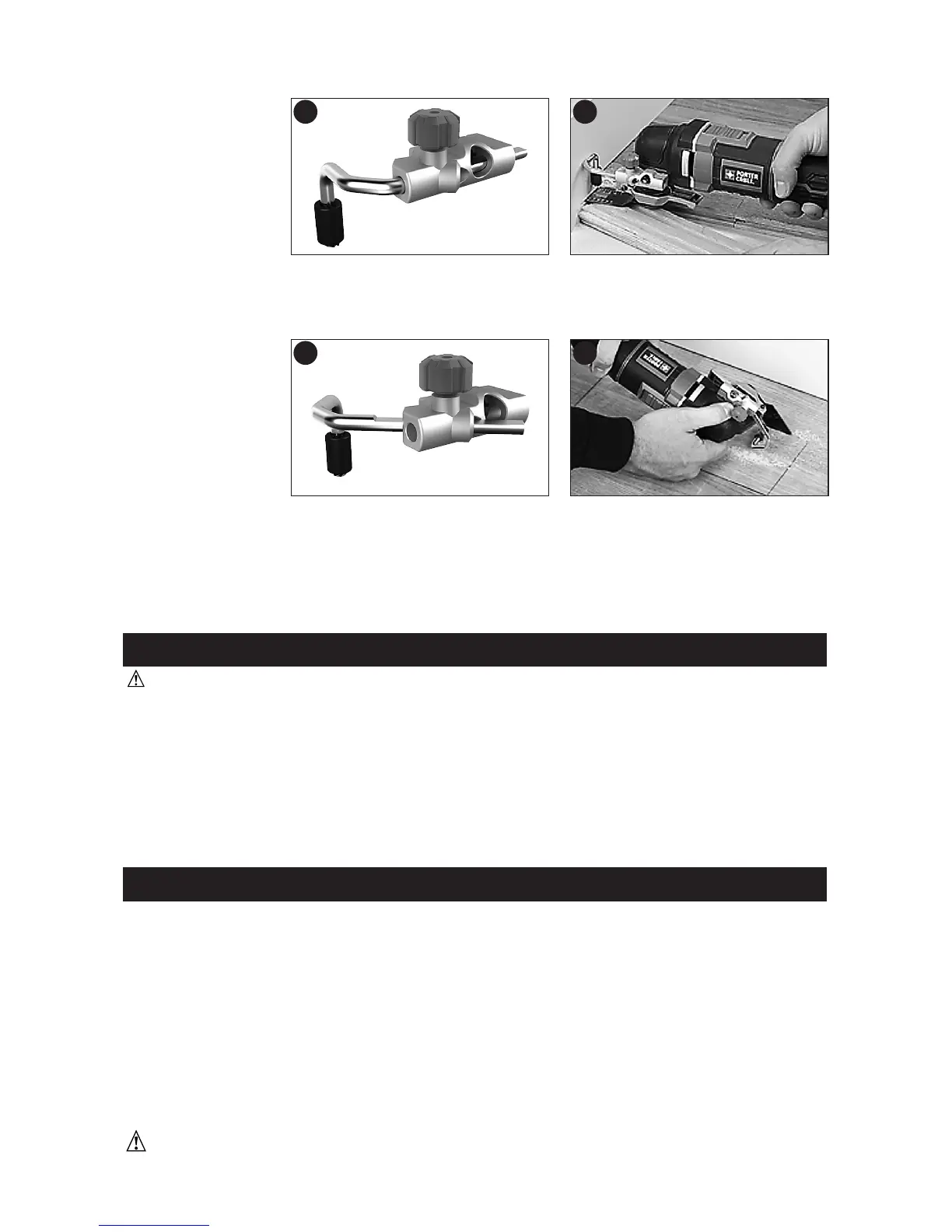
To use the depth
guide, insert the
guide as shown in
figure 10 into the
front slot on the
guide block.
•Adjustthelengthof
the guide by pulling
out or pushing
inward to achieve
the desired cut depth as shown
in figure 11
.
•Securetheguideinplacebyturningthedepth/cut
adjustment knob clockwise. To
release the guide turn the
depth/cut
adjustment knob counterclockwise.
CUT GUIDE
This feature allows
you to more
accurately track a
marked cut line.
•
To use the cut
guide, insert the
guide as shown in
figure 12 into the
slots on the left and right sides of the guide block.
•Adjustthelengthoftheguidebypullingoutorpushinginwardtoachievethedesired
length as shown
in figure 13
.
•Securetheguideinplacebyturningthedepth/cut
adjustment knob clockwise. To
release the guide turn the
depth/cut
adjustment knob counterclockwise.
SANDING
WARNING:
Fire hazard. When working on metal surfaces, do not use a vacuum
cleaner because sparks are generated. Wear safety glasses and a dust mask. Due to the danger
of fire, do not use your sander to sand magnesium surfaces. Do not use for wet sanding.
NOTE:
Do not rest fingers on platen during use. Move it in long sweeping strokes across the
surface, letting it do the work. Light pressure is all that is required for sanding. Excessive pressure
will slow the tool and produce inferior results. Check your work often, product is capable of
removing material rapidly. Excessive force will reduce the working efficiency and cause motor
overload. Replacing the sanding sheet regularly will maintain optimum working efficiency.
NOTE: Always ensure the work piece is firmly held or clamped to prevent movement. Any
movement of the material may affect the quality of the sanding finish.
HELPFUL HINTS
•Alwaysensuretheworkpieceisfirmlyheldorclampedtopreventmovement.Any
movement of the material may affect the quality of the cutting or sanding finish.
•Donotstartsandingwithouthavingthesandpaperattachedtosandingplaten.
•Usecoarsegritpapertosandroughsurfaces,mediumgritforsmoothsurfacesand
fine grit for the finishing surfaces. If necessary, first make a test run on scrap material.
•Excessiveforcewillreducetheworkingefficiencyandcausemotoroverload.
Replacing the accessory regularly will maintain optimum working efficiency.
•Donotallowthesandpapertowearaway,itwilldamagethesandingpad.
•Ifthetooloverheats,especiallywhenusedatlowspeed,setthespeedtomaximum
and run it with no load for 2-3 minutes to cool the motor. Avoid prolonged usage at very
low speeds. Always keep the blade sharp.
MAINTENANCE
CAUTION: Never use solvents or other harsh chemicals for cleaning the non-
metallic parts of the tool. Use only mild soap and damp cloth to clean the tool. Never let
any liquid get inside the tool; never immerse any part of the tool into a liquid.
13
1110
12





 To Next Page