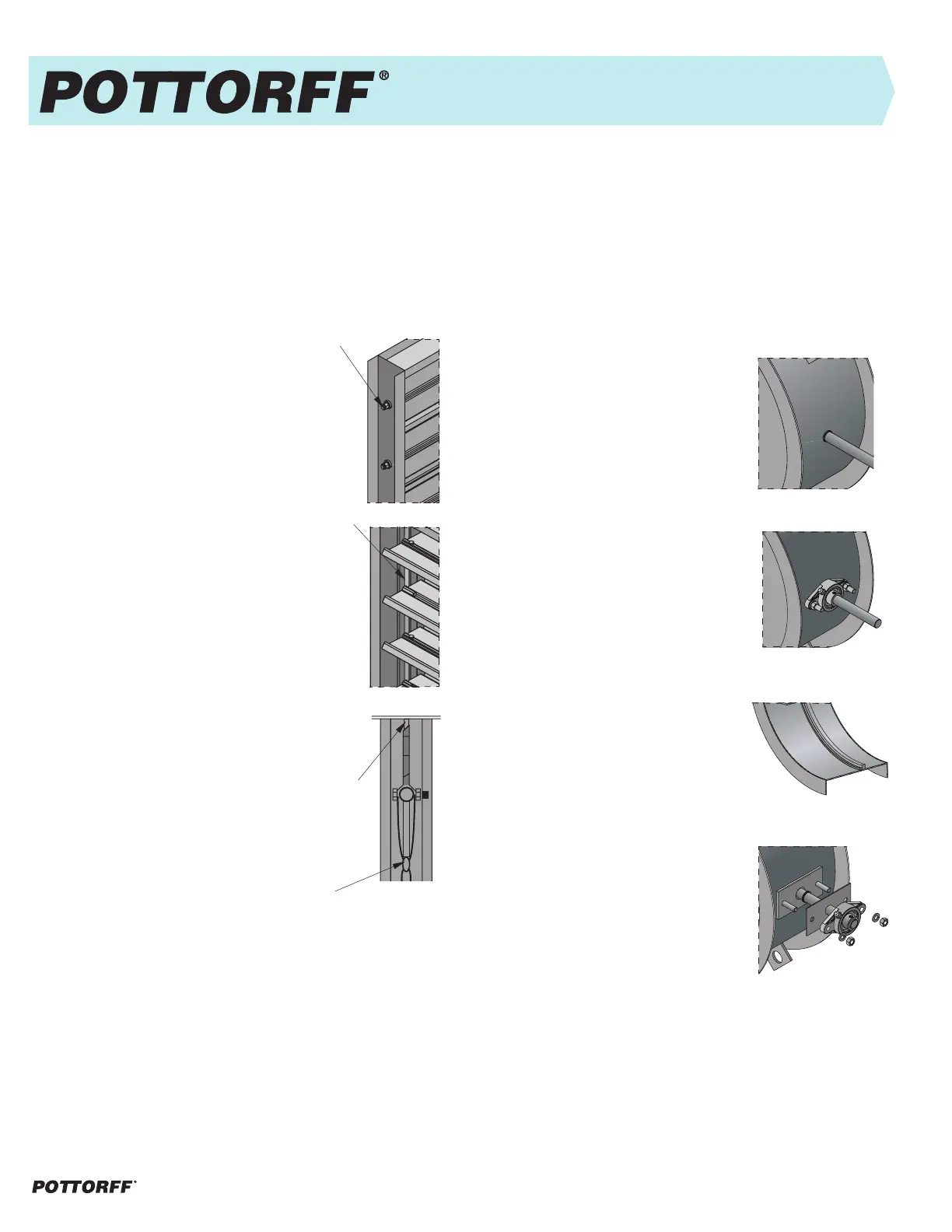
Bearings
Sleeve Bearing
Ball Bearing
Jamb Seal
Stop Seal
O-ring Axle Seal
Blade Seal
Blade Seal
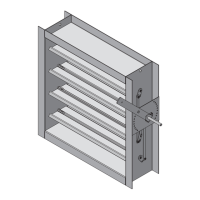
Rectangular Dampers
1. Clean the dampers. Over time, dirt and
grime may collect on damper surfaces.
This can be a hindrance to airflow as
well as reduce the sealing efficiency of
the damper when closed. Be especially
careful in cleaning non-metallic blade
seals as they can be torn if abused. Mild
soap and water is the recommended
cleaning agent. Avoid abrasives and
solvents as these could degrade seals,
adhesives, oil on bearings, etc.
2. Check moving parts such as crank arms,
linkages, pins, blades, etc., to make sure
they move freely. While not required,
lubricating these components can prevent
possible rusting and unnecessary friction
increase. Use only a molybdenum spray
oil or similar graphite-based oil as regular
lubricating oil will attract dirt.
3. The bearings located on the blade axles
do not require lubrication.
4. If installed, inspect the blade seals and
stop seals for damage such as tears and
nicks. If damaged, replace as needed.
5. Check for worn shaft seals if applicable
and repair or replace as necessary.
6. Look for debris that may be interfering
with blade closure or effective sealing of
the blades and remove.
7. Check for loose hardware.
Round Dampers
1. Clean the dampers. Over time, dirt and
grime may collect on damper surfaces.
This can be a hindrance to airflow as
well as reduce the sealing efficiency of
the damper when closed. Be especially
careful in cleaning non-metallic blade
seals as they can be torn if abused. Mild
soap and water is the recommended
cleaning agent. Avoid abrasives and
solvents as these could degrade seals,
adhesives, oil on bearings, etc.
2. Check moving parts such as crank arms,
linkages, pins, blades, etc., to make sure
they move freely. While not required,
lubricating these components can prevent
possible rusting and unnecessary friction
increase. Use only a molybdenum spray
oil or similar graphite-based oil as regular
lubricating oil will attract dirt.
3. If equipped, sleeve bearings located on
the blade axle do not require lubrication.
Ball bearings with grease fittings should
be lubricated twice a year minimum with
a NLG1 Grade 2 lithium 12-hydrostearate
grease.
4. If installed, inspect the blade seals and/
or axle o-rings for damage such as
tears and nicks. If damaged, replace as
needed.
5. Check for worn shaft seals if applicable
and repair or replace as necessary.
6. Look for debris that may be interfering
with blade closure or effective sealing of
the blades and remove.
7. Check for loose hardware.
Refer to the actuator installation manual
for details on the actuator maintenance
requirements as well.
Refer to the actuator installation manual
for details on the actuator maintenance
requirements as well.
Maintenance
Pottorff dampers are designed to be maintenance free under normal
operation. Dampers are to be installed square, level, and straight to prevent
binding during operation. The following damper maintenance is suggested
to help ensure proper operation and increase life expectancy of the damper.
The frequency of maintenance should be determined by the severity of the
application. Before performing maintenance ensure that the damper has
been locked out. The blades should also be securely blocked to eliminate the
potential for movement while maintaining.
Industrial Damper
Installation, Operation, and Maintenance Manual
Industrial Damper IOM 3 of 4, February, 2024 pottorff.com


 To Next Page
 Loading...