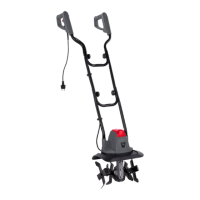
This document describes the POWERPLUS POWEG7010 1050 W electric tiller, designed for aerating lawns and grassy areas in private domestic and hobby gardens. It is suitable for breaking sod, preparing seed beds, cultivating gardens and flower beds, and digging small holes for planting saplings or potted plants. It is not intended for use in public areas, parks, sports areas, agriculture, or forestry, nor for commercial use.
Important Safety Information:
The appliance is not intended for use by persons (including children) with reduced physical, sensory, or mental capabilities, or lack of experience and knowledge, unless supervised or instructed by a person responsible for their safety. Children should be supervised to ensure they do not play with the appliance. Always read the manual and general safety instructions carefully before use. The power tool should only be passed on together with these instructions.
Description (Fig. A):
The tiller consists of several key components:
- Safety switch / trigger lever combination
- Cable relief
- Guide bar upper section
- Carrying handle
- Guide bar middle section
- Guide bar lower section
- Motor housing
- Protective shield
- Tines
Package Content List:
The package includes:
- 1 x 1050 W cultivator
- 1 x plastic bag with small parts
- 1 x manual
Upon unpacking, remove all packing materials, check for completeness, and inspect the appliance, power cord, power plug, and all accessories for transportation damages. Keep packaging materials until the end of the warranty period. Packing materials are not toys and pose a suffocation risk for children.
Symbols:
The manual and machine use various symbols:
- Warning / Danger!
- Read the manual carefully before use.
- CE marking: In accordance with essential applicable safety standards of European directives.
- Keep bystanders away from the danger zone!
- Always switch off the appliance, disconnect power, and wait for the machine to stop before maintenance, cleaning, or repair.
- Wear ear guards and goggles.
- Wear gloves.
- Do not use the appliance in wet weather conditions!
- Remove plug from mains immediately if the cable is damaged or cut.
- Cutting danger!
General Power Tool Safety Warnings:
- Work area: Keep the work area clean, well-lit, and free from flammable liquids, gases, or dust. Keep children and bystanders away.
- Electrical safety: Always check that the power supply matches the voltage on the rating plate. Power tool plugs must match the outlet. Avoid body contact with earthed surfaces. Do not expose power tools to rain or wet conditions. Do not abuse the cord. Use an extension cord suitable for outdoor use when operating outdoors. If operating in damp locations, use a residual current device (RCD) protected supply.
- Personal safety: Stay alert, use common sense, and do not operate the tool when tired or under the influence of drugs, alcohol, or medication. Use safety equipment, including eye protection, dust mask, non-skid safety shoes, hard hat, or hearing protection. Avoid accidental starting. Remove adjusting keys or wrenches before turning on the power tool. Do not overreach; maintain proper footing and balance. Dress properly; keep hair, clothing, and gloves away from moving parts. If dust extraction/collection devices are provided, ensure they are connected and properly used.
- Power tool use and care: Do not force the power tool. Use the correct tool for the application. Do not use the power tool if the switch does not turn it on and off. Disconnect the plug from the power source before making adjustments, changing accessories, or storing. Store idle power tools out of reach of children. Maintain power tools; check for misalignment, sticking, breakage, and other conditions that may affect operation. Keep cutting tools sharp and clean. Use the power tool, accessories, and tool bits according to instructions and intended use.
- Service: Have your power tool serviced by a qualified repair person using identical replacement parts to maintain safety.
Additional Safety Warnings for Tillers:
- Before operation: Remove all foreign bodies from the lawn. Work in daylight or good artificial light. Wear eye protection, face or dust mask, rubber gloves, substantial footwear, and protective hair covering. Avoid loose clothing or jewelry.
- Proper use: The user is responsible for third parties. Do not operate near underground electric cables, telephone lines, pipes, or hoses. Ensure socket ratings match the appliance's rating label. Only use if the safety distance provided by the guide bar is complied with. Do not operate on steep slopes; slow down and maintain good footing. Ensure tines are not touching foreign objects and are free to move before starting. Grip the guide bar firmly with both hands. Be aware that the application may bounce or jump if tines strike hard soil, frozen ground, or buried obstacles. Keep hands, feet, and clothing away from rotating tines. Guide the appliance at walking pace. Be aware of the extension cord; guide it away from tines. If the appliance strikes a foreign body, inspect for damage and repair before restarting. If the appliance vibrates abnormally, switch off and check the cause. Lift the application by the guide bar to move it. Always switch off, disconnect the plug, and wait for the application to stop before maintenance or cleaning. Use caution when cleaning or performing maintenance; wear gloves. It is forbidden to move or modify any electrical or mechanical safety devices.
- Electrical safety: Mains voltage must correspond to the technical data plate (230 V~50 Hz). A safety circuit-breaker (10-30 mA) is recommended.
- Guidelines for using extension cords: Ensure the extension cord is in good condition and heavy enough for the current drawn. Replace damaged cords. Protect cords from sharp objects, excessive heat, and damp/wet areas. Ensure the switch is OFF before connecting to the power line. Running at a lower voltage will damage the motor. This tool must be grounded to protect the operator from electric shock.
Assembly:
The product must be assembled correctly before use.
- Insert the lower handle section to the motor housing and fix with two M4x16 screws (Fig. 1-1).
- Attach the center handle section to the lower handle sections using two M6x45 bolts and wing nuts (Fig. 1-2).
- Fasten the upper handle section to the center handle section using two M6x45 bolts and wing nuts (Fig. 1-3).
- Use the two supplied cable clips to secure the cord (Fig. 1-4).
Operation:
- Double insulation: The tiller has double insulation, meaning all external metal parts are insulated from the electrical supply by an insulation layer between electrical and mechanical parts, ensuring maximum safety.
- Overheat protection: If the application is blocked or the motor is overloaded, the motor will switch off automatically. Release the trigger lever and wait for the motor to cool down (approx. 15 minutes) before restarting.
- Connection to mains (Fig. 2): Plug the appliance connection line into the safety switch/trigger lever combination and secure it with the cable relief. The mains wire loop must be long enough for the cable relief to slide from side to side.
- Starting up (Fig. 3): Press safety lock button A of the switch/trigger lever combination, then pull trigger lever B against the bar. The motor will start, and tines will rotate. Keep the trigger lever held while releasing the safety lock button. To stop, release the trigger lever.
- Tips: Move the application to the work area before starting. Hold firmly when switching on. Tines will pull the tiller forward; press the carrying handle to lower tines slowly. Pulling the tiller back towards you will make tines dig deeper. For breaking sod or deep tilling, allow tines to pull forward, then pull back repeatedly for best effect. If the tiller digs deep enough to stay in one spot, gently rock it side to side to move forward again. For preparing seed beds, use tilling patterns shown in Fig. 4: Pattern A (two passes at right angles) or Pattern B (two overlapping passes). Take care when moving backward and pulling the tiller to prevent tripping.
Transport:
Always switch off the motor before transporting. Tines and the unit can be damaged if moved over solid ground with the motor off. Prevent tines from touching the ground by carrying the tiller by its guide bar.
Clearing tines of foreign objects:
If a stone, root, or tall grass/weeds become lodged, release the trigger lever, unplug the tiller, and dislodge or remove obstacles. To ease removal of wrapped grass/weeds, remove one or more tines from the shaft (see Tine Removal and Installation).
Cleaning and Maintenance:
Always pull the power plug before performing any work on the equipment.
- Prior to each use: Check the connecting cable for damage or aging. Check the cutting cylinder and ensure all threaded connections are tight. If tines are blunt, have them repaired by a specialist.
- Once per season: Lubricate tines and shaft. At the end of the season, have the application checked and serviced in a specialist workshop.
- General cleaning: Always clean the application after use. Clean the underside of the housing, tines, protective shield, and fender with a scrubbing brush or soft cloth dampened with mild soap and water. Never splash with water. Use a stiff brush or dampened cloth to remove soil and debris from tines and transmission. Clean the ventilator and remove grass/dirt. Wipe tines and shaft dry and apply a light coat of oil.
- Tines Removal and Installation (Fig. 5): Worn tines lead to poor performance and motor overload. Check tines before each use and sharpen or replace them when necessary (recommended by a specialist). Disconnect from mains and wear protective gloves. To remove complete tine assemblies: remove the M8x40 hex head bolt from the shaft, then take off the outer tine set. Reverse steps to install.
- Change tines from bracket: If one or two tines are broken, change only the damaged tine. Loosen screws from one side while holding lock nuts from the other. Take off the damaged tine and replace.
- Checking transmission lubricant (Fig. 6): The drain screw plug is on the right side of the transmission housing. Lay the tiller on its left side and clean the transmission before removing the drain screw. Use an 8 mm hex key to unscrew the plug and empty the oil. Fill with high-quality, automotive-grade grease using a grease gun until it seeps out around the nozzle hole. Reinstall the drain screw plug.
Storage:
Store the tiller in a dry, clean room, out of reach of children. During extended storage (e.g., winter), protect the application against corrosion and frost. At the end of the season or if not used for over a month: clean the application, wipe metal surfaces with oil-impregnated cloth (non-resinous oil) or spray fine oil to protect from corrosion, fold the guide bar down, and store in a suitable place.
Troubleshooting:
| Problem | Possible causes | Remedy
The POWERPLUS POWEG7010 1050 W Cultivator is an electric tiller designed for garden maintenance.
Function Description
The primary function of this appliance is to aerate lawns and grassy areas, break sod, prepare seed beds, and cultivate gardens and flower beds. It can also be used to dig small holes for planting saplings or potted plants. The tiller operates by rotating tines that break up and mix the soil.
Important Technical Specifications
- Power Supply Voltage: 230-240V~ 50 Hz
- Power Consumption: 1050 W
- Idle Speed: 380 min⁻¹
- Working Width: 320 mm
- Working Depth Max.: 220 mm
- Acoustic Pressure Level (LpA): 80 dB(A) (K=3)
- Acoustic Power Level (LwA): 93 dB(A)
- Vibration (aw): 7.5 m/s² (K=1.5 m/s²)
- Insulation: Double insulation for enhanced safety.
- Overheat Protection: Automatic motor shutdown in case of blockage or overload.
Usage Features
- Intended Use: Specifically for private domestic and hobby gardens. Not for public areas, parks, sports areas, agriculture, forestry, or commercial use.
- Assembly: Requires assembly of the handle sections (upper, middle, lower) to the motor housing using provided screws, bolts, and wing nuts. Cable clips are used to secure the cord.
- Starting: To start, press the safety lock button (A) and then pull the trigger lever (B) against the bar. The motor will start, and the tines will rotate. The trigger lever must be held while releasing the safety lock button.
- Stopping: Release the trigger lever, and it will automatically return to its start position, stopping the appliance.
- Tilling Technique:
- The tines pull the tiller forward during operation; press the carrying handle to lower the tines slowly.
- Pulling the tiller back towards the user allows the tines to dig deeper and more aggressively.
- For breaking sod or deep tilling, allow the tines to pull forward to arm's reach, then firmly pull back. Repeating this forward and backward motion is most effective.
- If the tiller digs deep enough to stay in one spot, gently rock it side to side to move forward again.
- For seed bed preparation, two passes are recommended: either at right angles to each other (Pattern A) or overlapping (Pattern B).
- Safety during operation:
- Always work in daylight or sufficiently good artificial light.
- Wear appropriate safety gear: eye protection, face or dust mask (in dusty conditions), rubber gloves, substantial footwear, and protective hair covering. Avoid loose clothing or jewelry.
- Maintain proper footing and balance, and avoid overreaching.
- Keep hands, feet, and clothing away from rotating tines.
- Be mindful of the extension cord, guiding it away from the tines at all times to prevent tripping or cutting.
- Do not operate near underground electric cables, telephone lines, pipes, or hoses.
- Do not operate on slopes that are too steep for safe operation.
- Extension Cords: Use outdoor-rated extension cords that are heavy enough for the current draw (minimum 1.5 mm² cross-section for up to 75 m length, H07RN-F harmonized cable recommended). Ensure the mobile socket is splash-proof.
Maintenance Features
- Regular Checks (Prior to each use):
- Inspect the connecting cable for signs of damage or aging (cracks, splits). Replace if damaged.
- Check the cutting cylinder and ensure all threaded connections are securely tightened.
- Assess the tines for bluntness; if necessary, have them repaired by a specialist workshop.
- Seasonal Maintenance (Once per season):
- Lubricate the tines and shaft.
- Have the appliance checked and serviced in a specialist workshop at the end of the season.
- Cleaning:
- Always clean the appliance after use.
- Clean the underside of the housing, tines, protective shield, and fender with a scrubbing brush or soft cloth dampened with a mild soap and water mixture. Never splash with water.
- Use a stiff brush or dampened cloth to remove soil and debris from the tines and transmission.
- Clean the ventilator and remove any remaining grass or dirt.
- Wipe the tines and shaft dry and apply a light coat of oil.
- Tines Removal and Installation (Fig. 5):
- Check for worn tines before each use, as they can lead to poor performance and motor overload.
- For complete tine removal: Disconnect from mains, wear protective gloves, remove the M8x40 hex head bolt from the shaft, and take off the outer tine set. Reinstall by reversing these steps.
- For changing individual broken tines: Loosen the screws from one side while holding the lock nuts from the other side, remove the damaged tine, and replace it.
- Checking Transmission Lubricant (Fig. 6):
- The drain screw plug is located on the right side of the transmission housing.
- Lay the tiller on its left side and clean the transmission area.
- Use an 8 mm hex key to unscrew the plug and empty the old oil.
- Fill with a high-quality, automotive-grade grease using a grease gun until it seeps out around the edge of the nozzle hole.
- Reinstall the drain screw plug.
- Storage:
- Store in a dry and clean room, out of reach of children.
- For extended storage (e.g., winter), protect against corrosion and frost by cleaning, wiping metal surfaces with oil-impregnated cloth or spraying fine oil, and folding down the guide bar.
Warranty:
The product is warranted for 24 months from the date of purchase by the first user, covering material or production flaws. Exclusions include batteries, chargers, normal wear and tear parts (bearings, brushes, cables, plugs, accessories), damage from maltreatment, accidents, alterations, transportation costs, negligent maintenance, overload, fluid permeation, excessive dust penetration, intentional damage, inappropriate usage, incompetent usage, inexpert assembly, lightning strike, or erroneous net voltage. Repairs must be carried out by an authorized Powerplus customer service center. The purchase receipt serves as proof of date of purchase. The appliance must be returned undismantled, in an acceptably clean state, with proof of purchase.
Environment:
When the appliance needs replacement, dispose of it in an environmentally safe way. Do not discard with household rubbish. Recycle electrical machine items where facilities exist. Consult local authorities or retailers for recycling advice.


 To Next Page
 General