Need help?
Do you have a question about the Predator 4375 and is the answer not in the manual?
Warns about the lethal danger of carbon monoxide from generator exhaust.
Explains hazard alert symbols and their meanings for user safety.
Provides crucial safety guidelines to follow before and during operation.
Details essential precautions and steps for safely setting up the generator.
Reiterates CO danger and safe outdoor usage for generators.
Explains how to test and use GFCI receptacles for electrical safety.
Outlines essential safety measures to take before performing maintenance or cleaning.
Details technical output, displacement, engine type, and fuel/oil requirements.
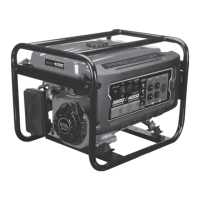
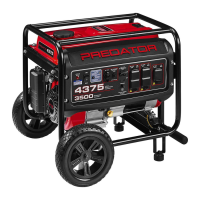
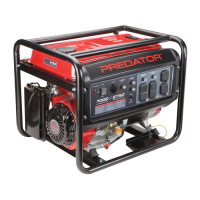
Identifies and describes the main parts and controls of the generator.
Describes AC/DC receptacles, circuit breakers, and grounding terminal.
Explains the critical importance and procedure for grounding the generator.
Details the process and parts for adjusting the generator for high-altitude use.
Lists essential inspections and checks before starting the generator.
Guides on checking oil level and safely filling the fuel tank.
Instructions for starting the engine and allowing it to stabilize before use.
Explains the initial break-in periods for optimal engine operation and longevity.
Step-by-step guide for starting a cold engine, including choke usage.
Details the correct order for connecting equipment to prevent damage.
Guides on checking circuit breakers when they trip during operation.
Explains how to sum running and starting watts for connected devices.
Provides estimated wattages for common household and job site equipment.
Instructions for stopping the engine quickly in an emergency situation.
Details the steps for safely stopping the engine under normal operating conditions.
Outlines procedures requiring user intervention for routine maintenance.
Lists specific maintenance tasks and their recommended frequency.
Safe practices for fueling and changing engine oil.
Instructions for cleaning or replacing the air filter element for optimal performance.
How to inspect, clean, gap, and install the spark plug.
Steps for preparing the generator for extended periods of non-use.
Diagnoses and probable solutions for common engine starting problems.
Solutions for engine stopping under load or misfiring.
Addresses causes and solutions for engine knocking and backfiring.
Solves issues where products lack power or operate abnormally.
 General
| Engine Displacement | 212 cc |
|---|---|
| Fuel Type | Gasoline |
| Engine Type | 4-Stroke OHV |
| Starting System | Recoil |
| Voltage | 120 V |
| Frequency | 60 Hz |
| Starting Watts | 4375 W |
| Running Watts | 3500 W |
| Fuel Tank Capacity | 4 gal |
| Noise Level | 68 dBA |
| Outlets | 2 x 120V 20A (5-20R) Duplex |


 To Next Page