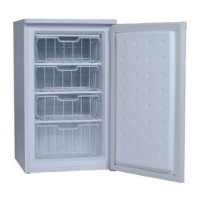
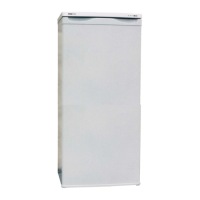
This document is a user manual for the PROLINE TTZ74 Freezer.
Function Description
The PROLINE TTZ74 is a freestanding freezer designed for household use and similar applications, such as staff kitchen areas in shops, offices, and other working environments; farm houses and by clients in hotels, motels, and other residential type environments; bed and breakfast type environments; catering and similar non-retail applications. It is intended for freezing and storing frozen food. The appliance is not designed to be used as a built-in unit.
Important Technical Specifications
- Model Identifier: TTZ74
- Supplier: Etablissements Darty & fils © | Proline
- Supplier Address: 9 Rue des Bateaux-Lavoirs, 94200 Ivry-sur-Seine, France
- Type of refrigerating appliance: Other refrigerating appliance (Freezer)
- Low-noise appliance: No
- Wine storage appliance: No
- Total Volume: 60 liters (dm³)
- Dimensions (H x W x D): 845 mm x 475 mm x 445 mm
- Energy Efficiency Index (EEI): 100
- Energy Efficiency Class: E
- Annual Energy Consumption: 156 kWh/year
- Airborne Acoustical Noise Emissions: 41 dB(A) re 1 pW
- Airborne Acoustical Noise Emission Class: C
- Climate Class: Temperate/Subtropical (intended for use at ambient temperatures ranging from 16 °C to 38 °C)
- Minimum Ambient Temperature: 16 °C
- Maximum Ambient Temperature: 38 °C
- Winter Setting: No
- Freezer Compartment (4-star):
- Volume: 60.0 liters (dm³)
- Recommended temperature setting for optimized food storage: -18 °C
- Freezing Capacity: 6.0 kg/24 h
- Defrost Type: Manual (M)
- Rated Voltage and Frequency: 220-240V~ / 50Hz
- Refrigerant/Amount: R600a / 34g (Isobutane, a natural gas with high environmental compatibility, but flammable)
- Insulation Blowing Gas: Cyclopentane
- Rated Current: 0.6A
- Electric Shock Protection Class: Class I
- Energy Consumption (E16/E32): 0.255 kWh/24h / 0.515 kWh/24h
- Temperature Rise Time (Power Cut Safe): 9 hours
- Net Weight: 20.7 kg
- Guarantee: 24 months (2 years)
- Compliance: EU Declaration of Conformity N°862023090041, conforming to EMC Directive (2014/30/EU), Low Voltage Directive (2014/35/EU), Eco design requirements for energy-related products (2009/125/EC), and RoHS (2011/65/EU & (EU) 2015/863).
Usage Features
Installation:
- Before connecting, ensure the voltage matches your home's supply.
- The plug must always be accessible as it is the only way to disconnect power.
- The appliance must be grounded.
- Install in a dry, well-ventilated room, away from direct sunlight and heat sources (cooker, radiator, etc.).
- Allow a minimum of 10 cm airspace on each side for adequate ventilation.
- Adjust the feet to keep the freezer level.
Temperature Control:
- The freezer is controlled by a temperature control knob located inside.
- Settings: MIN (least cold), NORMAL (cold), MAX (coldest).
- For optimal operation, the appliance should run empty for 2-3 hours after installation to cool to the appropriate temperature.
Using Your Freezer:
- Remove all packaging before use.
- Clean the interior with warm water and liquid detergent to remove manufacturing and transportation dust.
- Freezing and Storing Food:
- Store at -18°C or colder.
- Avoid prolonged door opening to prevent temperature increase.
- Regularly clean surfaces that come into contact with food and drainage systems.
- Store raw meat and fish in suitable containers to prevent contact with other foods.
- Two-star frozen-food compartments are suitable for storing pre-frozen food, making ice cream, and ice cubes.
- One-, two-, and three-star compartments are not suitable for freezing fresh food.
- If the appliance is left empty for long periods, switch off, defrost, clean, dry, and leave the door open to prevent mold.
- Freezing Fresh Food:
- Freeze fresh and undamaged food only.
- Blanch vegetables before freezing to retain nutritional value, flavor, and color (e.g., aubergines, peppers, zucchini, and asparagus do not require blanching).
- Keep fresh food to be frozen away from already frozen food.
- Suitable foods for freezing include cakes, pastries, fish, seafood, meat, game, poultry, vegetables, fruit, herbs, eggs without shells, dairy products, ready meals, and leftovers.
- Unsuitable foods for freezing include raw vegetables (lettuce, radishes), eggs in shells, grapes, whole apples, pears, peaches, hard-boiled eggs, yogurt, soured milk, sour cream, and mayonnaise.
- Packing Frozen Food:
- Use airtight packaging (plastic film, polyethylene tubular film, aluminum foil) to prevent flavor loss and drying out.
- Place food in packaging, remove air, seal, and label with contents and dates.
- Recommended Storage Times: Vary by food type, from 1 to 12 months at -18°C.
- Bacon, casseroles, milk: 1 month
- Bread, ice cream, sausages, pies, prepared shellfish, oily fish: 2 months
- Non-oily fish, shellfish, pizza, scones, muffins: 3 months
- Ham, cakes, biscuits, beef and lamb chops, poultry pieces: 4 months
- Butter, blanched vegetables, whole eggs and yolks, cooked crayfish, raw minced meat, raw pork: 6 months
- Dry or syrup fruit, egg whites, raw beef, whole chicken, raw lamb, fruit cakes: 12 months
- Important Notes on Freezing:
- Freeze fresh foods with a "use by/best before" date before it expires.
- Do not refreeze completely thawed frozen food.
- Consume defrosted food quickly.
- Making Ice Cubes:
- Fill an ice cube tray 3/4 full with drinking water and place in the freezer.
- If stuck, loosen with a blunt tool.
- Twist the tray or hold briefly under running water to release cubes.
Moving Your Appliance:
- Unplug the freezer from the mains socket.
- Remove all food and loose items.
- Secure doors with adhesive tape.
- Transport in an upright position.
- If the appliance has been left on its side, allow it to stand upright for at least 10 minutes before turning it on.
Door Conversion:
- It is recommended to call an authorized service agent or technician for door reversal.
- Before reversing, unplug the appliance and ensure it is empty.
- Requires a crosshead screwdriver and spanner (not supplied).
- Steps involve removing the upper hinge cover, screws, upper hinge, hole cap, and pins.
- Lift the door and place it on a padded surface.
- Remove screws, bottom hinge, and adjustable foot, then fit them on the opposite side.
- Move the hole cover from left to right.
- Reattach the upper hinge on the opposite side, fix the upper hinge cover, and refit the hole cap and pins.
Defrosting:
- Defrost regularly when frost thickness exceeds 3 mm.
- Do not use knives or sharp objects to scrape off frost/ice to avoid damaging refrigerant tubes.
- Set temperature control knob to OFF and unplug.
- Remove all frozen food and wrap in thick blankets or paper to keep cold.
- Place a pan of hot water on a stand in the freezer to accelerate defrosting.
- Clean the interior after defrosting. Wipe condensation with a cloth or sponge.
- Plug the appliance back in and set the desired temperature.
- Return food to the freezer.
Maintenance Features
Cleaning and Maintenance:
- Clean thoroughly upon installation.
- Clean the freezer after each defrosting to maintain efficiency.
- Do not use abrasive cleaning agents or solvents.
- Cleaning Steps:
- Remove all food and store in a cool place.
- Wait for ice to thaw.
- Clean with a soft cloth, warm water, and detergent.
- Wipe the door seal with clear water only, then dry thoroughly.
- Reconnect and adjust the temperature control knob.
- Return food to the appliance.
- Cleaning Tips:
- Remove drawers and wash with warm soapy water and a soft sponge. Rinse and dry thoroughly.
- Wipe interior parts (including temperature control knob) with a damp cloth soaked in warm water and dishwashing liquid. Use baking soda for stubborn stains.
- Wipe doors and edges with a microfiber cloth dampened with mild dishwashing liquid and water. Use a wet sponge and soft brush (like a toothbrush) to remove stuck-on food.
Troubleshooting:
- If the appliance does not operate: Check if plugged in, outlet switched on, fuse not blown, circuit breaker not tripped.
- If the freezer is noisy: Check if placed on a level surface, check for loose items vibrating against interior walls.
- If the temperature inside is too high: Turn control knob to a colder setting, allow several hours for stabilization. Reduce door opening frequency. Check if door is closed completely and gasket seals properly. Allow time if large amounts of warm food were recently stored.
- If the motor runs continuously: Normal to hear motor sound frequently. May run continuously if control knob is set to colder, large amount of warm food stored, high ambient temperature, doors left open too long/often, or after installation/long switch-off.
- If the door does not close properly: Check if on a level surface, check if gasket is dirty.
- If there is a bad smell: Pack strong-smelling food tightly. Check for deteriorated items or dirty door seals.
Repair and Spare Parts Service:
- Do not disassemble or repair the appliance yourself to avoid electric shock or injury.
- For professional repairs or spare parts, contact FNAC DARTY after-sales service.
- Spare parts are delivered within 15 working days of order receipt.
- The 2-year warranty does not cover damages from improper installation, unauthorized modification, self-repair, or non-professional repair.
- Contact Darty: 0978 970 970 (24 hours, 7 days a week), 9 Rue des Bateaux-Lavoirs, 94200 Ivry-sur-Seine, France.
- Contact Vanden Borre (Belgium): 02 334 00 00 (Mon-Sat, 8 AM-6 PM), Slesbroekstraat 101, 1600 Sint-Pieters-Leeuw, Belgium.
Disposal:
- Dispose of the appliance and its packaging in accordance with local laws and regulations.
- Electronic components and accessories must be disposed of separately from household waste.
- Contact local authorities for information on disposal and recycling.
- The appliance should be taken to a local collection point for recycling. Some collection points offer free appliance drop-off.
- The refrigerant (R600a) and insulation gases must be disposed of by experts. Ensure the refrigerant circuit tubes are not damaged before disposal.
- Etablissements Darty & fils ©, 9 Rue des Bateaux-Lavoirs, 94200 Ivry-sur-Seine, France. Date: 20/10/2023.

 Need help?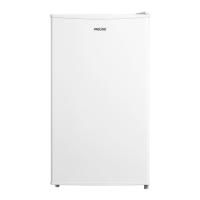

 To Next Page
 General