3000 EXPRESS
3-2
Fuel Fill
Fuel Withdrawal Tubes
The fuel withdrawal tubes are positioned in the fuel tanks to achieve optimum fuel usage, fuel line
routing, etc. At certain speeds and hull trim angles, the fuel supply at the withdrawal tank location
can increase or decrease accordingly. Be extremely careful when attempting to operate the boat
when low on fuel. Though some fuel may be in the tank, the relative trim angle of the boat may
cause the fuel to flow away from the withdrawal tubes.
Fuel Gauge
This indicates the amount of fuel in the tanks. Due to the mechanical nature of the fuel sender,
variations in readings during various speeds of operation may occur. This system is merely a
relative indication of the available fuel supply and not a calibrated instrument. A fuel gauge is
located in the gauge cluster for each engine.
Fuel Fills
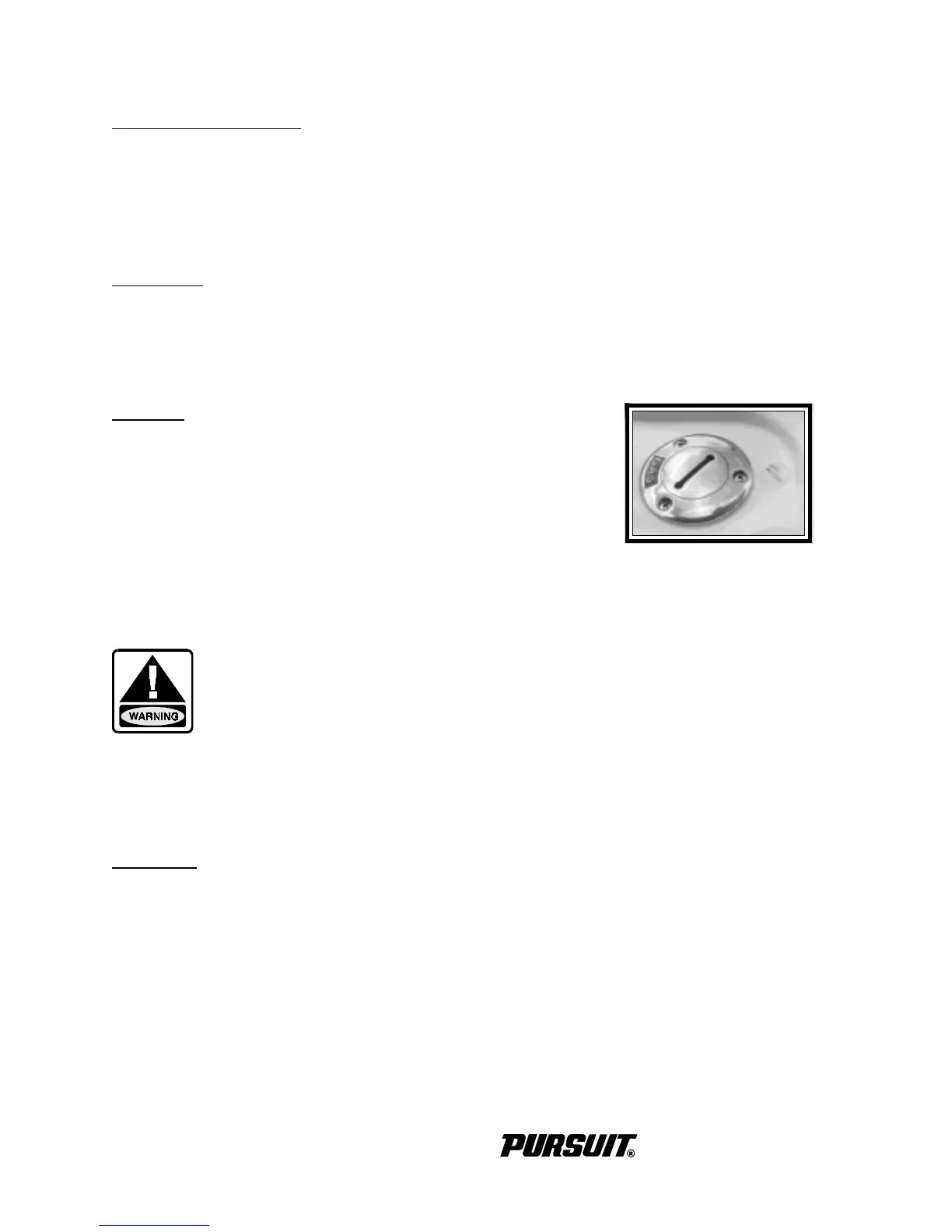
A fuel fill deck plate is located on each gunnel, and is marked “GAS”
or “DIESEL.” The fuel fill is opened by turning it counter clockwise
with a special key. After fueling, install the fuel cap and tighten with
the key. Be sure to use the proper type and grade fuel. Refer to the
engine owner’s manual for additional information.
Note: Do not overtighten the fuel cap. If the cap is overtightened, the O-ring seal could
be damaged allowing water to contaminate the fuel system.
DO NOT CONFUSE FUEL FILL DECK PLATES WITH THE WATER OR WASTE FILL DECK
PLATES. THESE PLATES ALSO ARE LABELED ACCORDINGLY. IF GASOLINE OR DIE-
SEL FUEL IS ACCIDENTALLY PUMPED INTO THE WATER OR WASTE TANK, DO NOT
ATTEMPT TO PUMP IT OUT YOURSELF. WATER AND WASTE PUMPS ARE NOT DE-
SIGNED TO PUMP FUEL AND A FIRE OR EXPLOSION COULD RESULT. CONTACT YOUR
DEALER OR THE PURSUIT CUSTOMER RELATIONS DEPARTMENT FOR ASSISTANCE IN
HAVING THE FUEL PROFESSIONALLY REMOVED.
Fuel Vents
There are two fuel vent fittings, one on each side of the hull. While the tank is being filled, the air
displaced by the fuel escapes through the vent. When the tank is full, fuel will be ejected from the
fuel vent.
After fueling, replace the fill cap(s), and wash the areas around the fuel fill plates and below the fuel
vent(s). Residual fuel left on the deck and hull sides can be dangerous and will yellow the fiberglass
or damage the striping.



 To Next Page