780 Handheld Test Instrument Page 11
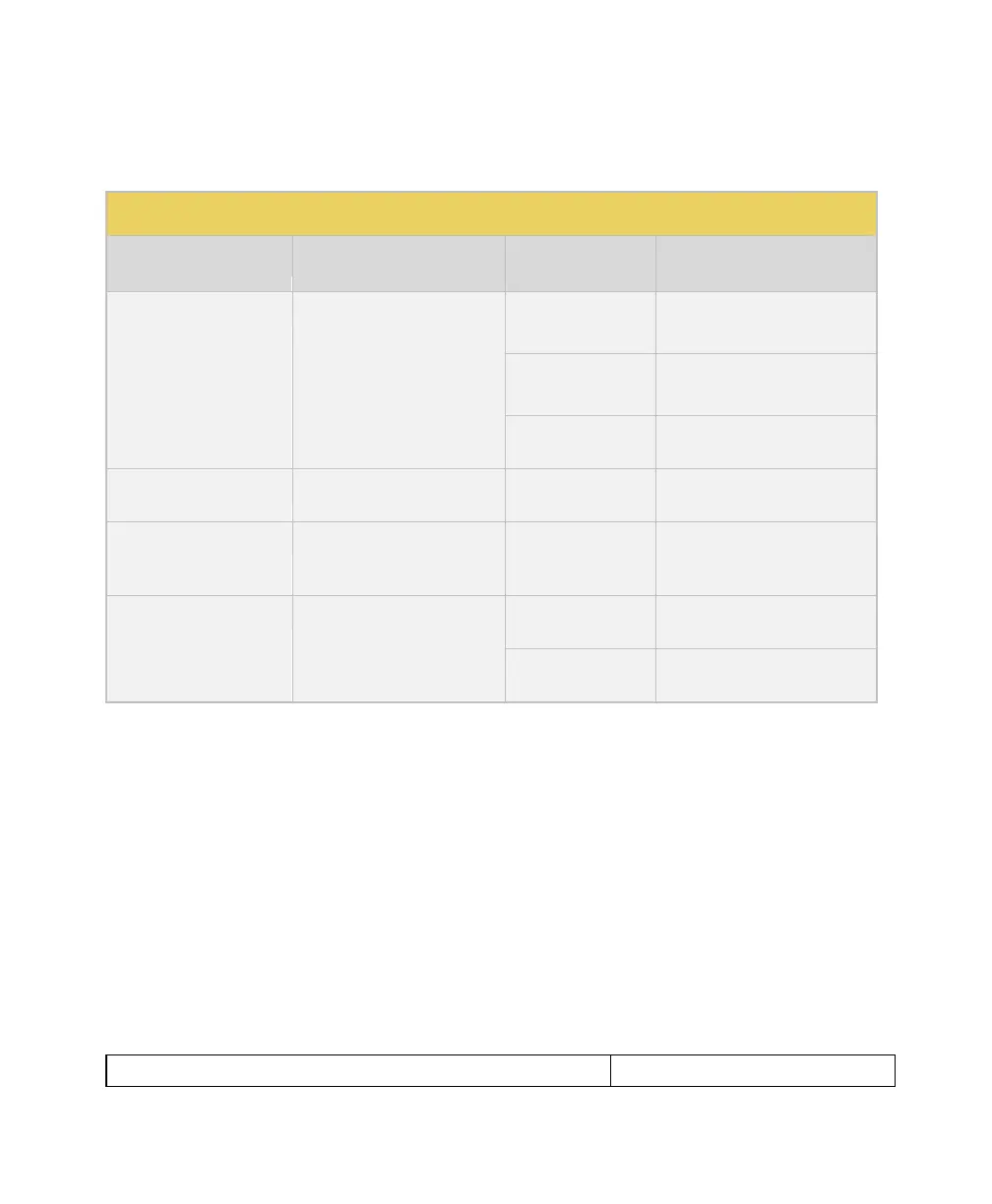
4. Touch select the options for the Signal Type. Use the information in Table 4-1 below as a guide:
HDMI OUT via HDMI to
HDMI cable (provided)
YCbCr
YCbCr 4:2:2
RGB
HDMI OUT via HDMI to DVI
cable (not provided)
ANALOG HD-15 (VGA) via
HD to 3-RCA cable
(provided)
Sep[arate] Sync
Sync on Green
ANALOG HD-15 (VGA) via
VGA cable (not provided)
Sep[arate] Sync
Sync on Green
5. Select the desired video signal.
4.2.2 Procedures for Selecting an HDMI Resolution and Frame Rate
The procedures below describe how to select the resolution in HDMI.
Note: You can create your own custom formats using the Quantum Data Format Editor. These procedures are described
in the User Guide.
When you make a physical connection to an HDMI HDTV, a hot plug event will occur. There are two modes the 780 can
be set in when testing HDMI sink devices that determine how the 780 responds to this hot plug event: 1) Hot plug formats
On; 2) Hot plug formats Off.
When hot plug formats are On and a hot plug event occurs, the 780 will read the EDID of the display device connected to
its output port. It will then automatically configure the list available signal types (resolutions and frame rates) to only those
supported by the HDMI sink device. The 780 will also be configured to output the signal indicated in the EDID as the
―preferred‖ timing. The preferred timing is highlighted in green following a hot plug event.


 To Next Page
 Loading...