How To Use Your RESCUE
®
Batter Charger Safely
Personal Precautions and Saftey
• Use only accessories that are included with your battery charger or recommended by the
manufacturer. Use of non-recommended accessories may result in re, electric shock, or
injury
• Do not disconnect the battery charger by pulling the cord. Disconnect by pulling at the
outlet plug. Pulling on the cord may cause damage to cord or plug
• Connect and disconnect the DC output clamps only after removing the AC plug from the
electrical outlet. Never allow the clamps to touch each other
• To reduce risk of electric shock, unplug charger from outlet before attempting any mainte-
nance or cleaning
• Do not operate the battery charger in a closed-in or restricted area without adequate ventila-
tion. Always charge battery in a well ventilated area
• Do not attempt to start the vehicle’s engine with charger connected
• Do not touch the battery clamps or ring terminals together when the charger is energized
• Locate charger as far away from battery as the power cables permit. Place or mount on a
stable surface
• Do not use an extension cord unless absolutely necessary. Use of an improper extension
cord could result in re or electric shock. If an extension cord must be used, make sure that:
• Pins on plug of extension cord are
the same number, size, and shape
as those of plug on charger
• Extension cord is properly wired and in good electrical condition
• The wire size of the extension cord is large enough for AC rating of charger; see Speci-
cations and Features section
• Do not alter the AC cord or plug. Improper connection can result in
a risk of electrical shock
• If it is necessary to remove the battery from the vehicle to charge it, always remove the
grounded terminal rst. Make sure all of the accessories in the vehicle are o to prevent
arcing
WARNING
!
Working in the vicinity of a lead acid battery is dangerous. Batteries generate explosive
gases during normal battery operation. It is important to follow these instructions each time
you use this charger.
Personal Precautions and Saftey Cont.
Operating Modes – Charging Features
• Wear Safety goggles whenever working around lead-acid batteries
• Wear gloves and protective clothing
• Consider having someone close enough by to come to your aid when you work near a
lead-acid battery
• Have plenty of fresh water and soap nearby for use if battery acid contacts skin, clothing, or
eyes. If battery acid contacts skin or clothing, wash immediately with soap and water
• Avoid touching your eyes while working with a battery. Airborne particles may get into your
eyes. If acid enters your eye, immediately ood eye with running cold water for at least 10
minutes. Get immediate medical attention
• Remove all metal articles such as rings, bracelets, necklaces, and watches when working with
a lead-acid battery. A lead-acid battery can produce a short-circuit current high enough to
weld these items to a metal surface, causing a severe burn
• Take care not to drop a metal tool or other metal onto the battery. Metal may cause sparking
or short circuit the battery or another electrical device. Sparking may cause an explosion
• Clean the battery terminals before charging the battery. During cleaning,
keep airborne corrosion from coming into contact with your eyes, nose, and mouth
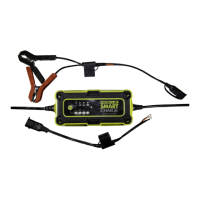
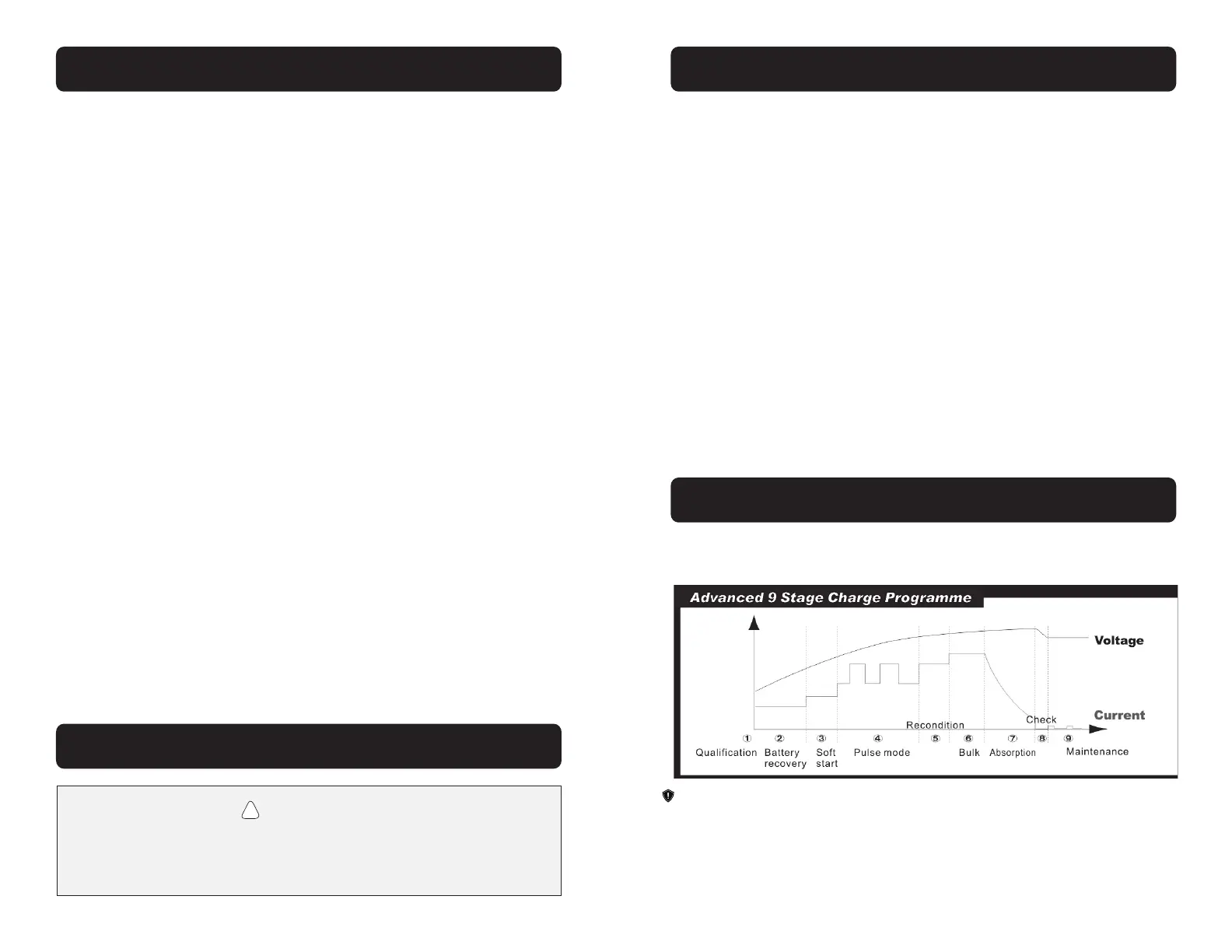
The Rescue
®
4A/1A, 6/12V Battery Charger has the ability to automatically cycle through nine
stages to repair, charge, and maintain your battery.
This charger has a high charge rate of 4 Amps for faster charging, and a lower charge rate of
1 Amp to charge smaller size batteries. It is intended for charging 12 volt and 6 volt lead-acid
batteries including AGM and Gel cell types.
IMPORTANT: THE RESCUE® 4A/1A, 6/12V BATTERY CHARGER CAN EASILY BE CONFIGURED
TO CHARGE MANY TYPES OF 12 VOLT AND 6 VOLT LEAD ACID BATTERIES. THE FOLLOWING
RECOMMENDATIONS ARE ONLY TO BE USED AS GUIDELINES. ALWAYS CONSULT THE BATTERY
MANUFACTURER’S INSTRUCTIONS FOR THE BEST WAY TO CHARGE YOUR BATTERY.
3 4


 To Next Page
 Loading...