The Radio Shack 1650 Computerized Portable Sensory Chess (Cat. No. 60-2187) is an electronic chess game designed to provide a chess partner and referee for players of various skill levels. This portable device features a sensory chess board, plug-in pieces, and a range of functions to enhance the chess playing experience.
Function Description
The primary function of the Radio Shack 1650 is to serve as a computerized chess opponent or a referee for two human players. It offers nine different levels of ability for the computer, ranging from an easy level suitable for beginners to a difficult level that can challenge experienced players. Level 0 is the easiest, and level 7 is the most difficult for normal play. Level 8 is a special problem-solving level.
The device supports several play modes:
- Player vs. Computer: The computer acts as an opponent. Players can switch colors with the computer or force the computer to make a move immediately if it's taking too long.
- Player vs. Player (PVP) Mode: The computer acts as a referee, ensuring all moves are legal and keeping track of the board position. In this mode, the computer can also be asked to suggest a move.
- Computer vs. Computer: The computer can play against itself, allowing users to observe its strategies.
Key features include:
- "Plug-in" Pieces: Moves are entered by lightly pressing the pieces into the holes on the chess board.
- Take Back: Players can take back up to two individual moves if they change their mind.
- Memory: The computer remembers the board position, level of play, and whose turn it is for up to one year, even if the power is turned off in the middle of a game, provided fresh batteries are used.
- Illegal Move Signal: The computer signals with a two-tone, high-low sound if an illegal move is attempted.
- Usual Chess Rules: The computer follows standard chess rules, including castling, capturing en passant, and pawn promotion.
- Control Indicators: LEDs indicate whose turn it is (WHITE or BLACK), if the computer is in check (CHECK), or if a checkmate or draw has occurred (MATE). Horizontal and vertical position indicators show piece locations and selected play levels.
- Opening Book: The computer is programmed with instant responses to many opening moves, but it will calculate responses for unusual openings.
- Special Situations (Level 8): This mode allows users to set up specific board positions to practice chess skills. In Level 8, the computer attempts to find a checkmate solution in four or fewer moves, computing all possible moves and countermoves.
Important Technical Specifications
- Battery Power: Requires three AA batteries. Radio Shack recommends Cat. No. 23-552 alkaline batteries for best results.
- Battery Life: Provides up to 50 hours of play with recommended alkaline batteries.
- Memory Retention: Can retain board position, level of play, and turn for up to one year with fresh batteries.
- Computer Move Times:
- Level 0: 2 seconds
- Level 1: 5 seconds
- Level 2: 15 seconds
- Level 3: 1 minute
- Level 4: 2 minutes
- Level 5: 3 minutes
- Level 6: 8 minutes
- Level 7: 2 hours
- Level 8 (problem solving): 10 seconds to 24 hours (for a four-move checkmate solution). These are average times and can vary.
Usage Features
- Setting the Level: After battery installation, turn the ON/MEMORY switch to ON and press LEVEL repeatedly until the desired skill level (0-8) is indicated by the lighted vertical position/level indicators. The level automatically defaults to 1 when first turned on or after battery removal.
- Making Moves: To move a piece, press it down in its current position (a beep sounds, and indicators mark the position), then move it to the new position and press it down again (another beep sounds). If you change your mind before pressing down in the new position, press the piece in its current position a second time to cancel and restart.
- Computer Moves: After a player's move, the computer's side indicator (BLACK or WHITE) flashes while it "thinks." Once ready, horizontal/vertical indicators show the piece to be moved. Press it down, then the new position is indicated. Move the piece and press it down.
- Taking Back Moves: Press TAKE BACK. The indicators show the last piece moved (computer's move). Press the piece down, and its previous position is indicated. Move the piece back and press it down. Repeat for the player's previous move. If a capturing move is taken back, remember to replace the captured piece.
- Castling: To castle, press down the king, move it to its proper position, and press it down again. Then move the rook to its proper position without pressing it down.
- Starting a New Game: Press NEW GAME when it's your turn. The level setting remains the same.
- Changing Sides: Press PLAY when it's your turn. The computer will indicate a move for your side, and you can then play the other side. This can be done as often as desired, or the computer can play against itself. To start a game as black, set up the board with black pieces at the bottom, then press NEW GAME and PLAY.
- Verifying Piece Positions: If the board position is uncertain, press the desired piece key. Indicators will show the position(s) of that piece. Press the key again to see other pieces of the same type. A two-tone signal indicates no more pieces of that type are found, and the game returns to play mode. The WHITE/BLACK key can verify all piece positions for either side.
- Clearing the Board: To clear the board for setting up special situations, press the 2nd F key (2nd F indicator lights), then press NEW GAME.
- Setting Up Special Situations: Enter set-up mode by pressing 2nd F, then the piece key for the piece to move, add, or remove. Select color with WHITE/BLACK key. To move, press the piece in its current position, move, and press again. To add, press the new piece in an empty space. To remove, press the piece and remove it. Exit set-up mode by pressing 2nd F again. The first move after exiting must be made by the side with the same color as the last piece set up. Press PLAY for the computer to make the first move.
- Turning Sound On/Off: Press LEVEL while the 2nd F indicator is on to toggle the sound.
- Game Memory: The ON/MEMORY switch can be set to MEMORY at any time during a game to conserve battery power. The computer will remember the board position and resume play when switched back to ON.
- ACL Button: If the computer locks up due to static discharge or other reasons, set the MEMORY/ON switch to MEMORY, then use a pin or sharp object to press the ACL button. This resets the computer and clears the memory.
Maintenance Features
- Battery Replacement: If indicators become dim or the computer makes "impossible" moves, the batteries need to be replaced. Always observe correct polarity during installation.
- Battery Care: Never leave weak or "dead" batteries in the unit, as even "leak-proof" batteries can leak damaging chemicals.
- General Care: The device is a precision electronic instrument. Avoid dropping it, rough handling, or exposing it to extreme temperatures, moisture, or damp areas.
The manual also notes that the Radio Shack 1650 is programmed to play chess, not to teach it, but includes basic chess rules. For additional information, users are advised to consult their local library.

 Need help?
 General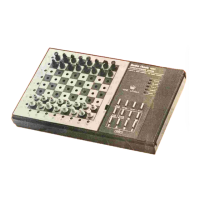

 To Next Page