
EasyManua.ls Logo

Rainbow Q-Connect - User Manual

Rainbow Q-Connect
16 pages
Print Icon
To Next Page IconTo Next Page
Loading...
For tech support and protocols call 1-877-272-6747
www.treecarescience.com info@treecarescience.com
OUR GUARANTEE
Our products and services
are guaranteed to give
100% satisfaction in every
way - service, performance,
quality, and value. If you
are ever dissatisfied, in any
way, please contact us
so that we can address
whatever concern you have.
Our goal is your complete
satisfaction.
Patent Pending
The Q-connect is designed to allow tree injection treatments to be performed quickly, safely,
and accurately. Be certain to read ALL instructions before use. Refer to the appropriate product
guide and product label for dosage and mixing instructions.
MANUAL
For tech support and protocols call 1-877-272-6747
www.treecarescience.com info@treecarescience.com
www.treecarescience.com/q-connect
Digital Download of this Manual Available at:
www.treecarescience.com/q-connect
Digital Download of this Manual Available at:

Questions and Answers

Summary

Q-CONNECT OVERVIEW

System Components Overview

Visual identification of key parts like bottle cap, harness, and injection port.

Equipment Checklist

Lists all included and required items for operation.

INSTRUCTIONS FOR USE

Getting Set Up

Step-by-step guide for initial system setup and preparation.

Drilling Injection Sites

Instructions for preparing the tree by drilling injection holes.

Injecting Product

Detailed process for administering the chemical treatment into the tree.

Cleaning the System

Procedures for cleaning the Q-connect after use.

GENERAL CARE & STORAGE

Routine Care and Cleaning

Guidelines for daily and weekly upkeep of the equipment.

Storage Recommendations

Best practices for storing the Q-connect system.

Approved Products Information

Reference to compatible products for use with the system.

TROUBLESHOOTING

Pressure and Leak Issues

Solutions for problems related to bottle pressure and system leaks.

Connection and Tubing Problems

Troubleshooting issues with fittings, tubing, and harness connectors.

Injection Performance Issues

Resolving problems with injection tips and sites.

MAINTENANCE & REPAIR

Basic Maintenance Procedures

Steps for cleaning, soaking, lubricating, and drying the unit.

Replacing Set Screws and Tips

Instructions for adjusting or replacing tips using set screws.

Replacing the Duckbill Valve

Guide for replacing the duckbill valve component.

Blocking the Dosing Port

Procedure for blocking the dosing port with a plug.

Replacing Tubing

Instructions for replacing damaged or worn tubing sections.

Replacing Push-to-Connect Tees

Steps for swapping out faulty push-to-connect tees.

Replacing Schrader Valve Core

Guide for replacing the Schrader valve core.

Cleaning Pressure Relief Valve

Instructions for cleaning the pressure relief valve.

Cleaning Harness Connector

Procedures for cleaning the harness connector.

Bottle Cap Maintenance

Procedures for maintaining the bottle cap components.

Summary

Q-CONNECT OVERVIEW

System Components Overview

Visual identification of key parts like bottle cap, harness, and injection port.

Equipment Checklist

Lists all included and required items for operation.

INSTRUCTIONS FOR USE

Getting Set Up

Step-by-step guide for initial system setup and preparation.

Drilling Injection Sites

Instructions for preparing the tree by drilling injection holes.

Injecting Product

Detailed process for administering the chemical treatment into the tree.

Cleaning the System

Procedures for cleaning the Q-connect after use.

GENERAL CARE & STORAGE

Routine Care and Cleaning

Guidelines for daily and weekly upkeep of the equipment.

Storage Recommendations

Best practices for storing the Q-connect system.

Approved Products Information

Reference to compatible products for use with the system.

TROUBLESHOOTING

Pressure and Leak Issues

Solutions for problems related to bottle pressure and system leaks.

Connection and Tubing Problems

Troubleshooting issues with fittings, tubing, and harness connectors.

Injection Performance Issues

Resolving problems with injection tips and sites.

MAINTENANCE & REPAIR

Basic Maintenance Procedures

Steps for cleaning, soaking, lubricating, and drying the unit.

Replacing Set Screws and Tips

Instructions for adjusting or replacing tips using set screws.

Replacing the Duckbill Valve

Guide for replacing the duckbill valve component.

Blocking the Dosing Port

Procedure for blocking the dosing port with a plug.

Replacing Tubing

Instructions for replacing damaged or worn tubing sections.

Replacing Push-to-Connect Tees

Steps for swapping out faulty push-to-connect tees.

Replacing Schrader Valve Core

Guide for replacing the Schrader valve core.

Cleaning Pressure Relief Valve

Instructions for cleaning the pressure relief valve.

Cleaning Harness Connector

Procedures for cleaning the harness connector.

Bottle Cap Maintenance

Procedures for maintaining the bottle cap components.

Overview

The Q-connect is a tree injection system designed for quick, safe, and accurate tree treatments. It is a versatile tool for various tree injection plans, with ongoing research to broaden its applications.

Function Description

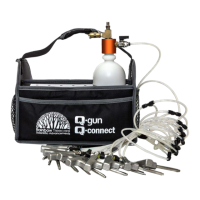
The Q-connect system facilitates the injection of treatment solutions into trees. It comprises a product bottle, a bottle cap assembly with a Schrader valve and dosing tip port, a harness with injection tees and tubing, and injection ports. The system is pressurized using a bike/foot pump, allowing the solution to be delivered through the harness and into the tree via injection sites.

Important Technical Specifications

Included Components:

  • Bottle Cap Assembly: Features a Schrader valve, main bottle valve, dosing tip port, pressure relief valve, and push-to-connect coupling.
  • Q-connect Tees & Tubing: Connects the bottle to the injection sites.
  • Product Bottle: Holds the treatment solution.
  • 15/64" High Helix Drill Bits: Used for drilling injection holes.
  • Bottle Stand: Supports the product bottle during use.
  • Carrying Bag & Insert: For convenient transport and storage.
  • Manual: Provides detailed instructions.
  • 3' of 5/32" Replacement Tubing: For field repairs.
  • Extra Grommet, Extra Duckbill Valve, Rubber Valve Plug: Spare parts for maintenance.

Components You Will Need (Not Included):

  • Bike/Foot Pump: For pressurizing the system.
  • Electric Drill (18v Recommended): For drilling injection holes.
  • DBH Measuring Tape: For determining tree diameter.
  • Proper PPE: Personal Protective Equipment, as specified on the product label.
  • Q-connect Field Repair Kit (Recommended): For on-site repairs.

Pressure Specifications:

  • Priming Pressure: 15-25 psi.
  • Operating Pressure: 35 psi (can be pressurized up to 55 psi if needed).
  • Pressure Relief Valve Release: 60 psi.

Storage Temperature:

  • Above 32°F (0°C) and below 110°F (43°C).

Usage Features

Getting Started:

  1. Measure Tree DBH: Measure the tree's Diameter at Breast Height (4.5 feet above soil grade).
  2. Determine Dose: Refer to the product label for the required dose and wear appropriate PPE.
  3. Set Up Bottle: Insert the bottle stand into the ground.
  4. Fill Bottle: With the main bottle valve closed, unscrew the bottle top and pour the measured product dose, or use a Q-gun/iQ-infuser to dose directly through the dosing port. Securely screw on the bottle cap, avoiding cross-threading.
  5. Determine Injection Sites: Use one injection site for every two inches of tree diameter (e.g., a 12" tree needs 6 sites).
  6. Adjust Harness: Adjust the harness size for the number of injection tees needed. Use black push-to-connect tees to add or remove tubing and tees. To use a push-to-connect, press and hold down the plastic collet and pull out the tubing.
  7. Connect Harness: Lay the harness around the tree base, ensuring both ends are connected (a "click" indicates proper connection) and the harness is connected to the bottle.

Drilling Injection Sites:

  1. Drill Holes: Use a 15/64" high helix drill bit to drill injection holes into the root flares, 3/4"-1" past the bark, perpendicular to the bark surface. Replace drill bits every 5-10 trees; a sharp bit produces "pig tails."
  2. Insert Tip: With the tee valve closed, insert the injection tip securely into the hole with a slight clockwise twist to ensure a tight seal.
  3. Site Placement: Space injection sites evenly around the tree, avoiding deadwood, decay, and valleys between root flares.

Injecting:

  1. Open Tee Valve: Open the valve on the tee farthest from the bottle.
  2. Open Main Bottle Valve: Open the main bottle valve.
  3. Prime Lines: Attach a bike pump to the Schrader valve on the bottle cap and pressurize the bottle to 15-25 psi to prime the lines. The open tee helps draw product evenly through the harness.
  4. Open All Tee Valves: Once primed at low pressure, open all injection tee valves. Inspect for leaks or blockages.
  5. Pressurize for Injection: Pressurize the bottle to 35 psi (up to 55 psi if needed). The pressure relief valve will release pressure at 60 psi.
  6. Emptying: Once the harness and tees are empty, close all injection tee valves. Allow a few minutes for residual product to move into the tree before removing injection tees.
  7. Depressurize: Slowly and carefully use the pressure relief valve on the bottle cap to depressurize the bottle.
  8. Disconnect: Press the quick-disconnect button to release the harness connector. Remove each injection tee with a slight clockwise turn while pulling it out. For easy carrying, remove tees one-by-one around the tree, holding every other black push-to-connect tee while coiling the harness.

Maintenance Features

Cleaning:

  1. Empty System: Ensure the bottle and harness lines are empty.
  2. Prepare Cleaning Solution: Mix ONE (1) part 70% isopropyl alcohol to TWO (2) parts water (for 90% isopropyl alcohol, mix ONE (1) part alcohol to THREE (3) parts water).
  3. Fill Bottle: Fill the bottle 1/3 to 1/2 way with the cleaning solution.
  4. Pressurize for Cleaning: Screw on the bottle cap, connect the harness, close injection tee valves, and pressurize the bottle to 40 psi with a bike pump.
  5. Flush Tips: One at a time, open the injection tee valves over a rinsate collection container (bucket with lid or empty injection bottle) to allow cleaning solution to flow through each tip. Re-pressurize the bottle as needed.
  6. Air Flush: Once the bottle and harness are empty of cleaning solution, pressurize the harness with air to flush any remaining fluid into the waste container.
  7. Dispose: Dispose of pesticide wastes and rinsate according to product label, local, state, and federal regulations.
  8. Thorough Cleaning: Thoroughly clean the harness connector, pressure relief valve, and other components. Soaking the harness connector in cleaning solution after heavy use is recommended.
  9. Post-Cleaning Flush: It is recommended to flush the system with water after the cleaning solution, particularly before storage.
  10. Storage: Always store the Q-connect system clean and dry.

General Care & Storage:

  • Purge all fluid from lines after each use and before changing chemistries.
  • Clean the Q-connect after every day of use with a dilute isopropyl alcohol solution (1 part 70% isopropyl alcohol to 2 parts water).
  • Run water through the unit after cleaning solution and allow lines to dry completely before storage.
  • Thoroughly clean bottle cap, pressure relief valve, and harness connector weekly or after heavy use.
  • Store in a dry area, free from dust and particulate matter.
  • Store above 32°F (0°C) and below 110°F (43°C).

Basic Maintenance Checklist:

  • Daily (after use):
    • Clean harness, tees, bottle, and cap.
    • Clean pressure relief valve.
    • Clean duckbill valve if used for dosing.
    • Check tips for clogs.
    • Ensure harness connector is free from chemical residue and debris.
  • Weekly:
    • Soak harness connector in an isopropyl alcohol-based cleaning solution (4-48 hours for best results). Allow components to dry completely before reassembly. Use a low to medium strength thread sealant when reassembling metal to plastic components.
    • Ensure injection tees are free from obstructions or leaks.
    • Clean Schrader valve: Remove and lubricate valve core if significant debris is present.
    • Clean duckbill valve: Soak in cleaning solution if significant chemical residue is present.
    • Thoroughly clean pressure relief valve.
  • After Heavy Use:
    • Check tubing ends and cut off deeply scored, kinked, or obstructed tubing with a sharp, straight blade (box cutter or knife).
    • Separate and soak injection tees, black push-to-connect tees, tubing segments, and harness connectors. Allow complete drying before reassembly or storage.
    • Lubricate O-rings on pressure relief valve and male barb of harness connector and X-ring on bottle cap as needed and after thorough cleaning (synthetic silicone recommended).

Repair Instructions:

  • Replacing Set Screws/Tightening Tips: Loosen the set screw, tighten the tip with a wrench (avoid over-tightening), then re-tighten the set screw (avoid over-tightening and stripping).
  • Replacing the Duckbill Valve: Unscrew the brass valve plug, remove the rubber grommet, metal shim, and retaining ring. Remove and replace the duckbill valve. Replace the retaining ring, then metal shim, then rubber grommet. Replace and hand-tighten the brass valve plug (DO NOT over-tighten).
  • Blocking the Dosing Port: Follow steps for replacing the duckbill valve, but place the rubber valve plug over the dosing port hole, then replace the retaining ring and rubber grommet (do not use the metal shim). Replace and hand-tighten the brass valve plug (DO NOT over-tighten).
  • Replacing Tubing: To disconnect, push in the plastic collet and pull out the tubing. Replace damaged tubing with new sections. Regularly inspect tubing ends for chemical residue, deep scoring, and kinks. Restore bad tubing ends by making a straight, vertical cut past the damaged section with a sharp blade (not scissors or shears).
  • Replacing Black Push-to-Connect Tee: Remove tubing by pushing in and holding the collet, then pulling out. Ensure tubing ends are in good condition. Switch faulty tee with a replacement tee, ensuring tubing is fully inserted.
  • Replacing Schrader Valve Core: Use a Schrader valve core tool to unscrew the core. Clear any chemical or debris from the valve, then insert and retighten the replacement core.
  • Cleaning Pressure Relief Valve: If the valve is not sealing or not opening when pressurized over 65 PSI, use wire brushes and a pick with cleaning solution (isopropyl alcohol) to remove residue and debris. Add lubricant to the O-ring.
  • Cleaning Harness Connector: If the connector is not connecting or leaking, disconnect from tubing and clean thoroughly with a mixture of isopropyl alcohol and water. If the problem persists, soak overnight in 70% isopropyl alcohol. If the connector stops functioning in the field, remove it and connect both sides of the harness to a black push-to-connect tee that feeds directly from the bottle.
  • Bottle Cap Maintenance: Add silicone lubricant to the X-ring. Inspect the dip tube for obstructions. Clean away any residue or debris from components. If a component must be removed or replaced, it's recommended to re-seal threads with pipe sealant or a medium strength thread lock product.

Rainbow Q-Connect Specifications

General IconGeneral
BrandRainbow
ModelQ-Connect
CategoryIndustrial Equipment
LanguageEnglish