Need help?
Do you have a question about the Raise3D N2 and is the answer not in the manual?
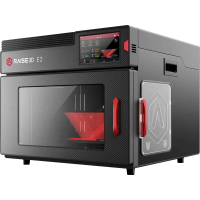
Identifies all parts and features specific to the N2 3D printer.
Identifies all parts and features specific to the N2 Plus 3D printer.
Guide for removing protective packaging, zip ties, and extruder assembly clips.
Steps for removing Z-axis clamps and the accessory bag from the printer.
Lists all parts included in the hardware package, with quantities noted.
Details on removing the glass plate and securing it to the build plate clamps.
Instructions for placing build plate clips onto the glass and heated bed plate.
Installing the filament holder and connecting the power cable to the printer.
Connecting power and initiating the printer's automated startup sequence.
Steps for loading filament through the guide tube and into the extruder gears.
Guide for initiating the ideaMaker installation on Windows, selecting language and path.
Choosing installation components and starting the actual installation process on Windows.
Instructions for installing ideaMaker on macOS using a disk image file.
Selecting the printer model and number of nozzles during initial setup.
Choosing the correct filament diameter (1.75mm) for the printer.
Adding .stl or .obj files to the ideaMaker software for processing.
Starting the slicing process and selecting templates for printer and material.
Saving slicing configurations and exporting sliced .gcode files to USB.
Proper procedure for removing the USB storage device after file transfer.
Verifying axis leveling and adjusting nozzle-to-platform distance before printing.
Loading pre-sliced models from USB and starting a print job.
Checking print status, time remaining, and other parameters on the printer's home screen.
Explains the main 'Home' screen elements: status bar, model info, and taskbar.
Describes the 'Tune' screen for parameter adjustments and 'Utilities' for axis control.
Overview of the 'Print' screen for selecting and managing print jobs from various storage.
 General
| Filament Diameter | 1.75 mm |
|---|---|
| Display | 7-inch Touch Screen |
| Print Speed | 150 mm/s |
| Nozzle Diameter | 0.4 mm (standard), 0.2 mm, 0.6 mm, 0.8 mm (optional) |
| Supported Materials | PLA, ABS, PETG, TPU, HIPS |
| Build Plate | Heated |
| Connectivity | USB, Ethernet, Wi-Fi |
| Frame | Aluminum |
| Layer Resolution | 10 - 300 microns |

 To Next Page