13
Valve Position Function
FILTER
This is the standard normal operation position of your ltration system. The water ows in from your pool
and is distributed across the top of the sand bed in the lter. Through pressure, this water then ows down
through the sand allowing debris to be removed from the water and collected in the sand bed. Water is then
routed up through the laterals and the center stem pipe and is returned to the pool, usually via some form
of sanitation and/or heating. The FILTER position can also be used for manual vacuuming and cleaning.
BACKWASH
This position is used when your sand lter’s sand bed needs cleaning. Use the pressure gauge to monitor
when this is required, usually 8-10 PSI above the operation of a clean lter. When BACKWASH is selected,
the water ow is reversed and goes down the stem pipe and out through the laterals. This lifts the sand
bed and allows debris to be taken out of the lter and through the waste pipe. The sight glass will show the
quality of the water. Continue BACKWASH until the water visually clears.
RINSE
This setting is used after completing the BACKWASH cycle. In the RINSE setting, water is taken
from the pool and distributed on the sand bed. This downward ow settles the sand bed, disturbed
from backwashing, and carries any remaining loose dirt through the waste line. By using RINSE after
backwashing, you will eliminate any debris from returning to the pool water. Rinse until you see clear water
through the transparent sight glass. Time needed is about half the time of a BACKWASH cycle.
WASTE
The WASTE position allows you to pump excess water from the pool directly down through the waste pipe.
This position is useful after heavy rains when the water level is too high. Water is directed straight through
the multiport control valve and bypasses the lter, going directly to waste. You can also use this position to
vacuum heavy concentration of debris from the pool.
RECIRCULATE
Similar to the WASTE setting, RECIRCULATE allows the water to bypass the lter but go straight back
to the pool. This is a useful setting if you have applied some chemicals that need to be circulated, but not
removed by the lter. In addition, if a leak develops in the lter, use recirculate to continue circulating water
until leaks are located for xing.
CLOSED
The CLOSED setting acts like a valve and prevents the ow of water through the tank, and is particularly
useful when doing any maintenance on the ltration system.
Table C. Multiport Valve Position Functions
CAUTION: Do not use anti-freeze solution except
Propylene Glycol, as the other anti-freeze are highly
toxic and will damage the pump.
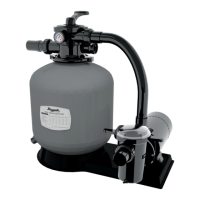
Winterizing is a process for protecting your sand lter
during freezing conditions which can damage all pool
ltration equipment resulting from ice expansion (water
expands as it freezes).
It is highly recommended to take the following steps when
preparing your lter for winter conditions:
1. Backwash the filter for at least 30 minutes before
closing down the pool for winterizing. This will clean
the filter bed thoroughly and remove any debris from
the system.
2. Remove the drain cap at the bottom of the filter tank
to darin the tank. Leave the cap off during winter.
3. Set the control valve handle between the RINSE and
FILTER. This will lift the handle and help with the
draining process by allowing air to enter into the tank.
4. Unscrew the pressure gauge from the control valve
and store the pressure gauge indoors.
5. Drain and winterize the pump according to the pump
instructions.
6. This is an ideal time for any repairs required during
the off-season. Most pool professionals have
recommendations of what will be needed before the
next pool season.
Pump Winterizing
A
CAUTION: The pump must be protected when
freezing temperatures are expected. Allowing the pump
to freeze will cause severe damage. Such damage will
not be covered under warranty.
There are two options when winterizing the pump:
Option 1
1. Drain all the water from the pump, system equipment,
and piping.
2. Remove the drain plugs. Do not replace the plugs;
store them in the empty strainer basket for winter.
3. Keep the motor covered and dry.
Option 2:
1. Drain all the water from the pump, system equipment,
and piping.
2. Remove the pump and motor from the plumbing and
store indoors in a warm and dry location.
NOTE: When the winter season is over the pump will
need to be primed prior to start. Refer to Section 5. Start-
Up.



 To Next Page