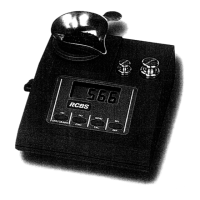
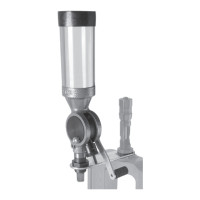
Need help?
Do you have a question about the RCBS 1500 GN and is the answer not in the manual?
Ensure the scale is placed on a stable, vibration-free surface for accurate readings.
Turn on the scale and allow it to warm up for 30 minutes before use to ensure thermal equilibrium.
Follow safety rules carefully when reloading to minimize hazards and prevent injury.
Store powder safely, use only identified powder, and discard uncertain or mixed powders.
This scale is for smokeless powders only; do not use with black powder due to explosion risk.
Details capacity, units, power source, and platform size for the RCBS Pocket Scale.
Calibrate before each use and re-check frequently to ensure accurate weight measurements.
Avoid temperature changes, jarring, off-center placement, and static electricity for accurate readings.
Details warranty coverage, limitations, and claims process for defects in material or workmanship.
Information regarding compliance with FCC rules for digital devices and potential interference.
Instructions for proper disposal of electric and electronic equipment in EU and other regions.
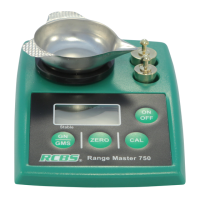
The RCBS 98914 Pocket Scale is a precision digital instrument designed for accurate weighing, particularly useful in reloading applications. It is built to provide reliable service over many years, provided it is handled with care and operated according to the instructions.
The primary function of the RCBS Pocket Scale is to accurately measure small weights, specifically in grams (g) and grains (gn). It is intended for use in reloading, where precise measurement of powder charges is critical for safety and performance. The scale features a digital display for easy reading of measurements and includes calibration capabilities to ensure accuracy. It can be used with a scale pan for weighing objects or directly on the platform. The scale is designed to be operated on a stable, vibration-free surface and requires a warm-up period to stabilize its internal components and reach thermal equilibrium for optimal accuracy.
The manual also emphasizes general reloading safety practices, such as wearing safety glasses, understanding procedures, avoiding shortcuts, maintaining a clean reloading area, keeping equipment and components out of reach of children, and not reloading when tired or impaired. It stresses the importance of using only laboratory-tested reloading data and observing maximum listed loads.

 To Next Page
 General